Stop Coverage Gaps With a Shift Swap Policy and Checklist for Managers
A manager-focused shift swap policy that prevents coverage gaps, overtime and fatigue. Includes ready checklist, template fields and a 48 hour notice rule...

A shift swap policy exists to let staff trade shifts voluntarily without leaving you exposed to gaps in cover, breaches of working time law, or a dispute you cannot prove either way. To do that job properly, it needs three things: eligibility and skills checks before any swap is confirmed, a manager approval step that catches overtime and rest-period problems, and a written record of who agreed to what.
TL;DR:
- Only employees who meet specific role and certification requirements should be eligible to swap shifts, with automatic flagging for expiring or invalid certifications.
- A standard notice period of at least 48 hours is recommended for non-emergency swaps to allow proper checks on overtime and rest compliance before approval.
- Managers must verify that proposed swaps do not push staff over legal working hours or breach rest regulations through automated or manual compliance checks.
- Shift swap approval should be documented with signed records detailing employee consent, certification matching, and manager sign-off, and kept for payroll and audit purposes.
- Implementing a formal pending status and a communication plan prevents unapproved or unconfirmed swaps from leading to uncovered shifts or staffing gaps.
Table of Contents
- What is a shift swap policy and what must it cover?
- Which staff qualify to swap shifts?
- How much notice should a shift swap policy require?
- What compliance checks should managers run before approving a swap?
- What should a shift swap form record?
- How do you stop a shift swap leaving a shift uncovered?
- How does fatigue affect shift swap approvals?
- How do you roll out a new shift swap policy?
- Author’s perspective: what managers get wrong, and the quick fixes
- How Timeprof handles swap compliance for you
- Sources
- FAQ
What is a shift swap policy and what must it cover?
A shift swap policy is the set of rules that governs how two employees exchange shifts, and who signs off on it before the rota changes. Get the rules loose, and you inherit every problem an unsupervised trade can cause: a certified worker swapping out for someone without the right qualification, a shift that quietly pushes someone over their weekly hours limit, or a “verbal agreement” that falls apart the moment nobody turns up.
Here is the process most well-run shift-based businesses now follow, whether they run it on paper or through a scheduling platform:
- Request initiated. The employee wanting to swap submits a request, either through a digital form or a signed two-party paper form, naming the colleague willing to cover.
- Mandatory fields captured. Both employees’ names, roles, the site, the exact dates and times, and any required skill-tags or certifications get logged at this stage, not chased up afterwards.
- Automatic pre-checks run. The system (or the manager manually) checks the incoming cover for role eligibility, overtime exposure, and rest-period compliance.
- Outcome recorded. The swap is marked approved or declined, with a reason attached if declined, so nobody is left guessing.
- Pending status enforced. Until a manager signs off, the original rota stands. Staff should never treat “requested” as “confirmed.”
That last point trips up more businesses than any other. A shift swap request form template with a status field for “pending” sounds bureaucratic, but it is the single cheapest way to stop two employees quietly agreeing a trade and both failing to show up because each assumed the other had it covered. Set a clear turnaround expectation, commonly 24 to 48 hours, so pending requests do not drift.
Which staff qualify to swap shifts?
Vague eligibility wording is where shift swap policies quietly fall apart. “Any similarly qualified colleague” sounds reasonable until a swap goes ahead between two people who hold different certifications, and one of them should never have been on that shift. LegalClarity’s guidance on shift swap policy design is blunt about this: eligibility should list specific job titles or certification requirements rather than relying on loose language that invites disputes.
In practice, that means building skill-tags or certification fields directly into your swap form or scheduling system, so a match either exists or it doesn’t:
- Tag each role with the certifications it legally or contractually requires (first aid, SIA licence, food hygiene, clinical competency).
- Require the covering employee’s tags to match the vacated shift’s tags exactly before a swap can be marked eligible.
- Flag near-expiry certifications automatically, so a swap doesn’t sail through on a licence that lapses the following week.
- In healthcare and security specifically, treat certification checks as mandatory, not discretionary, given the regulatory exposure involved.
Pro Tip: Watch for “skill-drift”, where a covering employee genuinely holds the right job title but their mandatory certificate has quietly expired. A job-title match is not the same as a certification match, and only the second one actually protects you.
How much notice should a shift swap policy require?
Most workable policies set a standard notice window of a few days for a swap request, giving managers time to run eligibility and overtime checks properly rather than rubber-stamping something under pressure. That window is not arbitrary. It exists because rushed approvals are where mistakes happen. A manager checking a swap five minutes before a shift starts is far less likely to catch a rest-period problem than one reviewing it two days out.
Emergency requests still need a route, though, because illness and family emergencies do not respect notice periods. The fix is a separate, clearly labelled emergency swap process rather than letting “urgent” become the default excuse for skipping checks:
- Keep a formal exemption log for any swap approved outside the standard notice window, with a reason recorded against each entry.
- Require the same eligibility and overtime checks for emergency swaps as for standard ones. Speed is not a reason to skip verification.
- Document that the swap was genuinely voluntary on both sides, particularly in jurisdictions with predictive-scheduling or fair-workweek style rules, where a rushed change can look like an employer-imposed schedule change rather than a worker-led trade.
ACAS advises that changes to hours or terms need consistent, careful handling to avoid discrimination claims. Applying one notice standard to everyone, with a documented exception process for genuine emergencies, is how you satisfy that in practice.
What compliance checks should managers run before approving a swap?

This is where a shift swap policy either earns its keep or quietly becomes a liability. Every approval needs to answer two questions before it goes ahead: will this push someone over legal working limits, and does it breach their entitlement to rest?
Government guidance on rest breaks and time off sets out the working time limits that formal approval checkpoints should be checking against automatically, catching a swap that would push someone past their weekly hours cap before the rota gets updated, not after payroll flags it. The checks that matter most:
- Weekly hours calculation. Add the incoming shift to the covering employee’s existing rota total and block the swap if it breaches the legal weekly limit.
- Rest-period verification. Confirm the swap does not leave less than the required rest between shifts, particularly for back-to-back or overnight patterns.
- Manager sign-off window. Set a defined turnaround, typically 24 to 48 hours, so approvals do not stall the rota or get rubber-stamped without review.
- Clear liability assignment. State explicitly who is responsible if the covering employee fails to show, so it is not decided retrospectively in an argument.
More than a million UK workers changed jobs in a single year over a lack of flexibility, according to CIPD research, which is a strong argument for having a swap system at all. But flexibility without compliance checks just trades a retention problem for a liability one.
What should a shift swap form record?
The paperwork is not busywork. A properly built swap form is what protects you if a dispute, an audit, or a tribunal claim ever asks “who agreed to this, and did anyone check it was safe?” A signed two-party swap form that captures both employees’ consent alongside manager approval is the standard reference point for this, and it should include:
- Both employees’ names, signatures (or digital equivalent), and the date of consent.
- Role and certification match confirmation, ticked against the required skill-tags.
- The overtime and rest-period check result, not just a blank approval box.
- The manager’s sign-off, with a timestamp.
- The original and replacement shift details in full, including site.
| Field | Why it matters |
|---|---|
| Two-party signatures | Proves the swap was voluntary, not manager-imposed |
| Certification match | Confirms the covering employee was actually eligible |
| Overtime/rest check | Shows compliance was verified, not assumed |
| Manager approval timestamp | Establishes exactly when and by whom it was signed off |
Keep swap records for as long as you retain payroll data generally, since they form part of your working-time evidence. That documentation is what proves voluntariness if a predictive-scheduling style rule ever questions how a change to someone’s hours came about.
How do you stop a shift swap leaving a shift uncovered?
A swap that gets approved but never actually communicated to the wider team is functionally the same as no swap at all: the original person doesn’t show, and nobody realised the change had happened. Three habits fix most of this.
- Publish rota changes with genuine lead time, and push them through more than one channel, an app notification backed by SMS or email, so nobody misses an update because they didn’t check one app that day.
- Lock in approved swaps. Once a manager has signed off, cancelling it should require sign-off from both employees and the manager again, not a unilateral change by one party the night before.
- Keep a fallback ready. An on-call list, a small paid cover pool, or a clearly posted open-shift protocol catches the swaps that fall through despite everything else working.
A checklist for managing open shifts is worth building alongside your swap policy, since the two problems (a shift needing cover, and a shift with an approved but unconfirmed swap) tend to overlap more than managers expect.
How does fatigue affect shift swap approvals?
HSE guidance on fatigue treats it as an operational safety risk, not just a wellbeing nicety, and that framing should shape how you approve swaps, not just how you talk about staff welfare. A swap that is technically legal on paper, meeting minimum rest requirements, can still stack a run of consecutive shifts or push someone into a late night after an early morning, and both raise real safety risk.
Build fatigue checks into the approval criteria itself, rather than treating them as a separate conversation that happens after something goes wrong:
- Cap consecutive shifts a swap can create, even where individual rest periods technically comply.
- Require additional recovery time after a last-minute or emergency swap specifically, since these are the ones most likely to create an exhausting pattern.
- Flag combinations, such as an evening shift swapped straight into an early the next day, for manager review even when the raw rest-period number passes.
Pro Tip: If your approval workflow only checks minimum legal rest, you are checking the floor, not the risk. A pattern of shifts can be individually legal and still leave someone dangerously tired. Our guide to shift fatigue management covers this in more depth.
How do you roll out a new shift swap policy?
A policy is only as good as its rollout. Draft it, configure whatever system enforces it, brief every shift, then watch the numbers for a defined trial period before calling it finished.
- Draft the policy with explicit eligibility, notice period, and approval language, not general principles.
- Configure your scheduling system’s skill-tags, overtime thresholds, and rest-period rules to match what the policy actually says.
- Brief every team in person or via a recorded session. A policy nobody has heard about gets ignored, not followed.
- Run a six-week trial before treating it as final, then review the data.
Suggested clause language to adapt directly:
“Shift swaps require mutual consent from both employees, confirmation of matching role and certification requirements, and written manager approval before the rota is updated. Requests must be submitted at least 48 hours in advance except in documented emergencies.”
| Metric to monitor | What it tells you |
|---|---|
| Swap failure rate | How often approved swaps still end in a no-show |
| Coverage incidents | Whether swaps are creating gaps despite approval |
| Overtime triggers | Whether the policy is quietly generating extra hours costs |
Author’s perspective: what managers get wrong, and the quick fixes
The failures I see repeated most often are vague eligibility wording, no audit trail, and inconsistent approvals between managers on different shifts. None of these need a system overhaul to fix. Require two-party written consent, switch on automatic overtime checks, set a firm 48-hour notice window, and run it as a six-week trial before locking it in. A scheduling platform with skill-tags, an audit trail, and built-in notifications turns most of this from a manual chore into something that runs itself.
— Michael
How Timeprof handles swap compliance for you
Workforce management platforms can help by flagging ineligible covers before a manager reviews them, running automatic overtime and rest-period compliance checks, and keeping audit-ready records of every approved swap instead of relying on hard-to-find screenshots.
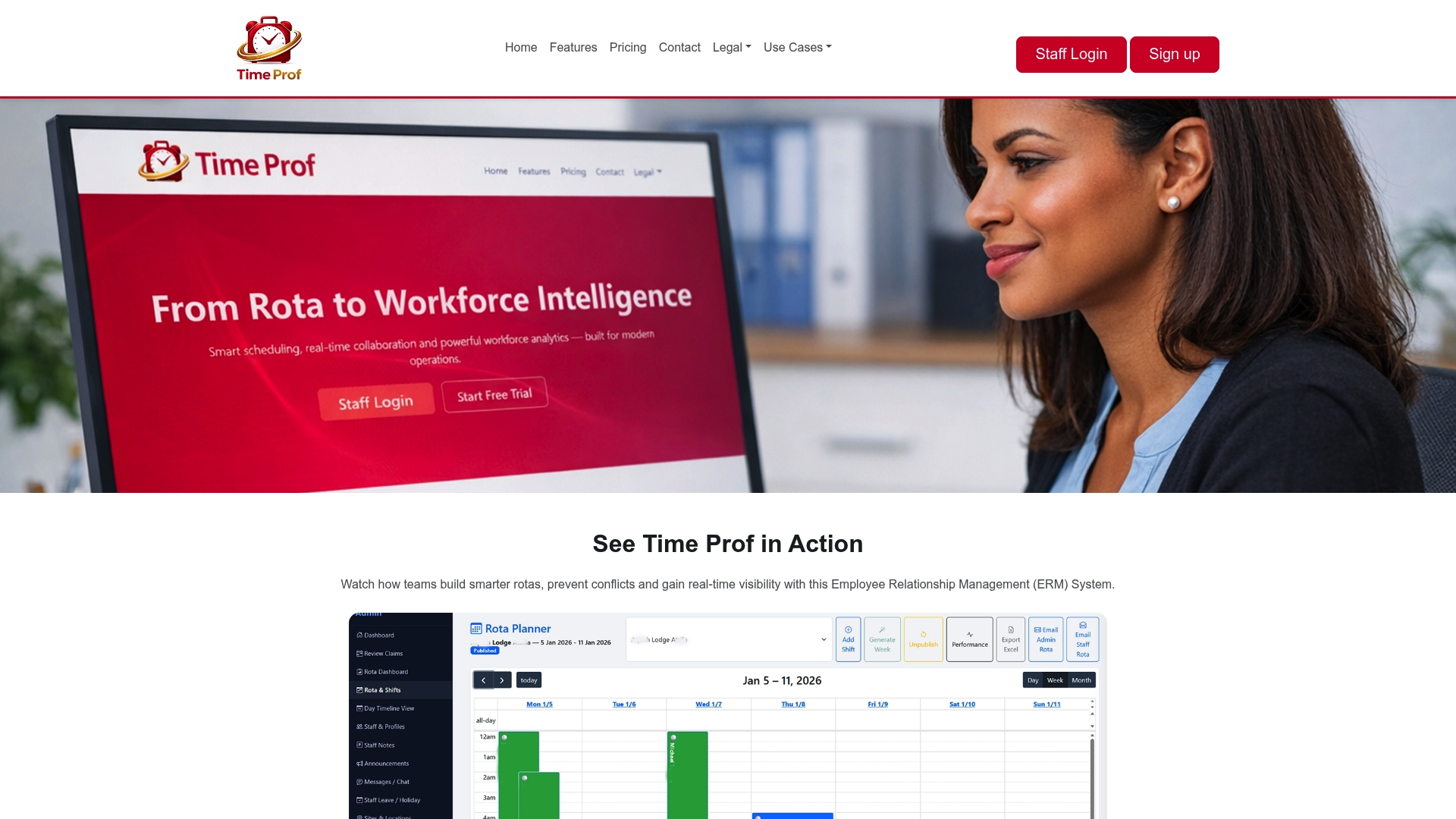
Beyond the swap workflow itself, some platforms pair geofenced clock-in with real-time notifications, so an approved swap actually gets confirmed when the covering employee arrives on site, not assumed. For businesses that also want dedicated geofenced time-tracking hardware, Clock-Me’s GPS-based solutions cover that ground well too. Timeprof’s own shift scheduling compliance guide walks through the legal groundwork in more detail. If you manage a rota of any size and want to see how these controls fit your business, visit Timeprof to book a demo and get policy templates you can adapt straight away.
Sources
- Fatigue and human factors - HSE
- If employment contract changes are agreed - Acas
- Shift swap policy example: rules and requirements - LegalClarity
FAQ
Can an employer say no to a shift swap request?
Yes. A shift swap is a request, not an entitlement, and a manager can decline one that fails eligibility, overtime, or rest-period checks, provided the refusal is applied consistently across staff.
What is the best way to refuse a shift swap?
Refuse in writing with a specific reason, such as a certification mismatch or an overtime breach, rather than a verbal “no,” so the decision is documented and consistent with how other requests are handled.
Can employees swap shifts with anyone they choose?
Only with someone who meets the eligibility rules for that shift, meaning matching role, certification, and skill-tags, and only once a manager has approved the specific swap.
What counts as a good reason to swap a shift?
Personal appointments, family responsibilities, illness recovery, and scheduling conflicts are all common valid reasons; most policies do not require a reason at all, only that both employees consent and the swap passes compliance checks.
How long should a business keep shift swap records?
Keep signed swap forms and digital records for as long as other payroll and working-time records are retained, since they serve as evidence of voluntariness and compliance if a dispute or audit arises.