Shift planning best practices: a manager's guide
Discover essential shift planning best practices that improve workforce scheduling, reduce absenteeism, and engage your team effectively.

Shift planning best practices are the methods and principles that ensure effective workforce scheduling by balancing operational demands with employee needs. Applied consistently, they reduce absenteeism, cut unnecessary overtime, and keep teams engaged across every sector from healthcare to retail. The industry term for this discipline is workforce scheduling, and it covers everything from rota design to fatigue management and legal compliance. Managers who follow structured scheduling principles report fewer last-minute gaps, lower staff turnover, and measurably better coverage. Timeprof exists precisely to support this kind of disciplined, data-driven approach to managing people and shifts.
1. What are the shift planning best practices every manager needs?
Effective shift scheduling starts with one non-negotiable principle: give your team enough notice. Experts recommend at least four weeks’ advance notice for significant schedule changes, with six to eight weeks being the ideal window. That lead time lets staff arrange childcare, medical appointments, and personal commitments without resentment building up.
Beyond notice periods, the core practices are:
- Match staffing levels to demand. Use historical sales data, footfall records, or production logs to forecast busy periods. Schedule your heaviest cover when the work actually arrives, not based on habit.
- Build fairness into the rota. Rotate unpopular shifts, such as nights and weekends, equitably. Staff notice immediately when the same people always draw the short straw.
- Comply with rest period rules. UK working time regulations require a minimum 11-hour rest between shifts. Build this into your scheduling logic from day one, not as an afterthought.
- Create a backup plan. Identify a pool of flexible or part-time staff who can cover absences at short notice. A rota with no contingency is a rota that will fail.
- Communicate schedules through one channel. Posting rotas in multiple places, a noticeboard, a group chat, and a spreadsheet, creates confusion. One authoritative source removes the “I didn’t see it” problem entirely.
Pro Tip: Publish your rota in a shared digital system so staff can view it on their phones at any time. This alone cuts the volume of “what am I working?” messages by a significant margin.
2. How to give employees a genuine say in their schedules

Employee choice schedules consistently outperform management-imposed rotas on acceptance, retention, and performance. The mechanism is straightforward: present two or three management-approved schedule options and let staff vote or self-select. You retain operational control while staff gain a sense of ownership.
Collecting preference data does not require complex tools. A simple availability form, updated monthly, gives you the raw material to build rotas that work for both sides. Focus groups or brief one-to-one conversations reveal preferences that a form alone will miss, such as a team member who needs every other Friday off for a caring responsibility.
Self-selection also reduces the resistance that typically follows a schedule change. When staff feel heard, they are far more likely to cover gaps voluntarily and flag problems early rather than quietly disengaging.
3. How to optimise shift schedules for 24/7 operations
Continuous operations in manufacturing, logistics, healthcare, and security face a specific structural challenge: you cannot simply add more shifts without accounting for fatigue, handover quality, and crew sustainability. Sustainable 24/7 operations typically require a ratio of 4.2 to 5 crews per position. That ratio ensures adequate cover while giving each crew sufficient rest and annual leave.
Running a 24/7 operation as an integrated system, rather than a collection of separate shifts, delivers measurable capacity and cost advantages. The key elements are:
- Standardised handover procedures. Every shift must end with a structured briefing to the incoming team. Verbal-only handovers lose critical information.
- Consistent supervision quality. Train all shift supervisors to the same standard. Performance gaps between day and night supervisors are one of the most common causes of quality variation.
- Overlapping shift windows. A 15-to-30-minute overlap between outgoing and incoming shifts allows for real-time problem-solving and reduces the risk of issues falling through the gap.
- Shift-specific performance tracking. Track productivity, quality, and safety by shift rather than by day. This reveals whether problems are systemic or shift-specific, and supports root cause analysis.
| Shift pattern element | Why it matters |
|---|---|
| Crew-to-position ratio (4.2–5) | Prevents fatigue and maintains continuity |
| Standardised handover | Preserves operational knowledge between shifts |
| Overlapping shift windows | Reduces information loss at transition points |
| Shift-level performance data | Identifies root causes of variation |
4. Which tools and techniques support effective shift management?
Digital scheduling software is the single biggest upgrade most managers can make. Modern scheduling tools handle accurate assignments, compliance checks, communication, and data collection in one place. Spreadsheets cannot flag a rest-period breach automatically, send a notification to a staff member, or show you real-time coverage gaps across multiple sites.
The practical toolkit for effective shift management includes:
- Availability and preference surveys. Run these monthly or quarterly. Stale preference data produces rotas that no longer reflect your team’s actual lives.
- Historical demand analysis. Pull data from your point-of-sale system, production logs, or call records to identify your true peak periods. Gut instinct is a poor substitute.
- Absenteeism tracking. Knowing which days and shifts carry the highest absence risk lets you schedule additional cover proactively rather than reactively.
- Trial periods for new patterns. Before rolling out a new shift structure across the whole team, pilot it with a volunteer group. Their feedback will surface problems you did not anticipate.
- Key metrics dashboard. Monitor coverage rate, overtime hours, and staff satisfaction scores on a regular cycle. What gets measured gets managed.
Pro Tip: Proactively rotate shift patterns quarterly rather than waiting for complaints. Regular rotation prevents resentment from accumulating around unpopular shifts and signals to your team that fairness is a genuine priority.
5. What common mistakes undermine shift planning?
The most damaging shift planning mistake is ignoring the knock-on effects of changing shift lengths or rotation patterns. Shift pattern changes affect underlying HR policies including holiday pay calculations, overtime thresholds, and vacation accrual. Managers who change from eight-hour to twelve-hour shifts without auditing these policies first often discover payroll errors months later.
A second major pitfall is ignoring employee preferences. Poor scheduling that disregards staff input causes conflicts, increases turnover, and disrupts operations. The cost of replacing a single experienced team member typically far exceeds the administrative effort of collecting and acting on preference data.
Overstaffing is also a genuine problem, not just understaffing. Lean operations often perform better running slightly short with controlled overtime, which carries a 5–10% cost premium, than overstaffing, which wastes full wages and benefits on idle workers. The goal is calibrated coverage, not maximum headcount.
Finally, poor communication compounds every other problem. Publishing a rota late, updating it without notifying affected staff, or relying on informal messages creates conflict and erodes trust. A clear, single-channel communication process is not a luxury. It is a basic operational requirement.
6. How to adapt shift planning to different industries and team sizes
Shift schedule patterns affect recruitment, retention, cost, and satisfaction differently depending on the sector and workforce profile. A twelve-hour rotating pattern suits a manufacturing plant with a stable, experienced workforce. The same pattern applied to a hospitality team with high turnover and variable demand would create chaos.
Small teams need simpler systems. A ten-person team can manage with a shared digital rota and a monthly availability form. A 200-person multi-site operation needs automated scheduling rules, skills-based assignment, and real-time visibility across locations. The principle is the same; the tooling must match the scale.
Industry-specific legal requirements also shape what is possible. Healthcare settings in the UK must comply with NHS terms and conditions alongside Working Time Regulations. Security firms must account for SIA licensing requirements when assigning roles. Retail managers must plan around statutory rest breaks and the National Living Wage uplift for unsocial hours. Build these constraints into your scheduling logic before you design the rota, not after.
Workforce demographics matter too. A team with a high proportion of students needs flexibility around term times and exam periods. A team with many parents needs predictable patterns and adequate notice. Understanding your workforce’s actual life circumstances is the foundation of a rota that people will commit to.
Key takeaways
Effective shift planning requires advance notice, employee involvement, and data-driven scheduling to sustain coverage, compliance, and team morale across any industry.
| Point | Details |
|---|---|
| Give adequate notice | Publish rotas six to eight weeks ahead to let staff plan personal commitments. |
| Involve employees in scheduling | Offering approved schedule options builds acceptance and reduces turnover. |
| Match staffing to actual demand | Use historical data, not habit, to place cover where the work genuinely falls. |
| Audit HR policies before changing patterns | Shift length changes affect holiday pay and overtime calculations. |
| Track performance by shift | Shift-level data reveals root causes of variation and supports continuous improvement. |
What I have learned from watching managers get shift planning wrong
The most consistent pattern I see is managers treating the rota as an administrative task rather than a management decision. They build the schedule around what is convenient for the business and then wonder why staff disengage, call in sick at higher rates, and leave within twelve months.
The managers who get this right do something different. They treat the rota as a communication tool. A well-built schedule tells your team: we know your availability, we have planned fairly, and we respect your time outside work. That message, delivered consistently through a reliable system, builds the kind of trust that makes a team resilient when things go wrong.
The data backs this up. Employee self-selection of schedules builds buy-in that management-imposed plans rarely achieve, even when the self-selected option looks less efficient on paper. The efficiency gains from a schedule your team actually commits to outweigh the theoretical gains from a perfectly optimised rota that nobody trusts.
My honest advice: start with your team’s availability data, build the fairest rota you can within your operational constraints, publish it early, and then review what happened. Repeat that cycle quarterly. The managers who do this consistently do not have perfect rotas. They have teams that trust the process, and that is worth far more.
— Michael
Timeprof: workforce scheduling built for managers who need it to work
Managers who apply the principles in this article quickly hit the limits of spreadsheets and group chats. Timeprof brings rota planning, availability management, open shift claims, skills-based assignment, and real-time notifications into one mobile-friendly platform. It replaces the fragmented tools that create errors and communication gaps with a single source of truth for your entire workforce.
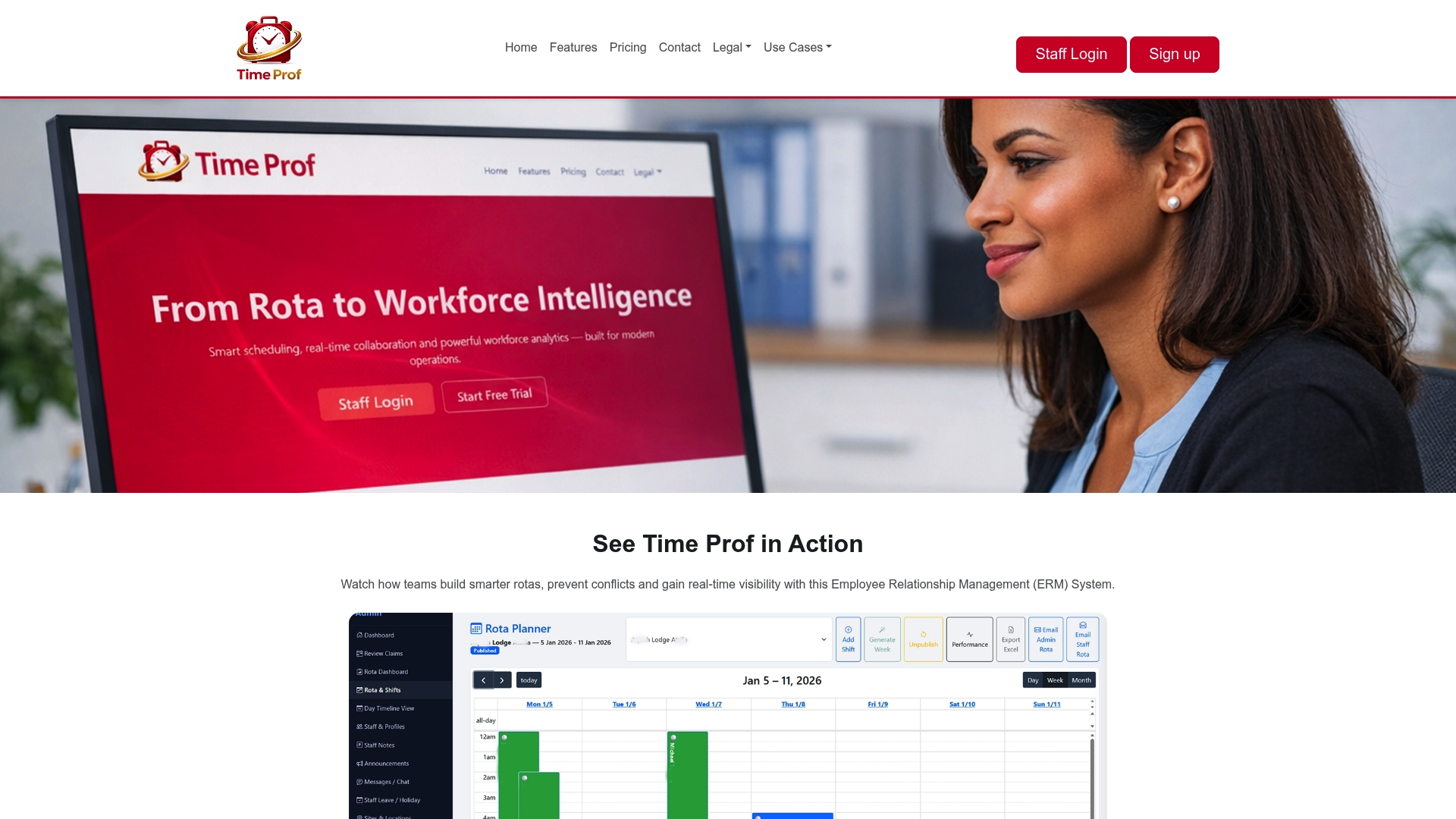
Timeprof supports advance notice through instant rota publication, collects staff availability digitally, and gives managers live visibility across sites and shifts. Its geofenced clock-in, audit-ready compliance reporting, and workforce intelligence tools are built for organisations in care, healthcare, security, hospitality, cleaning, and retail. If your current scheduling process relies on manual workarounds, Timeprof is worth a closer look.
FAQ
What is the recommended notice period for shift schedule changes?
Experts recommend a minimum of four weeks’ notice for significant schedule changes, with six to eight weeks being the optimal window. This gives staff enough time to arrange personal commitments without disruption.
How many crews are needed for sustainable 24/7 operations?
Sustainable round-the-clock operations typically require 4.2 to 5 crews per position. This ratio maintains continuity while allowing adequate rest and annual leave for each crew.
Why do employee-choice schedules outperform imposed rotas?
When staff select from management-approved options, they feel ownership over their schedule. This reduces resistance, lowers turnover, and produces better attendance and performance outcomes.
What HR policies must managers review before changing shift patterns?
Managers must audit holiday pay calculations, overtime thresholds, and vacation accrual rules before changing shift lengths or rotation patterns. Failing to do so often causes payroll errors that surface months after the change.
What metrics should managers track to evaluate shift planning effectiveness?
Track coverage rate, overtime hours, absenteeism by shift, and staff satisfaction scores. Monitoring these at the shift level, rather than the daily or weekly level, reveals the root causes of performance variation.