A shift handover checklist that actually transfers responsibility
Discover how an effective shift handover checklist ensures clear communication, accountability, and a smooth transition between teams.
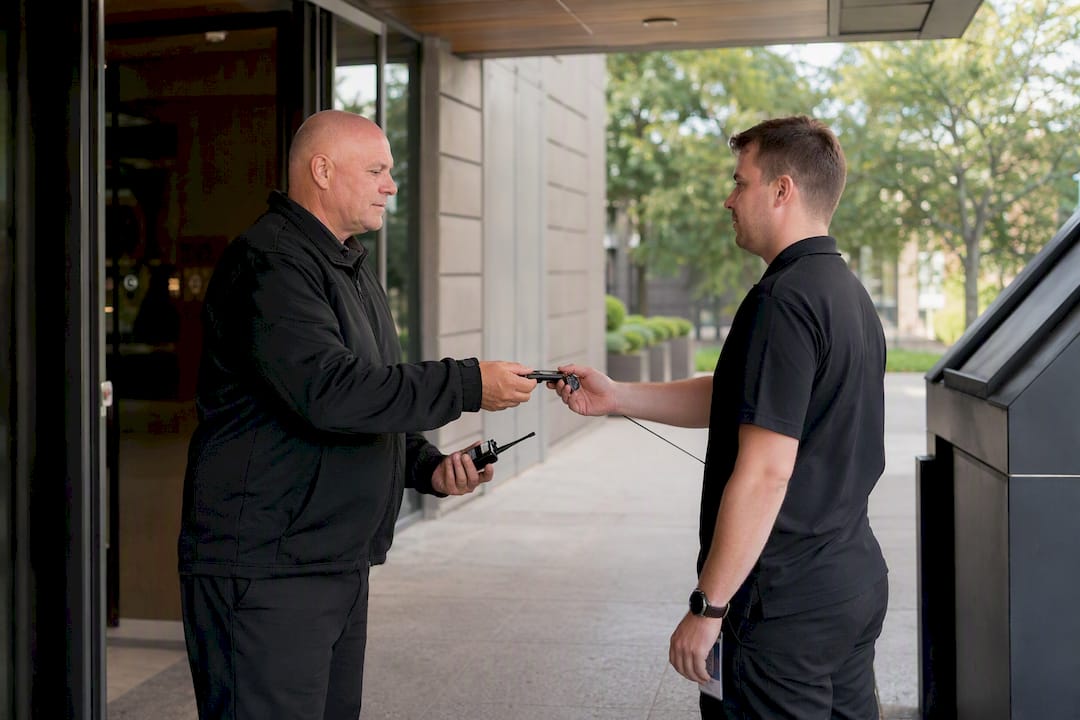
A shift handover checklist is the set of fields and steps a team uses to transfer accountability for jobs, hazards and equipment from one shift to the next, backed by a written record and a live conversation. The rule underneath it never changes: a note left on a desk is not a handover. HSE guidance is blunt about this. It has to combine a concise written record with a face-to-face, two-way briefing, and the incoming lead has to verify what matters and sign to confirm they’ve taken it on.
Three things separate a handover that works from one that quietly fails:
- A structured format such as SBAR (Situation, Background, Assessment, Recommendation) so nothing critical gets buried
- A target window of 15 to 20 minutes, tight enough to force focus, long enough to cover what matters
- Written sign-off from the incoming supervisor, not a nod or a “yep, got it”
Key Takeaways
A shift handover checklist only works when a written record, a live two-way briefing and incoming sign-off happen together, every time, without exception.
| Point | Details |
|---|---|
| Combine written and verbal | Pair a concise written record with a face-to-face briefing so nothing relies on memory alone. |
| Use SBAR structure | Lead with the situation and exceptions first, not a chronological recap of the whole shift. |
| Cap the meeting at 15 to 20 minutes | Keep the overlap focused on outstanding items and safety-critical checks, not small talk. |
| Require named owners and deadlines | Every outstanding action needs a person and a date attached, never a vague “follow up later”. |
| Get signature before anyone leaves | The outgoing lead stays until the incoming lead signs and the time is recorded. |
| Move to a platform when scale demands it | Time Prof enforces required fields, sign-offs and audit trails once paper checklists stop scaling. |
Table of Contents
- What should a shift handover checklist include?
- A shift handover template you can copy and use today
- How do you run an effective shift handover meeting?
- How does the checklist change by industry?
- Where do shift handovers usually go wrong?
- What role can digital tools play in shift handovers?
- How to know if you should move handovers into a digital tool
- Get shift handovers under control with Time Prof
- Sources
What should a shift handover checklist include?
Most handover failures aren’t dramatic. They’re a missing sentence about a permit that’s still live, or a customer complaint nobody wrote down. A checklist earns its keep by forcing the outgoing shift to answer specific questions rather than freewheel through whatever comes to mind first.
The fields that matter most, based on HSE’s research into handover structure, are:
- Job status — what’s finished, what’s in progress, with ticket or work order references attached
- Safety — incidents, near misses, and every permit or isolation still active, named specifically rather than “usual precautions taken”
- Equipment status — what’s down, what’s degraded, and the expected time back in service
- Customer or site updates — access notes, complaints, special instructions for the next shift
- Priority actions — each one with an owner, a deadline, and an escalation route if it slips
- Evidence — photos, part numbers, work order IDs, anything that lets someone check the claim later
Skip any of these and you’re not shortening the handover. You’re moving the risk onto the next shift without telling them.
A shift handover template you can copy and use today
You don’t need custom software to run a decent handover. You need a format that forces the right information out and doesn’t let anyone skip the uncomfortable bits. Here’s a structure built around SBAR that fits comfortably inside 15 to 20 minutes, drawn from the kind of exception-first templates SmartQHSE recommends.
- Header — date, shift (day/night), outgoing and incoming names, department or site
- Situation — one line summarising the state of play (“Line 3 down since 02:14, isolation in place”)
- Background/Status — production or job status, what’s complete, what’s outstanding
- Equipment — condition, faults, parts on order, expected return to service
- Safety and permits — active isolations, permit numbers, incidents or near misses logged during the shift
- Outstanding actions — a short table: action, owner, deadline, escalation contact
- Evidence — photo references, work order numbers, ticket IDs attached or linked
- Sign-off — outgoing signature and time, incoming signature and time, plus a line confirming verbal briefing happened
Pro Tip: Write every outstanding action as if the incoming supervisor knows nothing about your shift. “Follow up on compressor” tells them nothing. “Compressor 2 tripped at 14:20, awaiting engineer callback, escalate to Dave if not resolved by 18:00” tells them what to do.
Keep the form to one page wherever possible. A handover record that takes longer to write than the meeting itself won’t survive a busy week, and a template with too many optional fields drifts into the same vague notes it was meant to replace.
How do you run an effective shift handover meeting?
The checklist is only half the job. The meeting is where accountability actually changes hands, and it needs a rhythm, not a free-for-all.
- Log as you go. Don’t reconstruct the shift from memory at 21:55. Note incidents, status changes and completed jobs as they happen, so the written record is nearly finished before the overlap meeting starts.
- Open with the situation, not the small talk. Using an SBAR structure, research on handover reports found this exception-first approach keeps the briefing focused on what’s changed and what’s broken, rather than a chronological retelling of the whole shift.
- Verify safety-critical items in person. If there’s a live isolation or an unsafe asset, the incoming supervisor should physically check it rather than take the outgoing shift’s word for it. Template guidance from MapTrack is explicit that these items are non-negotiable, not optional extras.
- Get the signature before anyone leaves. The outgoing lead doesn’t clock off until the incoming lead has signed and the time is recorded. This single rule closes more accountability gaps than any amount of extra paperwork.
- Set escalation rules for anything unresolved. If a critical item can’t be closed at handover, name who gets called and by when, and put that in writing.
The target window matters more than it sounds. Sticking to roughly 15 to 20 minutes isn’t about rushing, it’s about forcing exception-first reporting instead of a rambling recap, which is exactly what keeps critical items from getting lost in the noise.
How does the checklist change by industry?
The core rules hold everywhere. What changes is which fields carry the most weight.
- Manufacturing: live isolations, permit numbers, and specific asset IDs come first, since a missed isolation is the most common source of serious incident.
- Care and healthcare: patient or client-specific notes, medication changes, and safeguarding flags take priority, often alongside a structured checklist approach similar to task management used by care teams.
- Field and mobile teams: site access details, customer contacts, photos and vehicle notes matter more here because there’s no shared physical space for the next person to just look around, a point Workhint’s field team guidance makes well.
- IT and NOC teams: incident ticket IDs, current service degradation status, and on-call contact details are the backbone, particularly for 24/7 support operations where a gap in coverage has immediate customer impact.
Where do shift handovers usually go wrong?
Most breakdowns trace back to five habits, and every one of them has a straightforward fix.
- Vague notes. “Keep an eye on it” isn’t an instruction. Require a named owner and a deadline on every open item, no exceptions.
- Verbal-only handovers. Memory fades and stories drift. A written record plus incoming acknowledgement stops disputes about what was actually said.
- Late documentation. Writing the report from memory after the shift ends produces gaps. Log events as they happen and finish the record before the overlap meeting.
- Handovers that run long. A 45-minute ramble buries the two things that actually matter. Cap it at 15 to 20 minutes and lead with exceptions, not chronology.
- Skipped verification. Taking someone’s word for a live isolation is how incidents happen. Insist on a physical check for anything safety-critical.
Pro Tip: If your handovers keep running long, it’s almost always because the template has no forced structure. Add a one-line “situation” field at the top and most teams naturally start leading with what’s urgent instead of what’s chronological.
What role can digital tools play in shift handovers?
A paper checklist works until the volume of shifts, sites or compliance requirements outgrows it. That’s usually the point where a platform earns its place, not before.
- Shift-linked tasks attach outstanding actions directly to the next shift, so nothing depends on someone remembering to check a folder.
- Required fields stop a handover being marked complete while safety or equipment sections are left blank.
- Digital signatures and timestamps create the sign-off record automatically, rather than relying on someone remembering to get a signature.
- Photo and document attachments build the audit trail that written logs alone can’t always provide.
- Escalation triggers flag unresolved critical items to a manager automatically, closing the gap where late documentation usually creeps in.
Time Prof builds these behaviours into shift-linked task management so handover items don’t rely on memory or a shared spreadsheet.
How to know if you should move handovers into a digital tool
The judgement that matters here is simple: a well-run paper checklist beats a badly configured digital one every time, but paper stops scaling the moment your operation gets complex enough that no single person can hold the full picture. If you’re running one site with a stable team, a printed template pinned to the wall will do the job for years. The conventional advice usually stops there, treating digital handover tools as a nice-to-have for anyone beyond that.

That’s where I think most guidance undersells the risk. The moment you add a second site, a night shift with different supervisors, or any regulatory requirement to prove a handover happened, paper becomes the weak point rather than the safe option. You can’t audit a Post-it note. You can’t prove a signature happened at a specific time if it’s scrawled at the bottom of a form nobody photographed.
Prioritise the sign-off and the audit trail before you worry about anything else. A beautifully designed checklist with no enforced signature is worse than a scruffy one that nobody can skip. Get accountability locked down first, then worry about polish.
— Michael
Get shift handovers under control with Time Prof
Timeprof gives multi-shift operations a single place to run the handover checklist above without relying on paper forms that go missing or WhatsApp messages that get scrolled past. Shift-linked tasks carry outstanding actions straight into the next shift with an owner and a deadline attached, required fields stop a handover being marked complete while a safety section sits blank, and digital sign-off timestamps the moment the incoming supervisor takes accountability.
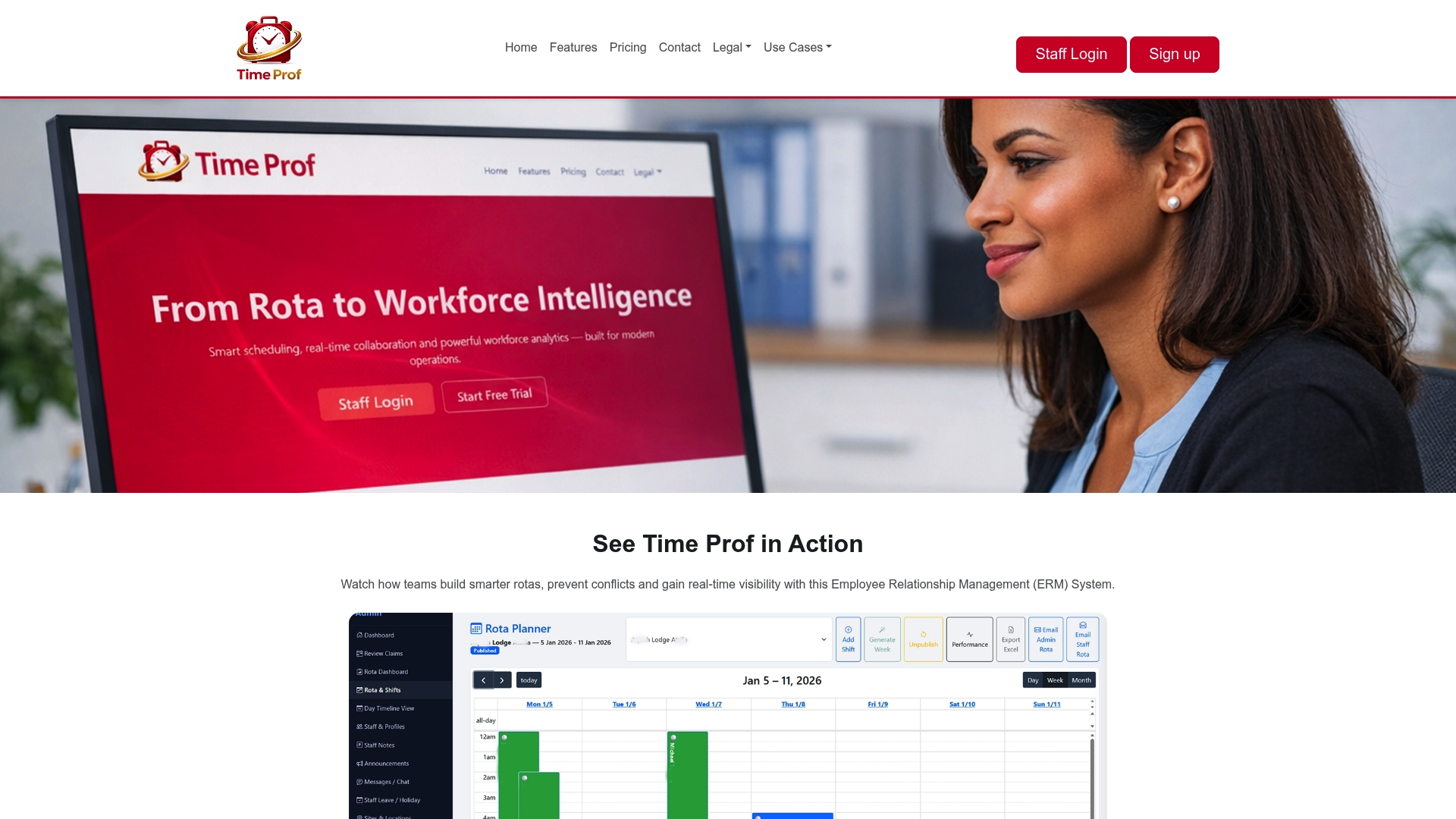
For managers juggling several sites or a regulator that expects proof a handover happened, that audit trail matters more than any template design choice. If your current process depends on someone remembering to send a message before they clock off, it’s worth seeing how Time Prof handles it instead. Start a trial and run your next shift change through it directly.
Sources
- Shift handover — HSE
- HSE research: human factors reports (CRR02324)
- Free Shift Handover Report Template | SmartQHSE
- Shift Handover Report Template | MapTrack