28 Day, 42 Hour Week: When Managers Should Choose Continental Shifts
Managers' decision guide to continental shift patterns: clear pick rules, copyable 28 day 42 hour schedule maths, step by step implementation and software...

The continental shift pattern is a fast-rotating 24/7 rota that uses four teams to cover three 8-hour shifts across a 28-day cycle, averaging around 42 hours a week per employee. It suits operations that run around the clock and can staff four separate crews. It doesn’t suit small teams: if you can’t cover four rotating units, the fatigue and absence risks tend to outweigh the benefits.
TL;DR:
- The continental shift pattern requires four teams to cover three 8-hour shifts in a 28-day cycle, averaging about 42 hours per week per employee, suitable for 24/7 operations.
- Favour the 8-hour version if commuting costs are low or shift fatigue is a primary concern, but prefer 2-2-3 or DuPont patterns for fewer handovers and longer rest periods.
- Implementing the rota demands careful planning of constraints, testing coverage with staggered copies, and monitoring unfilled shifts, overtime, and staff wellbeing monthly.
- Using scheduling software automates fatigue checks, open shift claims, and compliance reporting, making the system more reliable and easier to manage.
- Apply the pattern only if your operation has a full four-team headcount and predictable staffing, piloting it first to avoid fatigue issues and staffing gaps.
Table of Contents
- What is a continental shift pattern and how does the rotation work?
- Continental vs 2-2-3 vs DuPont: which rotation fits?
- Which industries run continental rotas, and how many staff do you need?
- What are the pros and cons of continental shift patterns?
- How do you implement a continental rota step by step?
- How does scheduling software support a continental rota?
- When should you actually use a continental pattern?
- See how Time Prof handles your rota before you commit
- Sources
- FAQ
What is a continental shift pattern and how does the rotation work?
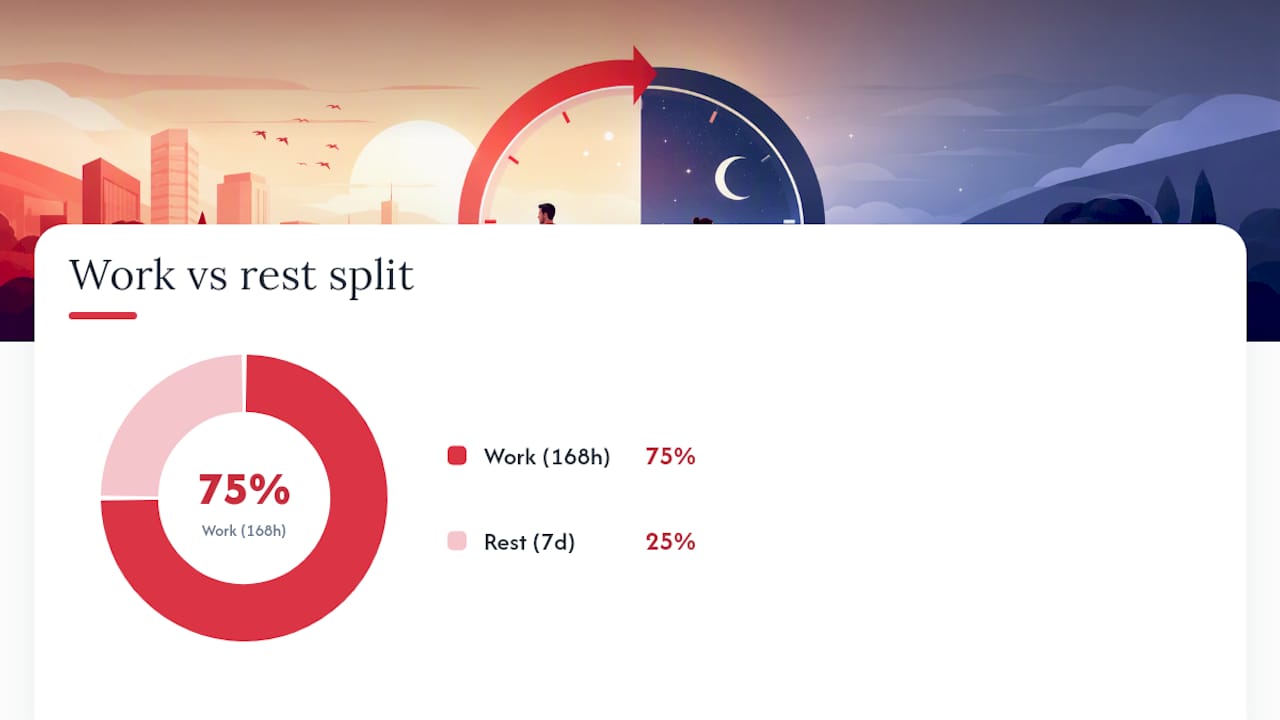
The rotation follows a simple logic once you see it laid out. Each team works two morning shifts, two afternoon shifts, and two night shifts in a row, then gets time off, then repeats. Over a full 28-day cycle, one team works 21 shifts totalling 168 hours, which averages to roughly 42 hours a week.
Forward rotation, moving from mornings to afternoons to nights rather than the reverse, is the version most guides recommend, because it lines up better with how the body’s clock naturally shifts forward rather than backward.
A single team’s 28-day sequence looks something like this:
Four teams are staggered a week apart, so at any given moment one team rests while the other three cover mornings, afternoons and nights. That stagger is what makes the whole thing work.
- Total shifts per team, per cycle: a set number
- Hours per cycle: a total number corresponding to the shifts
- Average weekly hours: typically around a standard work week
- Heaviest weeks: those containing back-to-back night blocks where fatigue accumulates fastest
Continental vs 2-2-3 vs DuPont: which rotation fits?
Once you understand the classic 8-hour continental pattern, the natural next question is whether a 12-hour variant would serve you better. Plenty of operations run a 12-hour continental structure that compresses the same logic into fewer, longer shifts, cutting the number of handovers but lengthening each one.
The most common 12-hour alternative is the 2-2-3 (Panama) schedule: a 14-day cycle of seven 12-hour shifts that also averages 42 hours a week, but delivers a three-day weekend every fortnight. DuPont, another rotating pattern, stretches over 28 days with a mix of shift lengths and a longer stretch of consecutive days off built in.
- 8-hour classic continental: more shifts, more commutes, shorter individual fatigue exposure per shift
- 12-hour continental/2-2-3: fewer handovers, longer single-shift fatigue exposure, better work-life blocks
- DuPont: longest recovery blocks but more complex to administer
Favour the 8-hour version where commuting is cheap and shift-length fatigue is the bigger concern. Favour 2-2-3 or DuPont where you want fewer weekly handovers and staff value longer stretches off.
Which industries run continental rotas, and how many staff do you need?
Continental shifts turn up wherever production or service delivery can’t stop: manufacturing lines, logistics hubs, healthcare wards, security operations, and utilities. National data on the UK’s overnight economy shows substantial night-time workforce activity across hospitality, healthcare and logistics, which is exactly the kind of demand this rota was built to answer.
The four-team structure is also its biggest constraint. Sector guides are blunt about it: if you can’t field four rotating crews, continental probably isn’t viable in its pure form.
Working through the maths for a single role:
- If a shift needs three staff on duty at any time, you need three staff per team.
- Four teams mean roughly 12 staff dedicated to that one role.
- Add leave and sickness allowance, typically 10 to 15% more, and you’re closer to 13 or 14 heads for genuine resilience.
Smaller operations often blend continental principles with part-time staff, bank workers, or a hybrid pattern that doesn’t demand four full permanent crews.
What are the pros and cons of continental shift patterns?
Continental scheduling earns its popularity for good reasons, but it carries predictable friction too. Weighing both sides honestly means pairing each drawback with a fix rather than pretending the pattern is problem-free.
The upside:
- Predictable, repeating coverage that staff can plan their lives around after the first cycle
- Shorter 8-hour shifts (in the classic version) reduce single-shift fatigue compared with 12-hour blocks
- Equitable rotation, since every team eventually works every shift type
The friction:
- Frequent rotation between mornings, afternoons and nights disrupts sleep for some staff
- More shift changes mean more handovers, and more chances for information to fall through the cracks
- Covering sickness is harder than in simpler patterns, because there’s no slack team sitting idle
- Overtime spikes when someone can’t work, since cover often comes from a team already resting
Mitigation tactics that actually work:
- Build fatigue checks into the rota design, flagging any run of consecutive nights before it’s published
- Set a minimum rest window after night blocks, rather than leaving it to informal judgement
- Cross-train staff across roles so absence cover doesn’t rely on one specialist
- Run an open shift pool so unfilled slots get claimed quickly instead of forced onto tired staff
- Document your overtime policy so managers apply it consistently, not case by case
Pro Tip: Track unfilled shifts and overtime hours separately from sickness data. Mixing them hides whether your rota design or your absence management is the real problem.
How do you implement a continental rota step by step?
Moving from theory to a working rota is where most of the real decisions happen. Treat it as a sequence, not a single planning session.
1. Define your constraints first. Work out minimum cover per shift, map your skills matrix, and check the Working Time Regulations for minimum daily and weekly rest requirements before you draft anything.
2. Model the 28-day draft. Build one team’s sequence, then stagger three copies a week apart to check coverage. Test it against real calendar dates to catch bank holiday clashes early.
3. Consult before you publish. Share the draft with staff, agree handover standards in writing, and set a clear policy for claiming open shifts.
4. Plan for absence before it happens. Decide how open shifts get filled, whether bank staff are available, and what triggers overtime versus escalation to a manager.
5. Monitor and review.
- Unfilled shifts per month
- Overtime hours per team
- Sickness rate by shift type
- Safety incidents by time of day
Review these monthly for the first two cycles, then quarterly once the pattern stabilises. A rota planning guide with worked templates can shortcut the drafting stage considerably.
How does scheduling software support a continental rota?
Three problems recur once continental goes live: modelling the rotation accurately, covering absence without chaos, and proving compliance when someone asks. Software built for shift work addresses all three directly rather than through spreadsheets patched together after the fact.

Intelligent scheduling software generates a 28-day draft against your skills matrix, then flags fatigue risk automatically, catching the consecutive-night runs a manual fatigue check might miss on a busy Friday.
Practical workflows managers adopt:
- Generate the 28-day draft, then run an automated fatigue check before publishing
- Publish with open shift claims switched on, so absence cover fills itself where possible
- Pull compliance and overtime reports straight from the live rota, not a separate spreadsheet
When should you actually use a continental pattern?
Use continental when you have genuine four-team headcount and a real need for shorter shifts with fair, predictable rotation. It rewards operations that can commit to the structure fully, not those bolting it onto a team of eight.
Avoid it where absence is unpredictable, headcount is marginal, or staff are simply unsuited to night rotation. Forcing the pattern onto a team that can’t support it just moves the fatigue problem from the shift itself to the manager covering gaps.
If you’re unsure, pilot it. Run one site or one role through a single 28-day cycle, track unfilled shifts and staff feedback, and decide from real data rather than a spreadsheet projection.
— Michael
See how Time Prof handles your rota before you commit
Time Prof turns the checklist above, fatigue checks, open shift claims, compliance reporting, into a live system rather than a manual process someone has to remember to run every month.
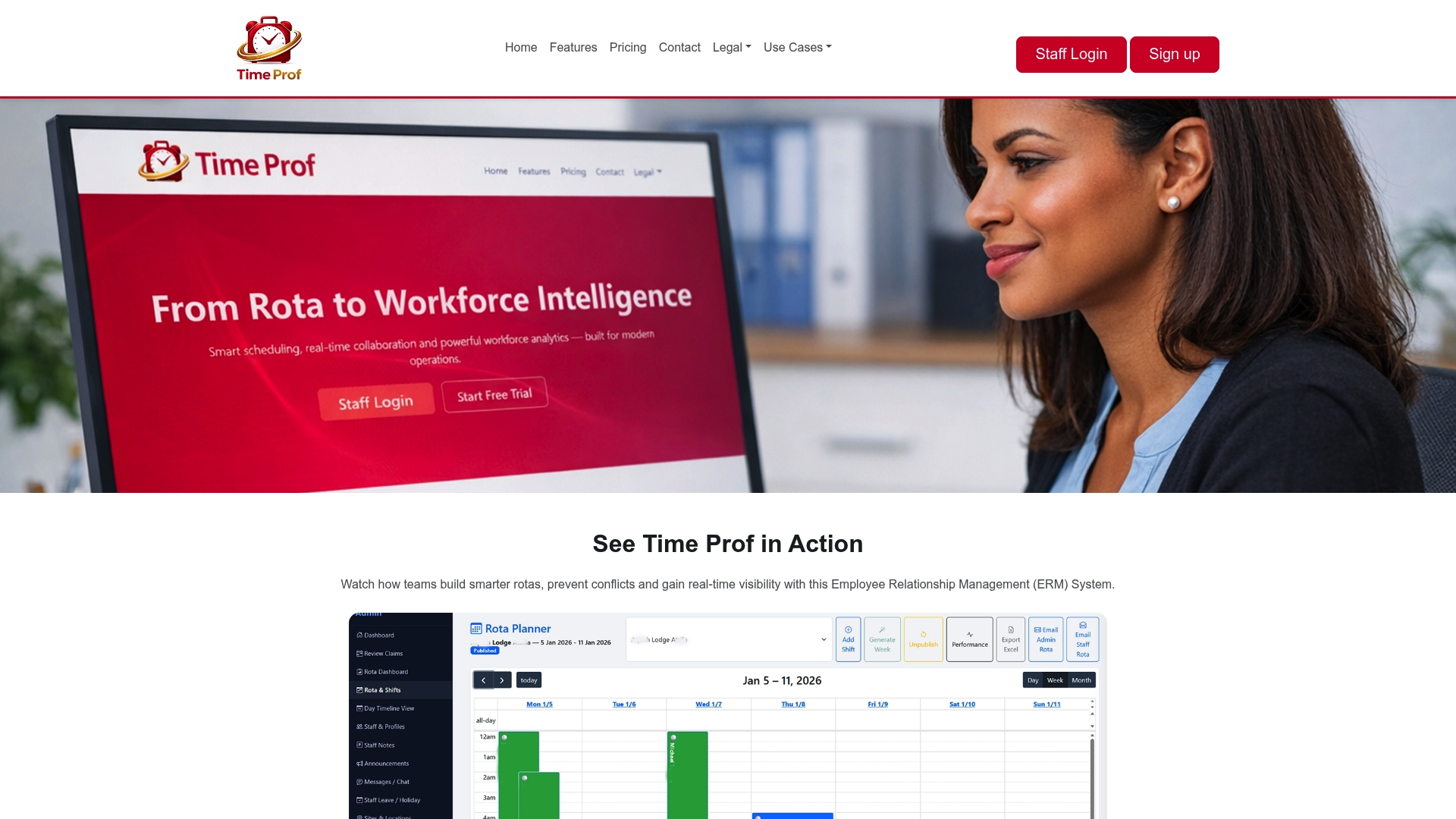
A demo walks through building your own 28-day continental draft, seeing the fatigue-risk flags in action, and watching an open shift get claimed and filled without a single phone call. You’ll also see the automated compliance reporting that saves managers from chasing paper trails when rest-period questions come up. For sites also running attendance verification alongside rota design, integrations such as PresenceFlow can tie clock-in data into the same picture.
Book a demo of Time Prof and bring your own headcount numbers. It’s the fastest way to know whether continental will actually work for your operation before you publish a single rota.
Sources
For legal minimums on rest and working hours, the Working Time Regulations set the baseline every UK rota must respect. For workforce context, the ONS night-time economy analysis shows where 24/7 staffing demand concentrates. For hands-on schedule building, the continental shift pattern generator and the 2-2-3 schedule guide both offer downloadable calendars worth testing against your own dates.
- Continental shift pattern: Guide + free calendar generator
- 2-2-3 schedule: Complete guide + free calendar generator
- The night-time economy and workforce in the UK — Office for National Statistics
- Legislation
FAQ
What are continental shifts?
A continental shift pattern is a 28-day rotating rota that uses four teams to cover three 8-hour shifts (morning, afternoon, night) around the clock, averaging roughly 42 hours a week per person.
What is a 2-2-3 continental work schedule?
The 2-2-3 schedule is a 14-day rotation of 12-hour shifts averaging around 42 hours a week, providing staff with a three-day weekend every other fortnight. It’s a common 12-hour alternative to the classic 8-hour continental pattern.
What is the healthiest shift pattern to work?
Forward-rotating patterns, moving from mornings to afternoons to nights rather than backwards, are generally considered easier on the body’s circadian rhythm than backward rotation, though individual tolerance varies. Continental’s forward structure is one reason it’s widely used despite its handover frequency.
What is the 7-3-7-4 shift pattern?
This is a variant rotation notation describing a specific sequence of consecutive working and rest days rather than a single standardised industry pattern; exact definitions vary between employers, so always confirm the specific day count and shift lengths your organisation means before modelling a rota around it.