The role of ERM in workforce retention: 2026 guide
Discover the role of ERM in workforce retention. Learn how strategic employee relations boost loyalty and reduce turnover in 2026.

Employee Relationship Management (ERM) is the strategic practice of building trust-based connections between employees and their organisation to increase loyalty, job satisfaction, and retention. The role of ERM in workforce retention is not peripheral. Structured ERM practices produce markedly better retention outcomes than isolated HR policies across every sector. Where traditional HR focuses on compliance and process, ERM focuses on the relationship itself. For HR professionals and organisational leaders, that distinction determines whether your best people stay or leave.
How does ERM reduce operational friction that drives employee attrition?
Operational friction is the single most underestimated driver of voluntary turnover. Chaotic last-minute schedule changes and unclear role expectations push employees out faster than any pay gap. Perks and bonuses do not compensate for the daily stress of not knowing when you are working or what is expected of you. ERM addresses this at the source.
ERM mechanisms that directly reduce attrition-causing friction include:
- Schedule stability. Employees who receive consistent, predictable rotas report lower stress and higher commitment. Unpredictable scheduling is a retention risk, particularly in care, hospitality, and retail.
- Role clarity. Clear job expectations reduce the cognitive load that erodes engagement over time. ERM frameworks formalise this through regular one-to-ones and documented role definitions.
- Manager coordination. ERM requires managers to communicate proactively, not reactively. When staff hear about changes through official channels before rumour, trust builds.
- Preference alignment. Matching shift patterns to employee availability and skills signals respect. Shift stability and preference alignment linked directly to daily workforce planning reduce friction and increase retention.
Workforce stability does not require identical schedules every week. It requires consistent communication and role clarity so that employees can plan their lives around work without anxiety. That predictability is what ERM delivers operationally.
Pro Tip: Audit your last 90 days of schedule changes. If more than 20% were made within 48 hours of a shift, you have a structural friction problem that no engagement survey will fix.

Organisations that address common staff scheduling challenges through ERM-aligned systems see measurable reductions in short-notice absences and resignation rates.
What modern ERM practices go beyond traditional engagement surveys?
Traditional engagement surveys are retrospective. They tell you how employees felt last quarter. By the time results are analysed and acted upon, the employees you most needed to retain have already handed in their notice. Modern ERM replaces this lag with forward-looking intelligence.
Stay interviews conducted at least annually provide actionable insight into what will keep an employee for the next six months. They surface concerns before they become decisions. Exit surveys, by contrast, confirm what you already lost.
| Method | Focus | Timing | Outcome |
|---|---|---|---|
| Exit survey | Why employees left | After resignation | Confirms past failure |
| Engagement survey | Current sentiment | Quarterly or annual | Identifies broad trends |
| Stay interview | Future intentions | At least annually | Prevents imminent attrition |
| Workforce persona analysis | Segment-level needs | Ongoing | Targets retention by role type |
Workforce persona analysis takes ERM a step further. Rather than treating all staff as a single audience, it segments employees by role, tenure, life stage, and career aspiration. A newly qualified nurse and a 15-year veteran in the same ward have different retention triggers. ERM that recognises this difference outperforms one-size-fits-all approaches.
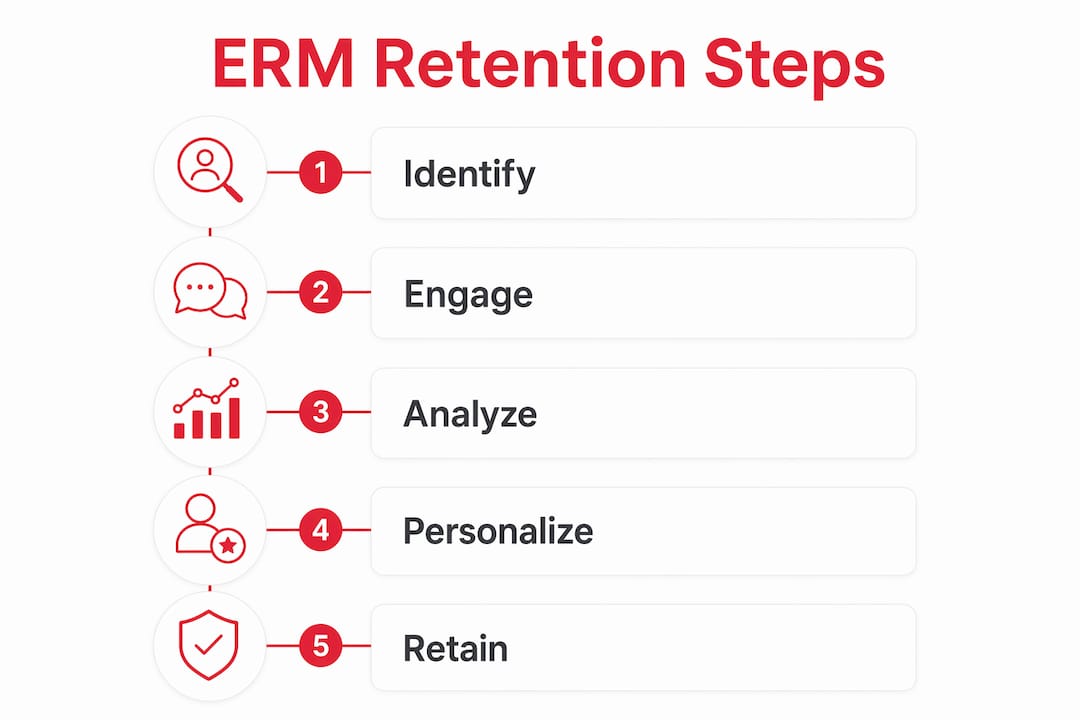
Quantitative KPIs matter here too. Linking ERM metrics to operational data, such as shift fill rates, manager response times, and absence patterns, turns retention from a feeling into a measurable outcome. Leadership, growth opportunities, and flexibility consistently outrank benefits additions as retention levers. Organisations that measure these factors directly, rather than inferring them from satisfaction scores, act faster and more precisely.
Pro Tip: Run stay interviews with your highest-performing staff first, not your most disengaged. Retaining top performers has a greater organisational impact than recovering those already checked out.
Why must workforce retention strategies be systemic rather than isolated HR policies?
Fragmented HR policies fail because employees experience their organisation as a whole, not as a collection of separate initiatives. A generous parental leave policy means little if the manager who approves it is inconsistent or unsupportive. Integrated HR systems where hiring, compensation, advancement, and retention function coherently outperform organisations that treat each as a standalone programme.
Harvard Business Review research confirms that enduring talent retention requires talent practices to operate as a system. Each element reinforces the others. When onboarding sets clear expectations, compensation reflects contribution, and advancement pathways are visible, employees build a long-term relationship with the organisation rather than a transactional one.
The framework below shows how ERM connects each HR function into a retention system:
| HR function | ERM connection | Retention impact |
|---|---|---|
| Recruitment | Realistic job previews and values alignment | Reduces early attrition within 90 days |
| Onboarding | Structured role clarity and manager introductions | Builds psychological safety from day one |
| Compensation | Transparent pay bands linked to contribution | Reduces resentment and pay-driven exits |
| Development | Career pathway visibility and skills investment | Increases long-term commitment |
| Scheduling | Preference alignment and shift stability | Reduces daily friction and burnout |
| Communication | Consistent, proactive manager dialogue | Builds trust and reduces uncertainty |
The ERM impact on employee retention multiplies when these functions are connected. A promotion that comes with no pay clarity, no updated role expectations, and no manager support is not a retention win. It is a delayed resignation. Systems thinking prevents these gaps.
How can personalised ERM strategies meet evolving employee needs?
Personalised ERM is the direction every leading organisation is moving towards. By 2026, adaptive workplaces that align with individual life stages and career aspirations have become the standard for organisations serious about retention. The shift from uniform HR policy to individual employee experience is not a trend. It is a structural change in how retention works.
Personalised ERM strategies that consistently improve retention include:
- Flexible work arrangements. Flexibility is not simply remote working. It includes shift swapping, compressed hours, and availability-based scheduling. Employees who can shape their schedule around life commitments stay longer.
- Leadership modelling. When senior leaders visibly use flexible arrangements, it signals that flexibility is genuinely available, not just written in a policy document. Leadership behaviour sets the cultural norm.
- Career aspiration alignment. ERM conversations that connect daily work to long-term goals give employees a reason to stay. A care worker who knows their employer supports their path to a senior role is far less likely to leave for a marginal pay increase elsewhere.
- Life stage sensitivity. A parent of young children, a carer for an elderly relative, and a recent graduate have different needs. ERM frameworks that account for life stage reduce the friction points that cause otherwise satisfied employees to leave.
- Employee participation. Involving staff in scheduling decisions, policy reviews, and team planning increases ownership. Employees who shape their environment are more invested in it.
How scheduling affects carer retention illustrates this clearly in the care sector, where personalised shift planning directly correlates with lower turnover rates. The same principle applies across security, retail, and hospitality.
The most common mistake organisations make is treating personalisation as a benefit add-on rather than a structural feature of ERM. Personalisation is not a perk. It is the mechanism by which ERM meets employees where they actually are.
Key takeaways
ERM reduces workforce attrition most effectively when it operates as an integrated system connecting scheduling stability, role clarity, personalised experiences, and forward-looking retention intelligence.
| Point | Details |
|---|---|
| ERM is foundational, not supplementary | Structured ERM practices produce better retention outcomes than isolated HR policies across all sectors. |
| Operational friction drives attrition | Schedule instability and unclear role expectations are primary turnover causes that ERM directly addresses. |
| Stay interviews outperform exit surveys | Annual stay interviews surface retention risks before employees decide to leave, giving HR time to act. |
| Systems beat policies | Integrated HR functions connecting hiring, development, and scheduling outperform fragmented initiatives. |
| Personalisation is structural | Adaptive ERM aligned to individual life stages and career goals is a retention mechanism, not a benefit. |
Why I think most organisations are solving retention backwards
After working with HR leaders across care, hospitality, and retail, the pattern I see most often is this: an organisation notices rising turnover, commissions an engagement survey, receives results six weeks later, and launches a new benefits package. Turnover continues. The cycle repeats.
The problem is not the benefits. Many leaders add perks hoping to solve turnover, but the real drivers are leadership quality, career growth, and flexibility. These are harder to measure and harder to change, so organisations default to what is easy to announce.
ERM forces a different conversation. It asks: what is the daily experience of working here? Is the manager consistent? Does the employee know what is expected? Can they predict their schedule two weeks out? These questions feel operational, not strategic. That is exactly why they get ignored at board level and why frontline turnover stays high.
The organisations I have seen genuinely improve retention do one thing differently. They connect ERM KPIs directly to shift planning best practices and operational data. They treat retention as a measurable output of daily management behaviour, not an annual HR initiative. When a manager’s shift fill rate, response time to staff messages, and schedule change frequency are visible in a dashboard, ERM stops being abstract. It becomes accountable.
The uncomfortable truth is that most turnover is predictable and preventable. The data is usually there. The will to act on it, consistently and systematically, is what separates organisations that retain their best people from those that perpetually recruit to replace them.
— Michael
Timeprof supports ERM-driven retention with workforce intelligence
Timeprof is built for exactly the operational challenges that drive turnover. Chaotic scheduling, disconnected communication, and invisible workforce data are the friction points ERM must eliminate. Timeprof brings scheduling, attendance, messaging, and staff management into one platform so managers have a single, reliable source of information.
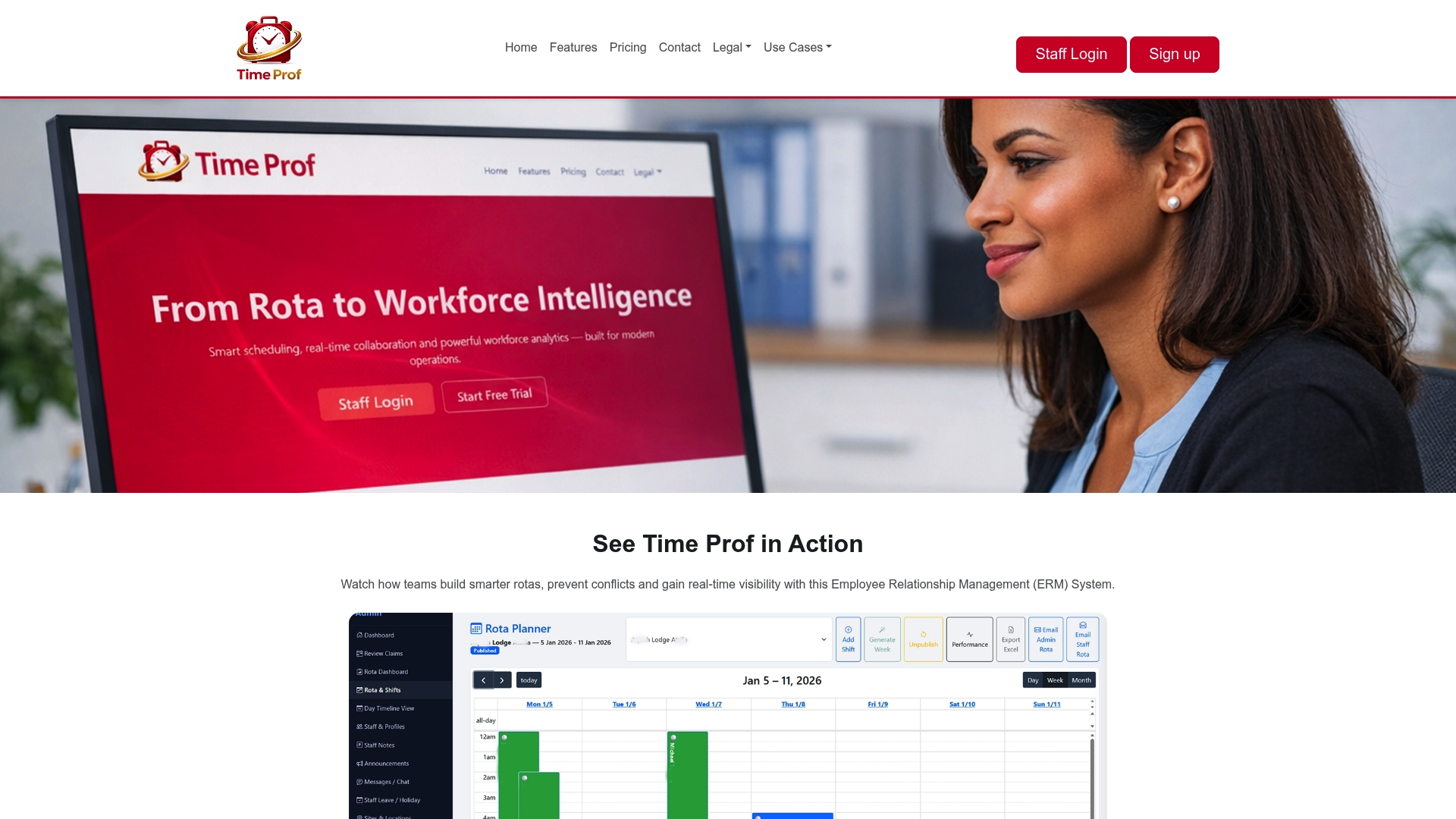
With built-in Staff and Employee Relationship Management (SRM/ERM), geofenced clock-in, real-time notifications, and a mobile-first staff portal, Timeprof gives both managers and staff the transparency that builds trust. From care and healthcare to security, hospitality, and retail, Timeprof helps organisations move from reactive rostering to workforce intelligence that actively supports retention. If operational friction is costing you good people, Timeprof removes it.
FAQ
What is ERM in the context of workforce retention?
ERM, or Employee Relationship Management, is the structured practice of building trust-based connections between employees and their organisation. It improves retention by addressing role clarity, schedule stability, and consistent communication.
How does ERM differ from standard HR management?
Standard HR management focuses on process and compliance. ERM focuses on the ongoing relationship between employee and employer, using tools like stay interviews, preference-aligned scheduling, and career development conversations to reduce attrition.
What is a stay interview and why does it matter for retention?
A stay interview is a structured conversation with a current employee to understand what would keep them in the organisation over the next six months. Stay interviews conducted annually provide forward-looking retention intelligence that exit surveys cannot.
Why do fragmented HR policies fail to retain employees?
Fragmented policies fail because employees experience the organisation as a whole. Integrated talent systems connecting hiring, compensation, advancement, and scheduling outperform disconnected initiatives.
How can scheduling directly affect employee retention?
Unpredictable scheduling creates daily stress that erodes commitment regardless of pay or benefits. Consistent, preference-aligned rotas are a core ERM mechanism for reducing scheduling-driven turnover across frontline sectors.