Common staff scheduling challenges: a manager's guide
Learn how to tackle common staff scheduling challenges. Discover effective solutions to improve attendance, reduce burnout, and optimize your roster.

Staff scheduling problems are defined as the operational failures that occur when shift patterns, attendance forecasting, and workforce planning fall out of alignment. Inconsistent start times increase no-show rates by over 32%, and more than 25% of workers experience clopening shifts with fewer than 11 hours of rest between them. These are not minor inconveniences. They drive burnout, inflate costs, and push good staff out the door. The industry benchmark for predictive scheduling, recommended by workforce management standards, is a minimum of 14 days’ advance notice. Most managers are not meeting it, and the consequences show up in every rota.
1. What are the most common staff scheduling challenges?
Workforce scheduling, also known as rostering or rota management, breaks down in predictable ways. Knowing which problems appear most often is the first step to fixing them.
- Inconsistent start times. Varying shift start times from week to week confuse staff and erode reliability. Start-time inconsistency drives no-shows up by more than 32%.
- Poor attendance forecasting. Scheduling based on headcount assumptions rather than actual attendance data causes both understaffing and overstaffing. Either outcome is costly.
- Shift swapping without oversight. Informal swaps create gaps that managers do not know about until it is too late. Unmanaged shift swapping disrupts workflow and redistributes workload unfairly.
- No-shows and last-minute absences. A single unplanned absence in a lean rota can force mandatory overtime on colleagues, raising costs and resentment simultaneously.
- Clopening shifts. A clopening occurs when a staff member closes one evening and opens the next morning. Over a quarter of workers face this regularly, and the fatigue risk is significant.
- Ignoring employee preferences. Rotas built purely around operational need, without any consideration of personal availability or circadian patterns, produce higher turnover.
- Scheduling conflicts from overload. Assigning staff at 100% capacity leaves no room for unplanned events. When something goes wrong, the whole rota collapses.
Pro Tip: Build your rota to 80% of team capacity. That buffer absorbs unplanned absences and non-billable activities without forcing last-minute scrambles.
2. How does inconsistent scheduling damage retention and costs?

Erratic rotas are one of the most underestimated drivers of staff turnover. When shift patterns change unpredictably, staff cannot plan childcare, second jobs, or personal commitments. The result is disengagement, and eventually resignation.
The financial damage compounds quickly. Mandatory overtime triggered by poor forecasting costs significantly more per hour than standard pay. Recruitment and onboarding for a replacement member of staff typically costs far more than the investment required to retain the original employee through better scheduling.
“Predictive scheduling with employee input is a high-return retention investment.” Giving staff at least 14 days’ advance notice of their shifts reduces conflicts and improves planning for both sides.
Clopening shifts sit at the centre of this problem. Fewer than 11 hours between shifts is the threshold below which fatigue risk rises sharply. Managers who allow clopening shifts regularly will see burnout rates climb and attendance reliability fall.
| Scheduling problem | Operational impact |
|---|---|
| Inconsistent start times | No-show rates rise by over 32% |
| Clopening shifts | Burnout and high turnover |
| Headcount-only forecasting | Understaffing or costly overtime |
| No advance notice | Poor staff planning and absenteeism |
| Unmanaged shift swaps | Workflow disruption and unfair workload |
3. What strategies reduce understaffing and scheduling conflicts?
Understaffing is almost always a forecasting failure, not a headcount failure. The fix is not hiring more people. It is scheduling the people you have more accurately.
Use actual attendance data, not headcount assumptions
Scheduling based on headcount rather than real attendance patterns is the single most common and costly mistake in rota management. Attendance data reveals who actually shows up, when, and how reliably. Build your rota from that baseline, not from the number of names on a contract.
Give staff at least 14 days’ notice
Predictive scheduling with employee input reduces conflicts and improves retention. Fourteen days is the minimum-recommended notice period. It gives staff time to flag conflicts before they become no-shows, and it gives managers time to adjust without panic.
Incorporate circadian rhythm and personal preferences
Research into shift scheduling shows that balancing fatigue with circadian alignment and personal preferences produces better outcomes than pure rotation logic. Night shifts, early starts, and back-to-back long days all carry fatigue penalties. Acknowledging these in your rota design reduces absenteeism and improves performance.
Make shift swapping transparent and formal
Informal swaps are invisible to managers until something goes wrong. A formal swap process, whether through a platform or a structured approval chain, keeps the rota accurate and the workload fairly distributed.
Pro Tip: Plan rotas at 80% capacity to absorb unplanned absences and non-billable time. A fully loaded rota has no resilience.
4. How can technology help solve employee scheduling issues?
Technology does not replace good scheduling judgement. It removes the manual errors and communication gaps that make good judgement impossible to act on.
The most useful features in a workforce scheduling platform fall into four categories.
- Automated rota building. Systems that draw on attendance history, staff availability, and skills data produce rotas that reflect reality rather than assumptions. This directly addresses the headcount forecasting problem.
- Real-time absence management. When a staff member calls in sick, a platform with live absence tracking can flag the gap immediately and surface available cover from staff who have indicated availability or claimed open shifts.
- Shift claiming and open shifts. Publishing unfilled shifts to eligible staff, who can then claim them, reduces the manager’s burden and gives staff agency over their hours.
- Mobile notifications and messaging. Schedule changes communicated through SMS or an app reach staff faster and more reliably than phone calls or paper notices. This is particularly important for last-minute changes.
- Geofenced clock-in. Verifying that staff are physically on site when they clock in removes a category of attendance error that is invisible in paper-based systems.
Timeprof brings all of these features into one platform, connecting rota planning, attendance tracking, shift claims, and staff communication in a single system. Managers working across care, hospitality, security, and retail use it to replace the spreadsheets and phone calls that create most of the problems described in this article.
Entry-level scheduling apps typically cover basic rota building and absence logging. Enterprise platforms add multi-site dashboards, compliance reporting, skills matching, and audit records. The right choice depends on the complexity of your operation, not the size of your team.
5. What best practices reduce fatigue and balance workloads fairly?
Fatigue-aware scheduling is not a wellbeing initiative. It is an operational decision that directly affects attendance, performance, and retention.
“Allowing shifts outside expected rotation, with preference consideration, increases the number of viable schedules and reduces fatigue penalties.” Research into bi-objective shift scheduling confirms that rigid rotation logic produces worse outcomes than flexible, preference-informed approaches.
The core practices that reduce fatigue and improve fairness are straightforward.
- Enforce a minimum 11-hour rest gap between shifts. This is the threshold below which fatigue risk rises sharply. Clopening shifts routinely breach it.
- Avoid consecutive night shifts where possible. Circadian disruption accumulates across consecutive nights. Rotating staff through night shifts with adequate recovery time reduces the cumulative effect.
- Distribute unsociable hours fairly. Weekend shifts, bank holidays, and late finishes should be spread across the team rather than falling repeatedly on the same individuals.
- Limit consecutive long-day blocks. A run of five or six consecutive long shifts, even within contracted hours, builds fatigue that affects the following week’s performance.
- Review workload balance regularly. A rota that looks balanced on paper may not reflect actual task load. Shift-linked task data, where available, gives a more accurate picture.
Balancing mathematical scheduling goals with human factors produces better staff satisfaction and greater operational flexibility. The maths of a rota is the easy part. The human factors are where most scheduling problems actually originate.
Key takeaways
Effective staff scheduling requires attendance-based forecasting, advance notice, and fatigue-aware rota design. Headcount assumptions and informal processes are the root cause of most scheduling failures.
| Point | Details |
|---|---|
| Use attendance data | Build rotas from actual attendance patterns, not headcount assumptions, to avoid costly overtime. |
| Give 14 days’ notice | Advance notice reduces no-shows and gives staff time to flag conflicts before they become gaps. |
| Enforce rest gaps | A minimum of 11 hours between shifts is the threshold for managing fatigue and reducing burnout. |
| Plan at 80% capacity | A capacity buffer absorbs unplanned absences without forcing last-minute scrambles. |
| Formalise shift swaps | Transparent swap processes keep the rota accurate and workload fairly distributed. |
What I have learned from watching managers get scheduling wrong
Most scheduling failures I have seen share a common root: managers treat the rota as a logistics puzzle rather than a people management tool. They fill shifts. They do not think about who is filling them, or what that person’s week looks like.
The biggest mistake is not the clopening shift or the last-minute rota. It is the assumption that staff will absorb whatever the rota demands because they are contracted to do so. That assumption is expensive. Turnover, overtime, and absenteeism are all, in large part, scheduling problems in disguise.
The research is clear. Employee input and advance notice in schedule planning improves retention and reduces conflicts. Yet most managers I have spoken to still build rotas in isolation, publish them late, and then wonder why staff disengage.
The shift to data-driven forecasting is not complicated. It requires using the attendance information you already have, rather than defaulting to the headcount on a spreadsheet. That one change, combined with 14 days’ notice and a formal swap process, resolves the majority of the problems described in this article.
Scheduling is not a back-office task. It is one of the most direct levers a manager has over staff satisfaction, operational cost, and service quality. Treat it accordingly.
— Michael
How Timeprof helps managers take control of their rotas
Timeprof is built for managers who are tired of chasing cover, correcting rota errors, and managing staff through a combination of spreadsheets and group chats.
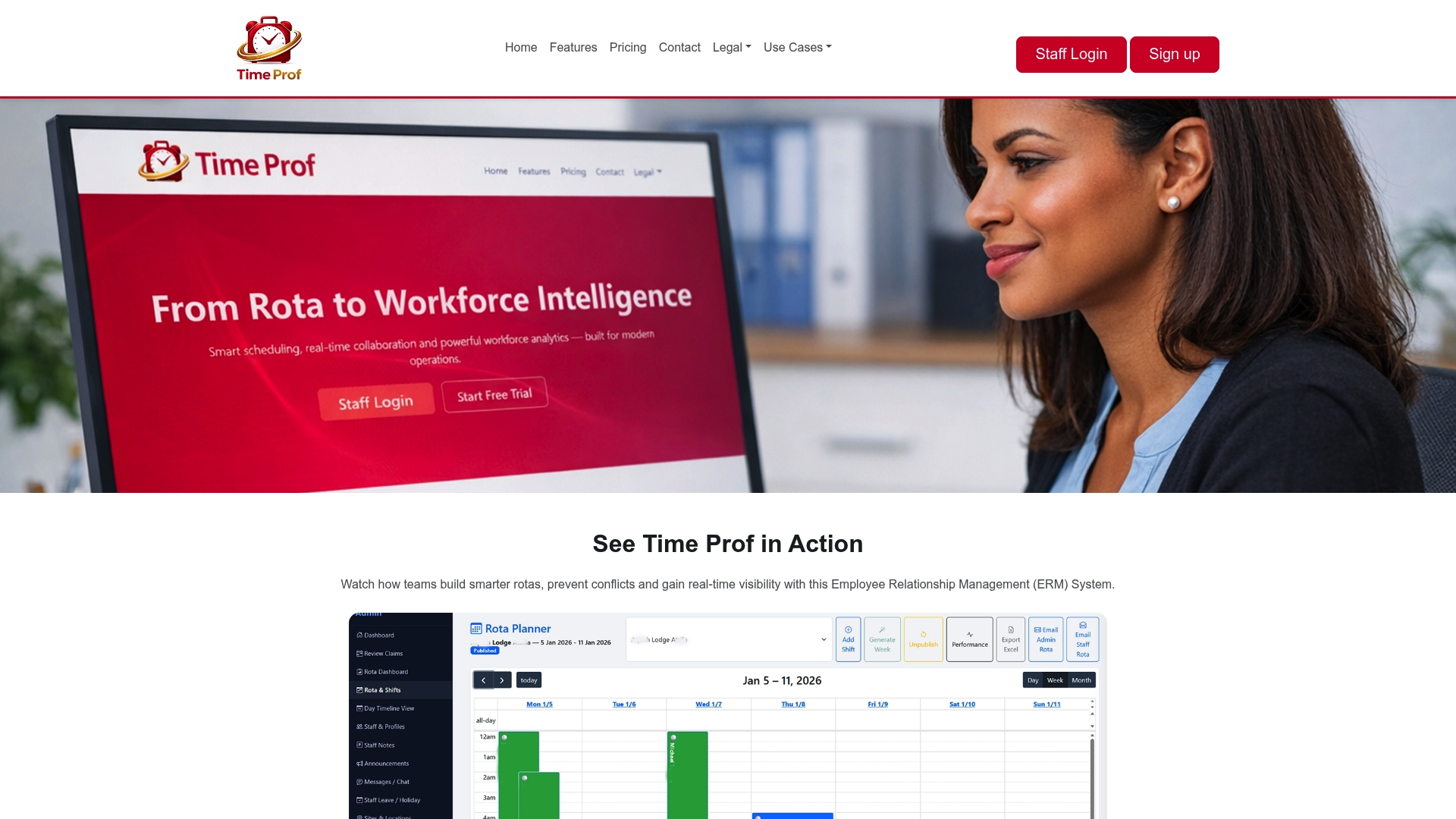
The platform connects rota planning, attendance tracking, open shifts, annual leave, and staff communication in one place. Managers get real-time visibility across sites. Staff get a mobile portal where they can view shifts, log availability, and claim open shifts without a phone call. Timeprof’s AI-powered scheduling accounts for skills, availability, and fatigue risk, so the rota you publish is one that actually works. If you are ready to move beyond manual rostering, explore Timeprof’s workforce platform and see how it fits your operation.
FAQ
What causes the most common staff scheduling challenges?
Poor attendance forecasting and inconsistent shift patterns are the primary causes. Scheduling based on headcount assumptions rather than actual attendance data leads directly to understaffing, overtime, and no-shows.
How much notice should managers give staff for shift schedules?
The recommended minimum is 14 days. Giving staff at least two weeks’ notice reduces no-shows and allows staff to flag conflicts before they become operational problems.
What is a clopening shift and why does it matter?
A clopening shift occurs when a staff member closes one evening and opens the following morning, leaving fewer than 11 hours of rest. Over 25% of workers experience this regularly, and it is a leading cause of fatigue and burnout.
How does technology improve staff scheduling?
Scheduling platforms reduce errors by automating rota building from attendance data, managing shift swaps formally, and sending real-time notifications to staff. This removes the communication gaps that cause most last-minute scheduling failures.
What is the best way to prevent scheduling conflicts?
Planning rotas at 80% of team capacity, giving 14 days’ advance notice, and formalising the shift swap process together address the three most common sources of scheduling conflict.