What is real-time workforce control? A manager's guide
Discover what is real-time workforce control and how it enhances staffing efficiency. Learn to adjust in real-time for optimal operations.

Real-time workforce control is defined as the continuous monitoring and dynamic adjustment of staffing levels during the operating day to match fluctuating demand. It extends traditional weekly planning into intraday windows, using live data, automated workflows, and AI-driven decision-making to keep operations aligned with actual conditions. Where conventional workforce management relies on static rotas and retrospective reports, real-time control acts before problems occur. Managers gain visibility into attendance, coverage gaps, and service demand as they happen, not hours later. Platforms such as Timeprof are built precisely for this shift, replacing disconnected spreadsheets with a single, live source of operational truth.
What is real-time workforce control and how does it differ from traditional management?
Real-time workforce control is the practice of continuously monitoring and adjusting staffing levels during the operating day to match fluctuating demand. Traditional workforce management produces a rota at the start of the week and reviews performance after the fact. Real-time control closes that gap by acting within the same operating window that problems arise.
The standard industry term for this discipline is intraday workforce management, sometimes called dynamic workforce orchestration. Both terms describe the same core capability: aligning headcount to demand in minutes rather than days. Key performance indicators tracked under this model include forecast accuracy, schedule adherence, and labour cost per unit of output.

Three foundational concepts separate real-time control from conventional planning. First, data must be live, not batch-updated. Second, the system must trigger automated responses, not just surface alerts. Third, managers must shift from watching dashboards to orchestrating outcomes. Without all three, you have monitoring, not control.
How does real-time workforce control operate within modern businesses?
Real-time control depends on integrating live data streams from multiple sources simultaneously. Time-capture systems, CRM platforms, and point-of-sale terminals all feed signals into a central workforce management engine. The engine uses those signals to reforecast demand intraday and identify gaps before they affect service levels.
Event-driven automation sits at the heart of this process. When a gap is detected, the system triggers shift-fill workflows scored by urgency, proximity, skills, and staff availability. A manager does not need to phone around. The system surfaces the right person, at the right site, at the right time. This is the difference between reacting to a problem and preventing it.
Intraday reforecasting is the mechanism that keeps plans current. Rather than running a single forecast at the start of the day, the system recalculates demand every few minutes as conditions change. A sudden spike in customer volume, an unexpected absence, or a delayed delivery all trigger a recalculation. The rota adjusts accordingly.
The distinction between monitoring and orchestrating is critical. Monitoring tells you what is happening. Orchestrating acts on it. Real-time visibility transforms workforce management from retrospective reporting to proactive control, enabling instant detection of gaps and dynamic shift adjustments that improve payroll accuracy and audit readiness.
Pro Tip: Never treat batch-updated data as live data. If your system refreshes every 15 or 30 minutes, you are not running real-time control. You are running delayed monitoring. Effective integrated “data plumbing” feeds live signals directly into the workforce management engine, and that architectural distinction changes every downstream decision.
What are the primary benefits of real-time workforce control?
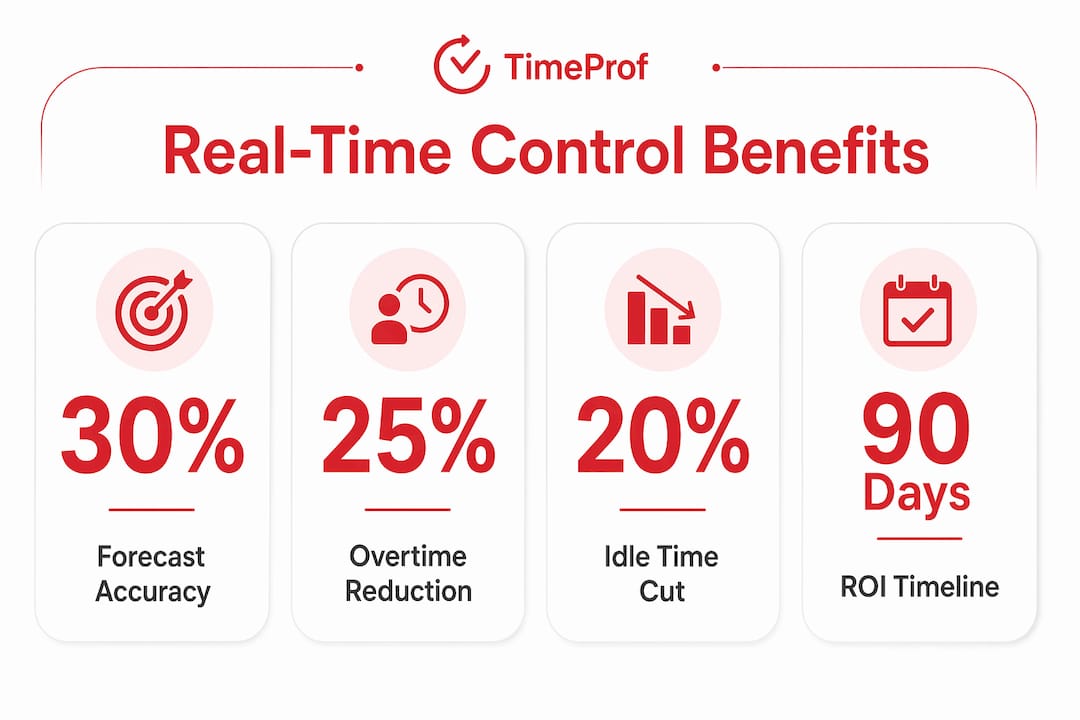
The operational benefits are measurable and appear quickly. Dynamic workforce orchestration delivers ROI within as little as 90 days, with tracked improvements in forecast accuracy, schedule adherence, and labour cost per unit of output. That speed of return makes the business case straightforward for most operations teams.
The table below summarises the most commonly reported performance shifts when organisations move from static planning to real-time control.
| Performance area | Before real-time control | After real-time control |
|---|---|---|
| Forecast accuracy | Reliant on weekly static plans | Intraday reforecasting against live demand |
| Schedule adherence | Reviewed retrospectively | Monitored and corrected within the operating day |
| Overtime and idle time | Difficult to detect until payroll | Identified and acted on within seconds |
| Payroll accuracy | Manual reconciliation required | Automated clock-in data feeds directly to payroll |
| SLA compliance | Reactive when breaches occur | Proactive adjustments before SLAs slip |
| Employee experience | Limited visibility of own schedule | Mobile self-service with shift transparency |
Reducing overtime and idle time produces direct cost savings. Automation identifies unproductive time within seconds and acts without manager intervention, increasing staff utilisation across the operating day. That speed is impossible to replicate manually.
AI-powered real-time workforce management supports maintaining service level agreements, controlling labour cost, and reducing attrition. Combining AI insights with live responsiveness improves schedules and gives staff flexible, transparent tools. Transparency matters because staff who can see their schedules, claim open shifts, and request changes through a mobile portal are less likely to disengage or leave.
Payroll accuracy and audit readiness are often underestimated benefits. When clock-in data flows automatically from geofenced devices into a central record, the manual reconciliation step disappears. Audit trails become a byproduct of normal operations rather than a separate administrative task.
What challenges should managers address when implementing real-time workforce control?
The most common failure point is data architecture. Organisations attempt to run real-time control on systems that were never designed to deliver live data. The result is decisions made on stale information, which produces worse outcomes than a well-run static rota.
Four challenges consistently appear during implementation:
- Data integration gaps. CRM, time-capture, and scheduling systems often sit in separate silos. Connecting them requires deliberate technical work, not just a software purchase.
- Over-automation without oversight. Automated shift-fill workflows must operate within compliance guardrails. Fatigue rules, working time regulations, and skills requirements must be encoded into the system, not left to manager discretion after the fact.
- Workforce transparency and fairness. Staff need to understand how automated decisions are made. Opaque systems breed distrust. Clear communication about how shifts are allocated and how self-service works reduces resistance.
- Change management for managers. Moving from a monitoring mindset to an orchestration mindset requires training. Managers accustomed to reviewing yesterday’s data need support to act on today’s signals.
Successful implementation requires integrated data plumbing to feed live signals directly into workforce management engines. Using batch data for real-time decisions is ineffective. Automation then frees managers for higher-value tasks like coaching and strategy.
Pro Tip: Start the transition by identifying one high-impact exception that managers currently handle manually, such as filling a last-minute absence. Automate that single workflow first. Measure the time saved and the coverage outcome. Use that result to build internal support for broader automation. Incremental wins are more persuasive than a full system overhaul.
How to implement real-time workforce control effectively
A structured approach produces faster results than a broad technology rollout. The steps below reflect what works in practice for operations teams moving from manual or spreadsheet-based management.
-
Audit your current data sources. Map every system that captures workforce data, including time-capture, scheduling, HR records, and demand signals. Identify which systems update in real time and which batch-process overnight.
-
Define your KPIs before selecting technology. Forecast accuracy, schedule adherence, overtime rate, and labour cost per unit are the four metrics most directly affected by real-time control. Set baseline measurements before any system goes live.
-
Select a platform that unifies data and action. Workforce optimisation tools that keep scheduling, attendance, and communication in separate modules create the same fragmentation you are trying to remove. Timeprof, for example, brings rota management, geofenced clock-in, real-time notifications, and audit records into one platform, giving managers a single source of truth.
-
Run a 90-day pilot on a single site or team. Limit the initial scope deliberately. A focused pilot produces clean data, surfaces integration issues early, and gives you a credible ROI case for wider rollout.
-
Build employee feedback loops from day one. Real-time scheduling tools provide mobile-first, AI-powered self-service for shift changes within guardrails, improving employee experience while preserving fairness and compliance. Staff adoption determines whether the system delivers its potential.
-
Establish a continuous improvement cycle. Review KPIs monthly for the first quarter. Identify the top three sources of schedule deviation and address them systematically. Real-time control is not a one-time configuration. It requires ongoing calibration as demand patterns evolve.
Key takeaways
Real-time workforce control delivers measurable operational gains only when live data, automated workflows, and clear KPIs are in place from the start.
| Point | Details |
|---|---|
| Core definition | Real-time control monitors and adjusts staffing within the operating day, not after it. |
| Data architecture is foundational | Batch-updated systems cannot support genuine real-time decisions; live data integration is non-negotiable. |
| ROI arrives quickly | Dynamic workforce orchestration can deliver measurable returns within 90 days when KPIs are tracked from the outset. |
| Automation needs guardrails | Shift-fill workflows must encode compliance rules, fatigue limits, and skills requirements to remain fair and lawful. |
| Employee experience is a direct benefit | Mobile self-service and schedule transparency reduce attrition risk and improve staff engagement. |
Why real-time control is the most underinvested capability in workforce management
Most organisations I have worked with understand the concept of real-time workforce control. Far fewer have actually built the architecture to support it. The gap is not ambition. It is data plumbing.
The uncomfortable truth is that most workforce management projects focus on the scheduling interface and ignore the data layer underneath. A well-designed rota tool sitting on top of batch-processed attendance data is not a real-time system. It is a better-looking spreadsheet. Real-time visibility is an architectural necessity, not a feature you toggle on. Organisations that treat it as a feature consistently underperform those that treat it as infrastructure.
The second thing I have observed is that automation and human judgement are not in competition. Successful real-time workforce management operates at the speed of life, empowering workers through AI rather than replacing them. The managers who get the most from these systems are those who use automation to handle repetitive exceptions and redirect their own attention to coaching, retention, and operational strategy. That is a genuine upgrade to the management role, not a threat to it.
The organisations that will build the most resilient workforces over the next five years are those that commit now to integrated real-time data architecture, clear KPIs, and a culture of continuous improvement. The technology exists. The constraint is leadership commitment to doing the data work properly.
— Michael
Timeprof: workforce intelligence built for real-time control
Timeprof was built to give managers the live visibility and control that spreadsheets and disconnected systems cannot provide.
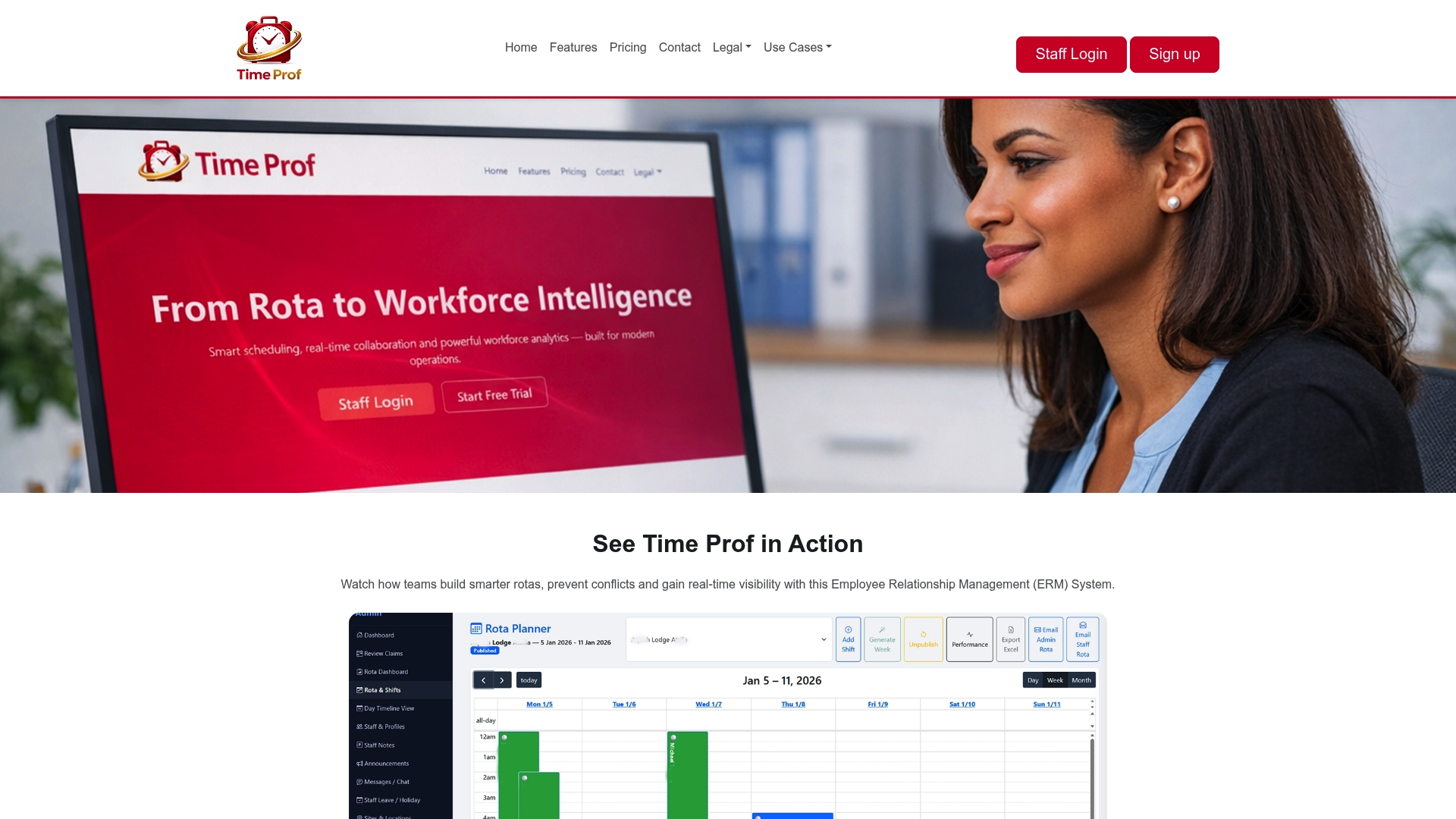
The platform brings rota planning, geofenced clock-in, real-time notifications, open shift management, skills matching, and audit-ready reporting into one mobile-friendly system. Managers across care, security, hospitality, retail, and cleaning use Timeprof to move from reactive scheduling to proactive workforce intelligence. Whether you are managing a single site or a complex multi-site operation, Timeprof’s workforce intelligence platform gives you the tools to act on live data, track the KPIs that matter, and keep your team informed and engaged every day.
FAQ
What is real-time workforce control?
Real-time workforce control is the continuous monitoring and adjustment of staffing levels during the operating day to match actual demand. It uses live data, automated workflows, and AI-driven scheduling to act on gaps before they affect service levels or costs.
How does real-time workforce control differ from standard workforce management?
Standard workforce management produces static rotas and reviews performance retrospectively. Real-time control reforecasts demand intraday and triggers automated responses within the same operating window, keeping plans aligned with actual conditions.
What KPIs should managers track to measure real-time workforce control?
The four most relevant KPIs are forecast accuracy, schedule adherence, overtime rate, and labour cost per unit of output. Establishing baseline measurements before implementation is the only way to demonstrate ROI clearly.
How quickly can businesses expect a return on investment?
Dynamic workforce orchestration can deliver measurable ROI within as little as 90 days when KPIs are tracked from the start and the pilot scope is kept focused on a single site or team.
What is the biggest risk when implementing real-time workforce control?
The most common failure is relying on batch-updated data while claiming to run a real-time system. Decisions made on stale information produce worse outcomes than a well-managed static rota, so live data integration must be the first technical priority.