How scheduling affects carer retention: a 2026 guide
Discover how scheduling affects carer retention in 2026. Learn strategies to reduce turnover and improve team morale in care organizations.

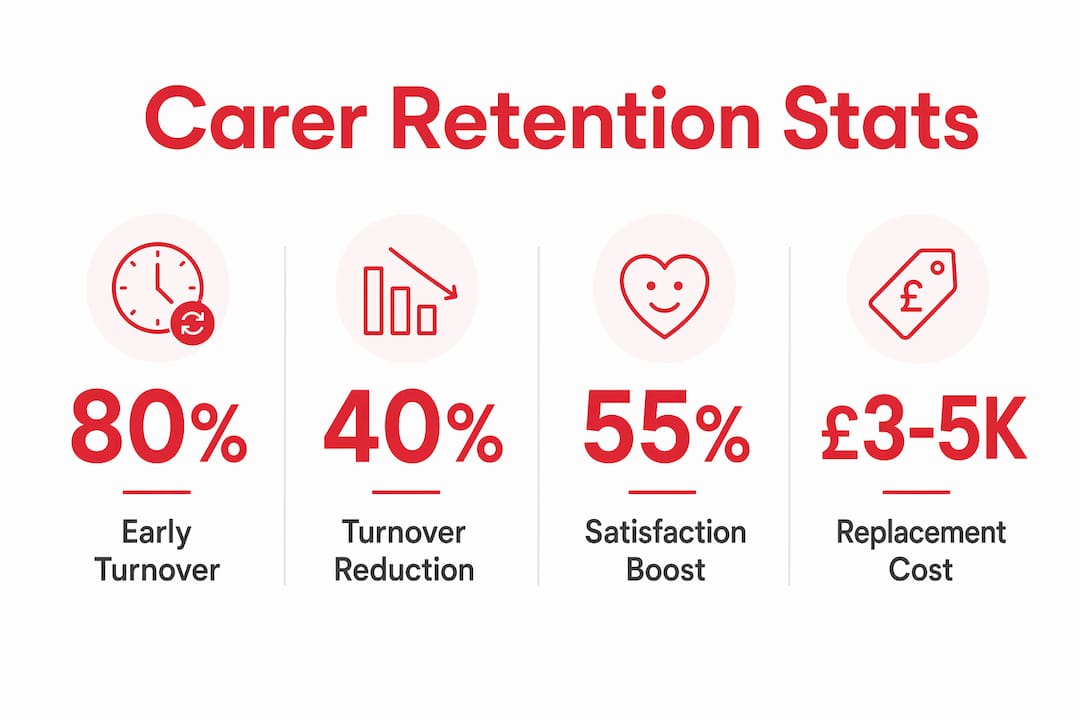
Scheduling is the single most controllable factor in carer retention. 80% of caregivers leave within their first 100 days, and scheduling stress is the primary driver. This is not a pay problem or a recruitment problem. It is a rota problem. Care home managers and HR professionals who treat workforce scheduling as a retention tool, rather than a logistical afterthought, consistently see lower turnover, stronger team morale, and measurable cost savings. The industry term for this approach is proactive rostering, and it is rapidly becoming the standard in well-run care organisations.
How scheduling affects carer retention: the core mechanism
Scheduling shapes a carer’s daily experience more than almost any other management decision. It determines whether they can collect their children from school, whether they know their week in advance, and whether they feel the organisation respects their time. When rotas are unpredictable or last-minute, carers experience chronic low-level stress that compounds over weeks. That stress is the mechanism behind early resignation.
Proactive scheduling reduces turnover by 40% and increases caregiver satisfaction by 55%. Those are not marginal gains. They represent the difference between a stable workforce and a revolving door. Agencies that involve carers in scheduling decisions see the sharpest improvements, because participation signals respect.

The financial case is equally clear. Replacing a single care worker costs between £3,000 and £5,000, accounting for recruitment, onboarding, and lost productivity. A care home losing six staff members per year spends up to £30,000 simply returning to baseline. Proactive rostering is not a soft HR initiative. It is a cost control measure.
What scheduling challenges cause carers to leave?
The impact of scheduling on carers is most damaging when it is unpredictable, opaque, or dismissive of personal commitments. Three specific patterns drive the majority of early departures.
Last-minute rota changes are the most cited cause of scheduling stress. When a carer receives a shift change with less than 24 hours’ notice, they cannot arrange childcare, transport, or rest. Repeated exposure to this pattern creates a sense of instability that no pay rise can offset. Dedicated scheduling coordinators prevent 65% of last-minute conflicts, which shows the problem is structural, not inevitable.
Scheduling conflicts with personal commitments erode loyalty faster than overwork. A carer who repeatedly misses family events because of avoidable rota clashes will leave, even if they love the residents they care for. The conflict is not with the job itself. It is with the organisation’s indifference to their life outside work.
Poor communication from coordinators compounds both problems. When carers do not understand why a shift was changed or why they were assigned a particular pattern, they fill the gap with suspicion. Transparency in scheduling reduces stress even when last-minute changes are unavoidable. A brief explanation transforms a frustrating change into a manageable one.
The cost consequences extend beyond individual resignations. 44% of healthcare turnover is preventable by improving work environments, with scheduling identified as a primary lever. Care homes that ignore this data are, in effect, choosing to pay the recruitment bill repeatedly.
Pro Tip: Track the timing of resignations against rota patterns. If departures cluster around periods of high schedule disruption, you have identified a direct causal link you can act on immediately.
Does proactive scheduling genuinely improve carer wellbeing?
Proactive rostering is defined as scheduling that accounts for carer availability, skills, and personal constraints before shifts are assigned, rather than filling gaps reactively. The evidence for its impact on wellbeing is specific and measurable.
Agencies that adopt proactive scheduling see the following pattern within six months:
- 90-day retention rates improve from 55% to 78%. That shift represents roughly one in four carers who would have left staying instead.
- Caregiver satisfaction with scheduling increases by 35% within four weeks. The improvement is rapid because carers notice predictability immediately.
- Overall job satisfaction rises by 25% by month three. Scheduling satisfaction generalises to broader engagement with the role.
- Annual savings exceed £150,000 for agencies that make this shift. The saving comes from reduced recruitment spend, not from cutting headcount.
Flexible scheduling produces similar gains, but only when it is built into the system rather than offered informally. Caregivers often leave because they feel misled about what flexible scheduling actually means in practice. Telling a carer during recruitment that shifts are flexible, then assigning them a rigid pattern, is one of the fastest ways to generate a resignation within the first 100 days.
Advance notice is the most practical expression of scheduling respect. Providing rotas two weeks ahead allows carers to plan their lives. It also reduces the number of last-minute absences, because carers who know their schedule in advance are far less likely to call in sick due to avoidable conflicts.
Pro Tip: Publish rotas at least 14 days in advance as a standing policy, not a target. Treat exceptions as incidents requiring a brief explanation to affected staff.
The psychological effect of scheduling fairness is distinct from workload reduction. Organisations gain the most sustained retention benefits when carers perceive scheduling as transparent, participatory, and fair. Reducing hours helps, but it does not replace the trust that comes from feeling the rota was built with you in mind.
What technology and practices support fair scheduling in care homes?
Technology is the most effective way to make scheduling transparent at scale, but it must be implemented with communication, not instead of it. Scheduling software can alienate carers if changes are pushed through without context. The tool is not the solution. The tool enables the solution.
Effective scheduling technology for care homes delivers four specific capabilities:
Visibility for carers. Staff should be able to see their rota, request shifts, and flag availability from a mobile device. When carers can see the full picture, they stop feeling like passive recipients of decisions made about them.
Rules-based assignment. Systems that make criteria such as skills and proximity transparent reduce perceptions of favouritism. When a carer can see that shifts are assigned by qualification and travel distance, not by personal preference, trust in the process increases.
Shift swap and open shift tools. Allowing carers to claim open shifts or arrange swaps within defined rules gives them agency without creating management overhead. This is one of the highest-impact features for day-to-day satisfaction.
Real-time notifications. When a change is made, carers should receive an immediate explanation alongside the update. Silence breeds resentment. A brief automated message stating the reason for a change costs nothing and prevents significant goodwill damage.
Alongside technology, managerial practice matters equally. Training coordinators on supportive scheduling significantly improves retention. Coordinators who understand the psychological impact of last-minute changes make different decisions than those who treat the rota as a pure logistics exercise.
Involving carers in shift assignment decisions is the most underused practice in care home scheduling. A quarterly availability review, where carers update their preferred patterns and constraints, takes less than an hour per person and dramatically reduces the friction that causes departures.
How can care managers measure scheduling’s impact on retention?
Measurement turns scheduling from a gut-feel practice into a managed process. Care managers who track the right indicators can identify problems before they become resignations.
The most useful metrics are:
- 90-day retention rate. Track the percentage of new starters still employed at 90 days. This is the clearest signal of whether early scheduling experiences are positive.
- Rota change frequency. Count how many shifts are altered within 48 hours of the shift start. High frequency indicates a reactive scheduling culture.
- Shift fill time. Measure how long it takes to fill an open shift. Long fill times suggest carers are not engaged with the process or do not trust the system.
- Carer satisfaction scores on scheduling fairness. A quarterly survey with three to five questions specifically about rota predictability, advance notice, and perceived fairness gives you qualitative data to act on.
- Absence rates by team or site. Unexplained absence often correlates with scheduling dissatisfaction. Clusters of absence in specific teams point to local scheduling problems.
Review these metrics quarterly, not annually. Scheduling problems compound quickly. A coordinator who has been generating last-minute changes for three months has already damaged retention by the time an annual review catches it.
Realistic job previews during hiring, including explicit descriptions of scheduling conditions, reduce early turnover by attracting candidates who genuinely match the role. This is a measurement intervention as much as a recruitment one. If your 90-day retention rate improves after you change how you describe scheduling in job adverts, you have found a root cause.
Pro Tip: Add a single scheduling-specific question to your exit interview process: “Did your actual rota match what you expected when you joined?” The answer will tell you more than a full satisfaction survey.
Key takeaways
Scheduling is the most direct and controllable driver of carer retention, and care homes that treat it as a management priority consistently outperform those that treat it as an administrative task.
| Point | Details |
|---|---|
| Scheduling drives early departures | 80% of carers leave within 100 days, with scheduling stress as the primary cause. |
| Proactive rostering cuts turnover | Involving carers in scheduling decisions reduces turnover by 40% and lifts satisfaction by 55%. |
| Transparency builds trust | Explaining rota changes reduces carer anxiety and prevents the suspicion that fuels resignations. |
| Technology needs communication | Scheduling tools only work when carers understand the criteria behind assignments. |
| Measure the right indicators | Track 90-day retention, rota change frequency, and scheduling satisfaction scores quarterly. |
Scheduling as organisational care: a view from the field
The framing I keep returning to is this: the rota is a message. Every time you publish a schedule, you are telling your carers how much the organisation values their time, their family, and their wellbeing. Most care home managers do not think of it that way. They think of it as a puzzle to solve. Get the right number of people in the right places. Job done.
That framing is where the problem starts. I have seen care homes with genuinely good pay, decent facilities, and committed managers haemorrhage staff because the rota was built around operational need alone. Carers are not shift-fillers. They are professionals with lives, and the moment they feel the rota treats them otherwise, the clock starts on their departure.
The organisations I have seen retain staff well share one habit: they involve carers in the scheduling process before the rota is published, not after. They run quarterly availability reviews. They explain changes. They publish rotas two weeks out as a non-negotiable standard. None of this is expensive. All of it requires intention.
The other thing I would push back on is the idea that flexible scheduling is a benefit you offer. Real flexibility is a system design choice. If your scheduling process does not structurally accommodate carer availability, you are not offering flexibility. You are offering the illusion of it. And carers notice the difference, usually within the first few weeks.
Treat scheduling as organisational care. The retention numbers will follow.
— Michael
How Timeprof supports scheduling and carer retention
Care homes that want to move from reactive rostering to a managed, transparent process need a platform built for that shift.
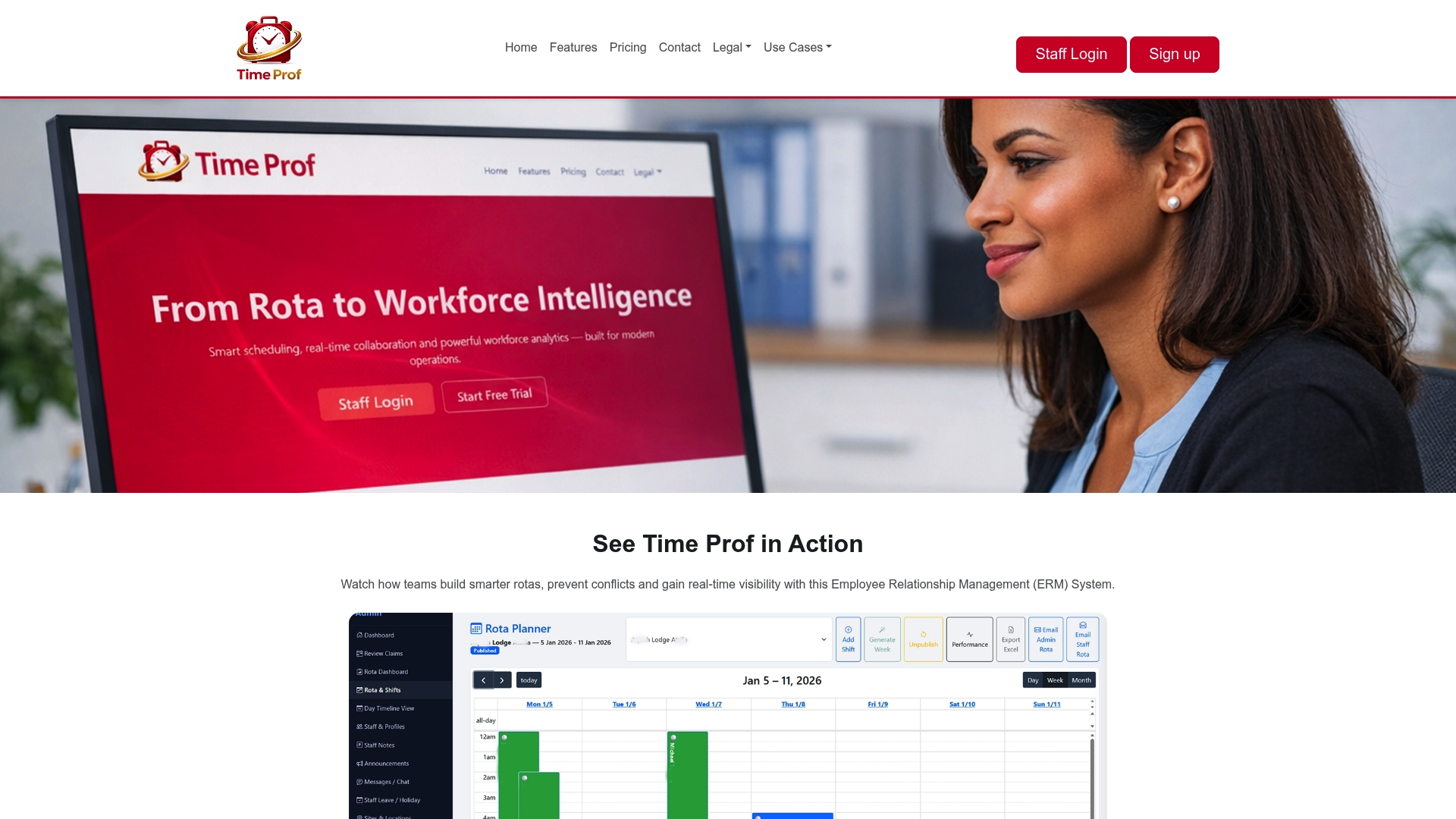
Timeprof brings rota planning, availability management, open shift claims, real-time notifications, and mobile staff self-service into one platform. Carers can see their schedule, flag availability, and receive explanations for changes without a phone call or a paper notice. Managers get live visibility across sites, rules-based shift assignment, and audit-ready records. The result is a scheduling process that carers trust and managers can actually manage. If scheduling and workforce stability are priorities for your care home in 2026, Timeprof is built for exactly that.
FAQ
What is the main reason carers leave within the first 100 days?
Scheduling stress is the primary cause. 80% of caregivers who leave early cite unpredictable rotas and last-minute changes as the key driver of their decision.
How much does carer turnover actually cost a care home?
Replacing one care worker costs between £3,000 and £5,000 when recruitment and onboarding are included. A care home losing several staff per year faces a significant and largely avoidable financial burden.
Does giving carers more notice really improve retention?
Publishing rotas at least 14 days in advance reduces scheduling conflicts, lowers absence rates, and signals organisational respect. Advance notice reduces carer anxiety and improves confidence in management.
What scheduling metrics should care managers track?
The most useful indicators are 90-day retention rate, rota change frequency within 48 hours of a shift, and quarterly carer satisfaction scores focused specifically on scheduling fairness and predictability.
Is flexible scheduling enough to retain carers on its own?
Flexibility only works when it is built into the scheduling system. Carers frequently leave when promised flexibility turns out to be informal and inconsistently applied. Structural flexibility, supported by clear policies and the right tools, is what drives retention.