Cut Early Staff Turnover in 90 Days: A Manager's Playbook With Metrics
Manager's playbook to reduce staff turnover: fix onboarding, coach managers, and run one measurable change at a time. Includes a 90 day plan.

The fastest way to reduce staff turnover is to fix onboarding, coach managers on retention behaviours, and replace blanket pay rises with visible career paths and targeted flexibility. Measure turnover correctly first, then run one or two changes at a time so you can prove what worked. Pay matters less than most managers assume.
TL;DR:
- Focusing on structured onboarding, manager coaching, and internal mobility can significantly reduce voluntary turnover and associated costs.
- Segmenting turnover data by leaver type, tenure, and manager helps identify specific issues and design targeted interventions.
- Improving onboarding and manager behaviors in career development and recognition offers higher returns than pay increases alone.
- Tracking early warning signals like new hire retention at 90 and 180 days and manager-driven metrics enables proactive retention strategies.
- Operational tools like scheduling and attendance management can eliminate avoidable turnover caused by shift and leave disruptions.
Table of Contents
- How to calculate and segment staff turnover
- What staff turnover actually costs your business
- What actually causes people to leave?
- High-impact retention strategies, ranked by what to run first
- A 90-day plan to stop losing new hires early
- Manager behaviours and career paths as the long-term retention engine
- Which metrics actually predict turnover before it happens?
- How operational tools cut avoidable turnover
- Where should you actually start?
- How Timeprof supports the fixes in this guide
- Sources
- FAQ
How to calculate and segment staff turnover
Annual turnover rate is simple: divide the number of leavers in a period by the average headcount, then multiply the result by 100.
Monthly tracking catches spikes fast but gets noisy with small teams. A rolling 12-month figure smooths seasonal effects and is what most boards want to see. The CIPD’s turnover and retention factsheet recommends tracking both.
The raw number hides where the problem actually sits, so segment it:
- Voluntary versus involuntary leavers, because they need different fixes
- Tenure band, especially under 90 days versus over two years
- Individual manager, since attrition often clusters under one or two people
- Role family and site or location
What staff turnover actually costs your business
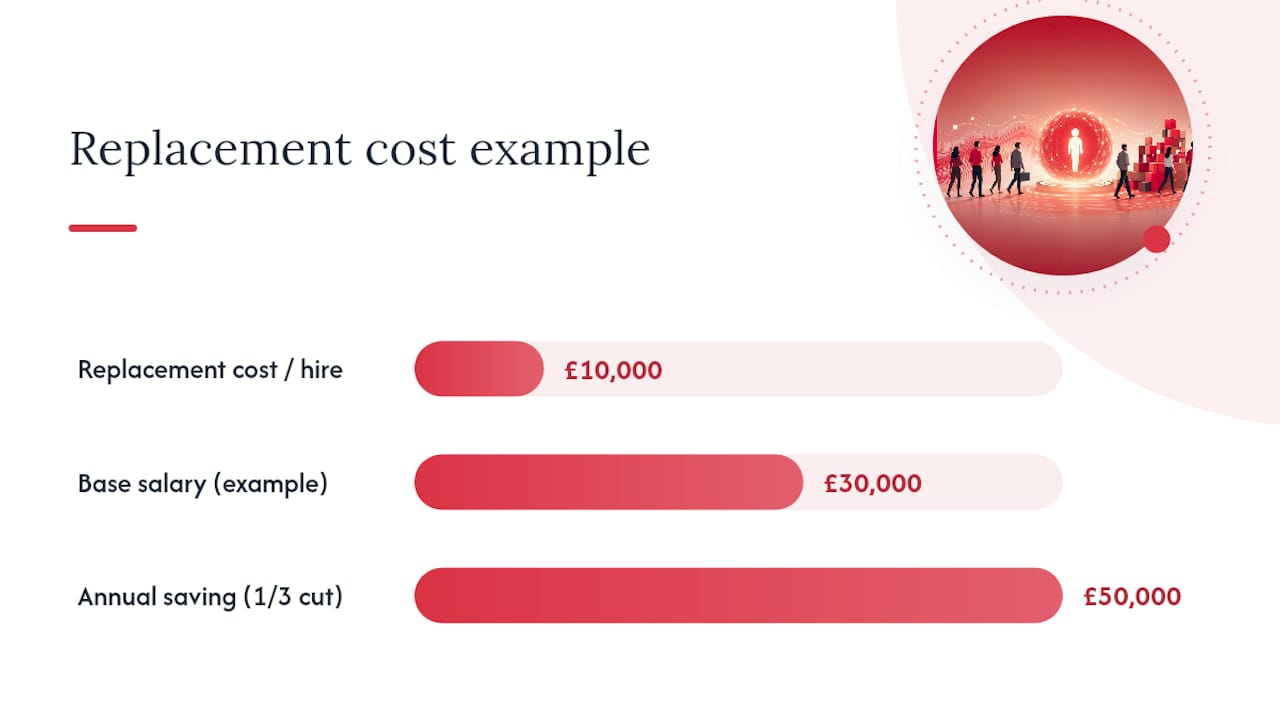
A commonly cited rule of thumb puts the cost of replacing an employee at roughly a third of their annual salary, though this varies sharply by role, seniority and sector, and it is a rough estimate rather than a precise figure for every business.
Build your own estimate from these components:
- Advertising and recruiter fees
- Manager and HR hours spent interviewing and onboarding
- Agency or overtime cover while the role sits vacant
- Lost productivity while a new hire ramps up to full output
Pro Tip: Run the maths on your highest-turnover role family first. If a £30,000 role costs roughly £10,000 to replace and you lose 15 people a year from that group, cutting turnover by a third saves around £50,000, which is a stronger business case than any generic retention slide.
A large share of that spend is avoidable. Structured onboarding and focused manager interventions prevent much voluntary turnover before it happens, which is why the business case for retention work rarely needs inflated numbers to stand up.
What actually causes people to leave?
Managers usually blame pay first. The data disagrees. Compensation earns high satisfaction scores but predicts long-term loyalty poorly; career development and recognition are stronger predictors. Treat pay complaints as a symptom worth checking, not the whole diagnosis.
Four causes show up repeatedly once you dig into exit data and stay interviews:
- Manager quality — check attrition clustering by team, then ask leavers directly about their manager
- Unclear progression — look at internal promotion rates against external hiring for the same roles
- Onboarding failure — segment turnover by tenure band; a spike under 90 days points here
- Workload and recognition gaps — cross-reference exit reasons with absence data; HSE’s days-lost statistics are a useful sense-check on whether workload is a live risk
Newer measurement frameworks push this further, arguing organisations should track signals of “earned loyalty” rather than relying on a single annual satisfaction score.
High-impact retention strategies, ranked by what to run first
Run these roughly in order. Each pairs an action with the metric that tells you whether it worked.
- Structured onboarding with 30/60/90 check-ins. Give new hires an early win in week one, a defined check-in at day 30, 60 and 90, and a named buddy. Measure new-hire retention at 90 and 180 days.
- Manager capability building. Set a non-negotiable weekly or fortnightly 1:1 cadence with a simple agenda, then coach managers who skip it using practical AI productivity workflows that can reduce manager administrative load. Measure attrition by manager, not just by team.
- Visible internal mobility. Publish career ladders and post internal vacancies before external ones. Removing mobility friction keeps top performers from taking counteroffers elsewhere.
- Targeted flexibility over blanket pay rises. Personalised support such as flexible scheduling often beats a uniform pay bump for the same budget. Ask staff what they’d trade a rise for.
- Recognition built into manager habits. Make recognition a weekly manager task, not an annual awards event, and track whether it happens.
Pro Tip: Pick one intervention, run it with a control group (a similar team that doesn’t get it yet), and compare 90-day retention. Without a comparison, you’ll never know if the change worked or if turnover just fell on its own.
A 90-day plan to stop losing new hires early
The first 90 days carry the highest risk of a new hire quitting, and a structured programme with role clarity and mapped relationships materially cuts that risk.
- Week one: confirm role clarity in writing, introduce the new hire to five key colleagues, and hand them one small task they can finish and get praised for.
- Day 30: run a structured check-in covering workload, relationships, and whether the job matches what was advertised.
- Day 60: hold a stay interview. Ask what’s working, what’s frustrating, and what would make them consider leaving.
- Day 90: review progress against the original role expectations and agree the next three months’ goals.
Two quick wins cost nothing: send a welcome message before day one, and assign a peer buddy who isn’t the line manager, so new hires have somewhere safe to ask “silly” questions.
Manager behaviours and career paths as the long-term retention engine
Onboarding stops early losses. What keeps people for years is how their manager runs career conversations and whether progression is genuinely visible.
- Hold a dedicated career conversation at least twice a year, separate from performance reviews, focused purely on where someone wants to go
- Publish career ladders so staff can see the skills and experience each level requires, rather than guessing
- Set manager KPIs that include team retention and internal promotion rates, not just output, which discourages talent hoarding and opens up lateral moves
- Flag a coaching conversation automatically when a team’s voluntary attrition rises above your baseline
Removing career development from the “nice to have” pile and putting it on a manager’s scorecard is what actually changes behaviour, according to the same MIT Sloan research on internal mobility.
Which metrics actually predict turnover before it happens?
A dashboard only earns its place if it triggers a conversation, not just a report.
- Overall and voluntary turnover rate, tracked as a rolling 12-month figure
- High-performer attrition specifically, since losing your best people costs more than average churn
- New-hire retention at 90 and 180 days
- Recurring themes from stay interviews and exit interviews, coded into categories
- Pulse survey score changes over time, not just a single snapshot
Slicing every one of these by manager and tenure band is what turns a flat number into something you can act on. Multi-signal tracking, combining mobility, skills growth and engagement data, catches risk earlier than a single annual survey. Read more on measuring workforce management ROI if you need to build the business case internally.
How operational tools cut avoidable turnover
Some turnover has nothing to do with careers or pay. It comes from missed shifts, disputed hours, and new hires who never get properly onboarded into the rota system.
Unified scheduling and attendance tracking removes a surprising number of exit triggers:
- Fewer missed shifts and rota disputes, both common, low-drama reasons people quietly disengage and leave
- Onboarding checkpoints and audit trails that confirm a new starter actually completed induction steps, rather than assuming they did
- Role-based visibility so staff can see their own shifts, leave balance, and hours without chasing a manager
After introducing tools like this, track schedule stability, late or last-minute shift claims, and unauthorised absences. A scheduling-focused retention example from the care sector shows how much these operational frictions matter in shift-based work specifically.
Where should you actually start?
Start wherever you can both measure and act within 30 days. For most teams that means onboarding or manager 1:1 cadence, because both produce a visible signal fast and cost little to test.
Run the cheap experiment before you touch a platform or budget line. Sequencing matters more than ambition here: prove a small fix works, then scale it, rather than launching five initiatives you can’t attribute results to.
— Michael
How Timeprof supports the fixes in this guide
The strategies above depend on managers actually seeing what’s happening on the ground: who’s missing shifts, whether onboarding checkpoints are being completed, and where rota disputes keep recurring. Workforce management platforms can bring rota planning, attendance tracking, structured onboarding checkpoints and audit-ready reporting into one platform, so those signals sit in one dashboard instead of three spreadsheets and a WhatsApp group.
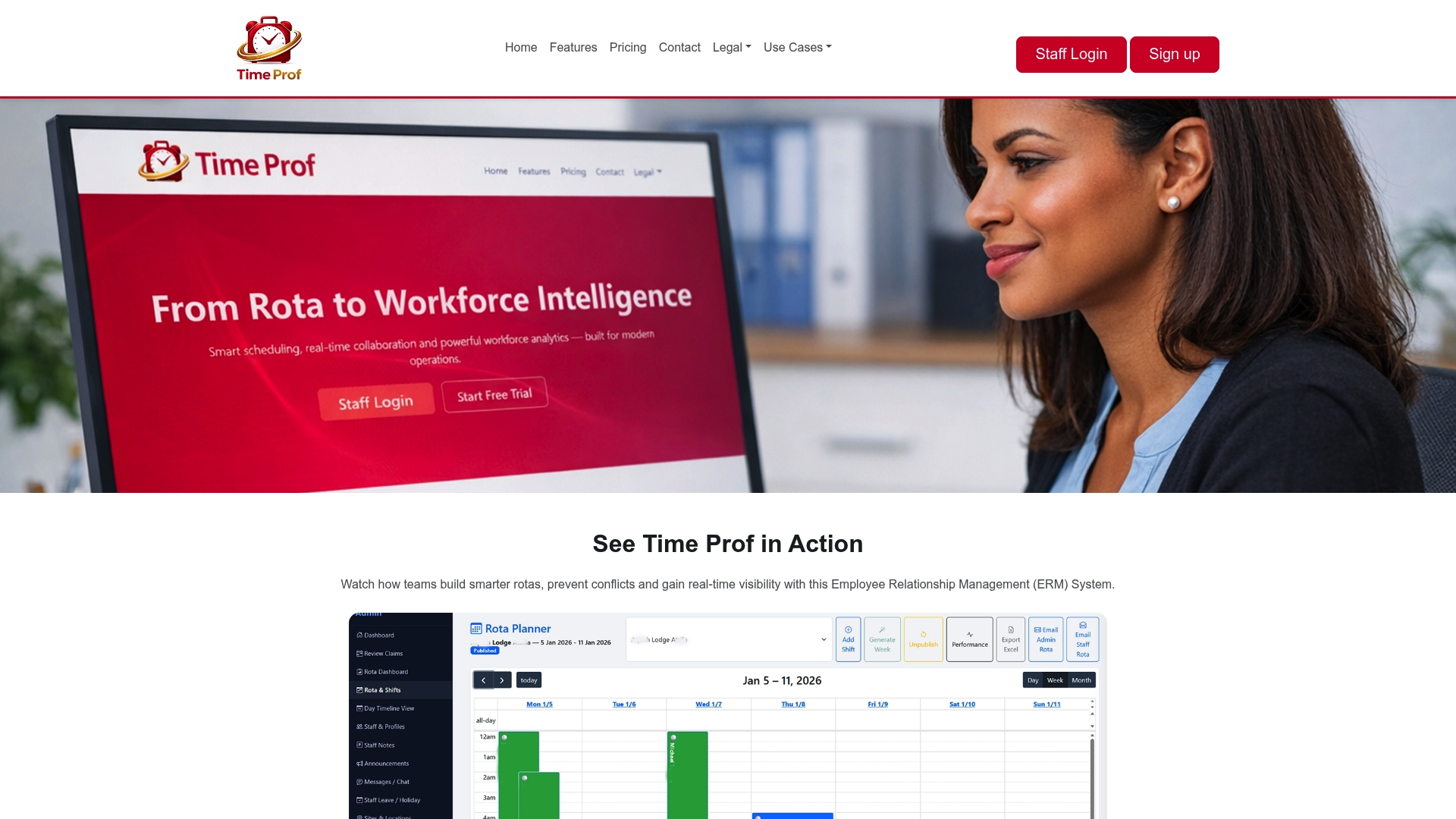
None of this replaces the manager behaviour changes covered above. A dashboard flags a stalled onboarding checkpoint or a spike in late shift claims; a manager still has to act on it. That’s the honest limit of any workforce platform, including this one. If you want a single source of truth for the operational side while you run the manager coaching and career-path work, the Enterprise Standard plan runs from £2.49 to £3.99 per staff member per month with a £99 one-off setup fee, or you can enquire about Enterprise Custom for larger, multi-site operations. Check current pricing and get started on the Timeprof pricing page.
Sources
For deeper reading, the WorldatWork piece on pay versus loyalty, MIT Sloan’s research on mobility barriers, and the CIPD’s UK-focused factsheet are all worth bookmarking for measurement and policy detail this guide couldn’t cover in full.
- Something Bigger than pay: What really spurs employee retention? | WorldatWork
- What gets your best employees to stay | MIT Sloan
- Surprising ways to reduce turnover in high-pressure, high-skill jobs | HBR
- Employee turnover and retention | Factsheets | CIPD
FAQ
Is 20% employee turnover high?
It depends heavily on sector.
What are the five C’s of employee retention?
Definitions vary across sources, but a common version covers career development, compensation, culture, communication and connection. Treat it as a useful checklist rather than a fixed formula, since the evidence in this guide points to career development and recognition mattering more than compensation.
Is 42% of turnover preventable?
Estimates of preventable turnover vary by study and sector, but research consistently finds a significant share of voluntary turnover is preventable through better onboarding and manager intervention, which is why fixing those two areas first tends to produce the fastest results.
How do I manage an employee who undermines a manager’s authority?
Address it directly and privately first, focusing on specific behaviours rather than character, and document the conversation. If it continues, involve HR early and check whether the underlying issue is a wider team or manager problem rather than a single difficult individual.
What’s the fastest way to reduce staff turnover this quarter?
Fix the first 90 days for new hires and enforce a consistent manager 1:1 cadence. Both are cheap, measurable within a quarter, and address the two causes of turnover that data shows are most preventable.