How workforce data improves care decisions in 2026
Discover how workforce data improves care decisions by enhancing staffing efficiency and patient outcomes, ensuring better care in 2026.

Workforce data improves care decisions by turning raw staffing information into precise, timely guidance that aligns the right people with the right patients at the right moment. When clinical, operational, and financial data are integrated effectively, healthcare leaders shift from firefighting to forecasting, reducing reliance on costly agency cover and improving the consistency of care. The result is not just operational efficiency. It is measurably safer, better-staffed care.
The core benefits of applying workforce analytics in healthcare and social care include:
- Proactive staffing alignment: matching staff numbers and skills to patient acuity before gaps become crises, rather than after.
- Reduced premium labour costs: forecasting demand accurately cuts last-minute agency spend.
- Earlier burnout detection: predictive models flag absenteeism patterns before they escalate into retention problems.
- Empowered frontline supervisors: real-time dashboards give charge nurses and team leaders the information to act without waiting for a central HR decision.
- Stronger resource justification: tracking workforce KPIs alongside community health needs supports funding bids and policy adjustments.
How workforce data informs planning and care quality
Workforce data gives care leaders a factual basis for decisions that were previously made on instinct or historical habit. The most direct application is identifying where staffing gaps exist right now, not where they existed six months ago when the last report was compiled.
Skill shortages are often invisible until a shift goes uncovered. Systematic tracking of staff competencies against care requirements reveals which wards or services are running on staff who lack the specific qualifications a patient cohort needs. That gap, once visible, can be addressed through targeted recruitment or training rather than a blanket headcount increase.
Forecasting future demand is where workforce analytics in healthcare delivers its clearest value. Patient census trends, seasonal admission patterns, and community health data all feed into demand models that tell you how many staff, with which skills, you will need in three months’ time. Aligning workforce planning with those projections produces safer staffing ratios and stronger justification for training investment.
Training decisions also improve when they are driven by data. If your workforce data shows a cluster of staff without dementia care qualifications in a service where referrals are rising, that is a clear commissioning signal. Waiting for an annual appraisal cycle to surface the same gap costs time and, potentially, patient safety.
Retention is the less-discussed dividend. Workload analytics can identify teams carrying disproportionate pressure, enabling managers to redistribute shifts before staff reach the point of resignation. The connection between scheduling and carer retention is well established: staff who feel their workload is managed fairly are less likely to leave.
How do you collect, integrate, and analyse workforce data effectively?
The data itself comes from several sources that rarely talk to each other by default. Human resources information systems hold contracts, qualifications, and absence records. Electronic health records carry patient acuity and dependency scores. Payroll systems track hours and costs. Patient census data shows demand by ward, shift, and time of day. Bringing these together into a coherent picture is the foundational challenge of workforce analytics.
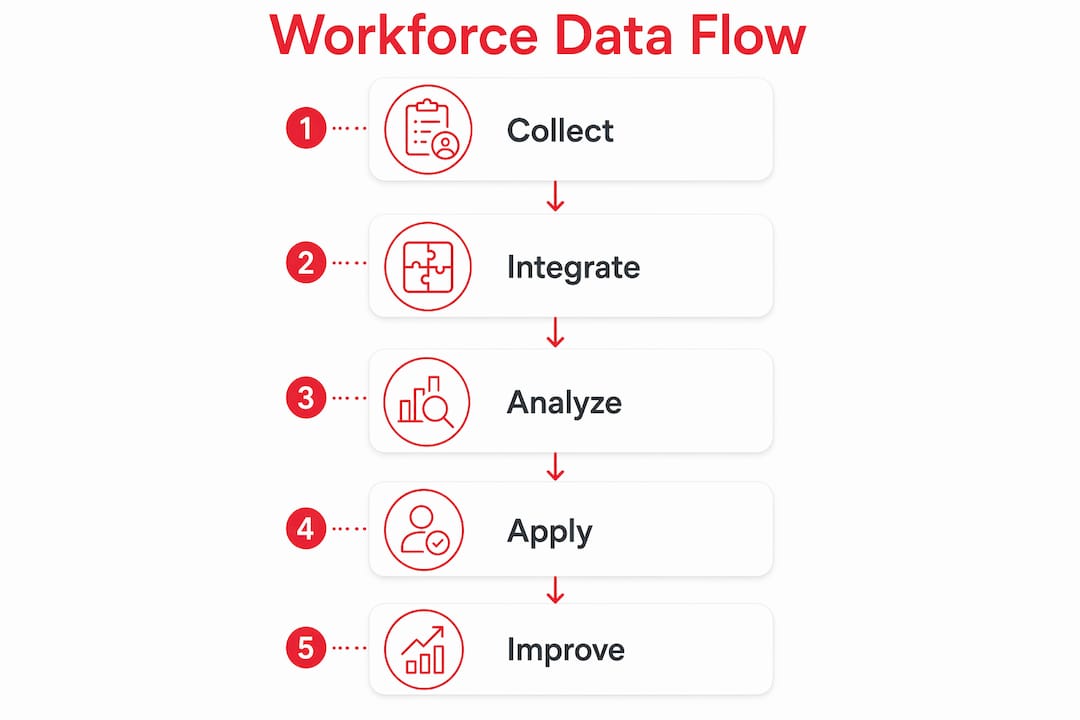
Integration is harder than it sounds. Most NHS trusts and social care providers operate legacy systems that were never designed to share data. Even where technical integration is possible, inconsistent skill coding across departments means that a “registered nurse” in one system may not map cleanly to the same role in another. Clearing that inconsistency is not glamorous work, but it is the prerequisite for any reliable analysis.
Once integrated, the analytical toolkit divides into three layers. Descriptive analytics tells you what has happened: hours worked, agency spend, sickness rates by team. Predictive analytics tells you what is likely to happen: which wards are at risk of understaffing next Tuesday, which staff members show early signs of burnout based on shift patterns. Prescriptive analytics goes further, recommending specific actions such as opening a shift to a named staff member whose skills and availability match the requirement.

Real-time dashboards sit at the centre of operational decision-making. A charge nurse who can see live attendance, current skill mix, and patient dependency scores on a single screen can make staffing adjustments in minutes rather than hours. That responsiveness directly reduces the window in which unsafe staffing ratios persist.
Benchmarking adds external context. The Adult Social Care Workforce Data Set (ASC-WDS), maintained by Skills for Care, is the primary national tool for benchmarking workforce composition, pay, turnover, and training levels across the adult social care sector in England. Providers who submit data to ASC-WDS can compare their workforce profile against sector averages, identify where they sit relative to peers, and use that evidence to inform commissioning conversations with local authorities. It is one of the most practical examples of how data drives healthcare and social care decisions at both provider and policy level.
Data privacy and security are non-negotiable in this context. Workforce data includes sensitive personal information: health records, disciplinary histories, pay, and in some cases protected characteristics. UK providers must comply with the UK General Data Protection Regulation (UK GDPR) and the Data Protection Act 2018. Ethical handling means collecting only what is necessary, storing it securely, and being transparent with staff about how their data is used. The risk of data being perceived as surveillance rather than support is real, and it shapes whether staff engage honestly with the systems that collect it.
Pro Tip: Before investing in any analytics platform, conduct a data quality audit across your HRIS, payroll, and patient census systems. Inconsistent skill coding or duplicate records will corrupt any forecast, regardless of how sophisticated the modelling tool is.
How does workforce data change decision-making culture?
The cultural shift is as significant as the technical one. Organisations that use workforce data well tend to move away from a model where a senior manager holds all the scheduling knowledge in their head, towards one where frontline supervisors have the information to make good decisions themselves. Real-time workforce data used as a guidance system for frontline supervisors reduces friction by enabling self-service for scheduling tasks, which improves the overall decision-making culture.

That shift requires trust. Staff need to believe that data is being used to support them, not to monitor or penalise them. Organisations that introduce analytics without explaining the purpose, or that use data primarily to challenge clinical judgment, tend to see resistance rather than adoption. The governance model matters: workforce analytics success depends on collaboration between HR, operations, and IT, with clear governance and organisational data literacy ensuring that data is perceived as supportive rather than punitive.
Intraday optimisation is one of the most practical expressions of data-driven culture. Rather than setting a rota at the start of the week and hoping it holds, managers with live attendance data and patient acuity scores can adjust staffing dynamically as the day unfolds. A ward that receives three unexpected admissions at 2:00 PM can pull in an available staff member from a quieter area within minutes, rather than waiting for a formal escalation process.
The administrative burden reduction is real and measurable. Managers who previously spent hours each week chasing shift confirmations by phone or reconciling paper timesheets can redirect that time to clinical oversight and staff development. The workforce transparency that comes with integrated data also reduces the informal politics of scheduling, where perceived favouritism in shift allocation is a common source of staff dissatisfaction.
One persistent barrier is the tension between data recommendations and clinical judgment. Clinicians are more likely to trust data-driven recommendations when they integrate with their clinical workflows rather than appearing as a separate dashboard they must consult. A recommendation that appears mid-handover on the same screen a nurse uses for patient notes carries far more weight than one buried in a workforce management portal they rarely open.
Pro Tip: Embed workforce analytics outputs directly into the tools clinicians already use, whether that is an electronic patient record system or a mobile handover app. Adoption rates rise sharply when staff do not have to switch systems to act on a recommendation.
UK datasets and tools that show what good looks like
The Adult Social Care Workforce Data Set (ASC-WDS) is the clearest UK example of workforce data being used systematically to improve care planning. Skills for Care uses ASC-WDS submissions to produce the annual State of the Adult Social Care Sector and Workforce report, which informs national policy, local authority commissioning, and provider-level workforce planning. Providers who engage with ASC-WDS gain access to benchmarking tools that show their turnover rate, training completion, and pay levels relative to comparable organisations in their region.
NHS trusts have been exploring federated data platforms that connect workforce, patient, and financial data across multiple sites. The King’s Fund has highlighted how these platforms support people teams across the NHS by giving HR and operational leaders a shared view of workforce capacity and patient demand, reducing the information asymmetry that leads to poor staffing decisions.
Central nursing offices in larger trusts use real-time nurse-to-patient assignment tools to manage staffing across wards dynamically. Rather than each ward sister managing her own staffing in isolation, a central view allows redeployment decisions to be made with full visibility of where the pressure is greatest. This approach has been associated with reductions in both agency spend and adverse patient safety events, though the specific outcomes vary by trust and implementation quality.
National frameworks such as the NHS Long Term Workforce Plan and the NHS People Plan provide the policy context within which local data use sits. Both documents emphasise the need for better workforce intelligence as a precondition for sustainable staffing, and both point to data integration as a priority. For social care, the Care Quality Commission’s inspection framework increasingly expects providers to demonstrate data-informed workforce planning as part of their well-led assessment.
“Tracking KPIs alongside community health needs improves funding decisions and policy adjustments. For UK health and social care, aligning workforce planning with patient needs through data enables safer, higher-quality care and stronger justification for resource allocation and training needs.” — WHO European Health Observatory
The use of AI-driven operational insights is growing across healthcare settings, with platforms increasingly able to surface workforce recommendations in real time rather than through periodic reporting cycles.
What are the biggest challenges in implementing workforce analytics?
Data quality is the most common reason workforce analytics projects underdeliver. Organisations that skip the foundational work of auditing their data sources, standardising skill codes, and resolving duplicate records find that their forecasting outputs are unreliable regardless of the sophistication of the tool they have purchased. Before using AI-driven forecasting, organisations must ensure foundational data quality and standardised skill coding; otherwise, outputs will be unreliable no matter the technology used.
Siloed reporting is the second major obstacle. Many healthcare managers treat workforce analytics as a periodic reporting exercise, producing a monthly dashboard that nobody acts on. The organisations that get genuine value treat it as a continuous integration cycle, syncing patient, financial, and operational data to generate real-time cost-per-patient-hour insights that inform daily decisions.
Organisational data literacy varies enormously. A director of nursing who understands regression analysis will use a predictive model very differently from a ward manager who has never seen one. Building shared literacy across clinical and operational roles requires investment in training, not just technology. Without it, even well-designed analytics tools get reduced to vanity metrics.
Staff engagement is often underestimated as a success factor. When staff understand that absence pattern analysis is used to offer support rather than to discipline, they are more likely to report accurately and engage with the systems that track their data. Governance structures that include staff representatives in decisions about how workforce data is used tend to produce better outcomes than those that treat data as a management-only tool.
Leadership alignment is the final piece. Analytics projects that sit within IT or HR without visible sponsorship from the chief executive or medical director rarely achieve the cross-functional integration they need. The most successful implementations in UK trusts and social care providers have had a named executive champion who connects workforce data to the organisation’s care quality goals, not just its cost reduction targets.
Does workforce data actually improve patient outcomes?
The evidence connecting workforce data use to patient outcomes is growing, and the mechanism is reasonably well understood. When staffing levels are matched to patient acuity through data rather than guesswork, patients receive care from staff who have the right skills and are not stretched beyond safe limits. That alignment reduces medication errors, pressure ulcer incidence, and unplanned readmissions.
Predictive analytics can identify risks of staff burnout early through patterns in absenteeism and productivity, enabling timely interventions that improve staff wellbeing and retention. Staff who are not burned out make fewer errors. The link between staff wellbeing and patient safety is not theoretical; it shows up in incident data, complaints, and CQC inspection outcomes.
The quality of care in social care settings is similarly affected. A care home that uses workforce data to maintain consistent key worker assignments, rather than rotating staff unpredictably, produces better outcomes for residents with dementia or complex needs. Continuity of care is itself a quality metric, and it depends on workforce planning that goes beyond filling a rota.
Using data to enhance patient care also means tracking outcomes alongside workforce inputs. Organisations that correlate staffing ratios with patient satisfaction scores, length of stay, or readmission rates can build an evidence base for the staffing levels they need. That evidence is increasingly what commissioners and regulators expect to see. A call for health data-informed clinicians has gained traction in academic and policy circles, with the argument that clinical decision-making quality improves when practitioners understand the workforce context in which they are operating.
Real-time workforce control, explored in depth in this manager’s guide, is one of the most direct routes from data to outcome improvement, giving managers the visibility to act before a staffing gap becomes a patient safety event.
Timeprof gives you the workforce intelligence to act, not just report
Most workforce management tools give you a rota. Timeprof gives you a live picture of your entire operation, connecting scheduling, attendance, skills, tasks, and communication in one platform so that the data you need to make a good decision is always in front of you, not buried in a spreadsheet from last Tuesday.
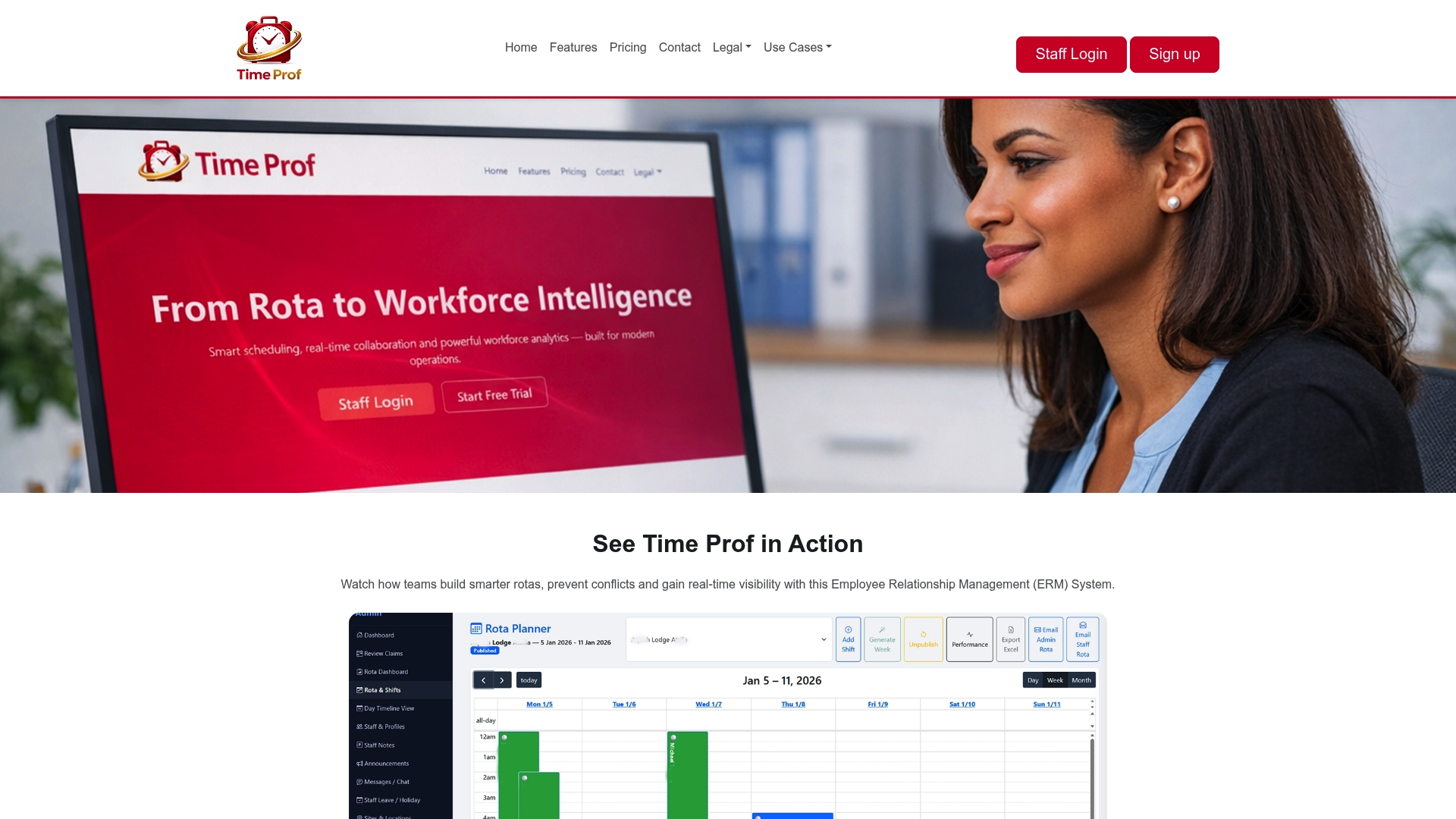
For healthcare and social care managers, that means knowing in real time which shifts are covered, which staff have the right qualifications for the patients on a given ward, and where fatigue risk is building before it becomes an absence. Timeprof’s geofenced clock-in, audit-ready compliance reporting, and live multi-site dashboards give you the kind of workforce visibility that used to require a dedicated analytics team. The platform also supports staff self-service for shift claims, leave requests, and availability, reducing the administrative back-and-forth that consumes management time. For organisations moving from fragmented spreadsheets and phone calls to a single source of truth, Timeprof is the practical next step. Visit timeprof.co.uk to see how the platform works for care and healthcare settings.
Key takeaways
Workforce data transforms reactive scheduling into proactive, demand-driven staffing that directly improves patient safety, staff wellbeing, and operational efficiency across healthcare and social care.
| Point | Details |
|---|---|
| Integrated data drives proactive planning | Linking clinical, financial, and operational data lets leaders forecast demand and reduce agency reliance before gaps appear. |
| ASC-WDS benchmarks social care workforce | Skills for Care’s Adult Social Care Workforce Data Set enables providers to compare turnover, training, and pay against sector peers. |
| Data quality precedes analytics value | Standardising skill codes and auditing source systems is the prerequisite for reliable forecasting, regardless of the tool used. |
| Workflow integration drives clinician adoption | Embedding analytics into existing clinical tools, rather than separate dashboards, significantly increases uptake and real-world impact. |
| Timeprof connects scheduling to workforce intelligence | Timeprof’s live dashboards, geofenced attendance, and skills tracking give care managers a single, real-time source of workforce truth. |