Workforce transparency in care: a manager's guide
Discover what workforce transparency in care is and how it boosts staffing efficiency, regulatory compliance, and patient outcomes. Learn more!

Workforce transparency in care is defined as the open sharing of staffing data, labour costs, shift information, and operational decisions with both managers and staff across a care organisation. The industry term for this practice is workforce visibility, and the two concepts work together: visibility is what technology provides, while transparency is the cultural and operational commitment to act on that information openly. For healthcare managers, getting this right is not optional. Regulatory pressure is growing, staff retention is a persistent challenge, and patient outcomes are directly linked to how well your workforce is managed and communicated with.
What is workforce transparency in care settings?
Workforce transparency in care means every relevant stakeholder, from ward managers to frontline carers, has access to accurate, timely information about staffing levels, shift coverage, skills deployment, and operational status. It is not about sharing everything with everyone. It is about sharing the right information with the right people at the right time.
The distinction matters because many managers conflate transparency with openness about pay or personal data. In practice, workforce transparency covers rotas, shift availability, attendance records, credential status, and workload distribution. Workforce visibility provides real-time insight on staffing, licences, overtime, open positions, and costs, all of which are essential for reducing burnout, compliance risks, and labour expenses in healthcare.
Healthcare ethicists now argue that information opacity is increasingly unsustainable. Organisations that withhold operational data from staff and managers create trust deficits that compound over time. Transparency, by contrast, builds the shared situational awareness that safe care depends on.
What are the primary benefits of workforce transparency in healthcare?
The benefits of transparency in care settings are measurable, not just cultural. A 2025 study found that hospitals subject to pay-transparency laws showed improved patient satisfaction by approximately 7.69% of overall ratings’ standard deviation. That figure confirms a direct link between how openly an organisation manages its workforce and the quality of care patients experience.
Staff retention is equally affected. Research from early 2026 found that around 42% of employee turnover in organisations is preventable, and that trust in direct managers, driven by transparency, is critical for 93% of employees’ job satisfaction. In care settings, where replacing a single trained carer carries significant cost and disruption, preventable turnover is a serious operational risk.
The benefits extend across several dimensions:
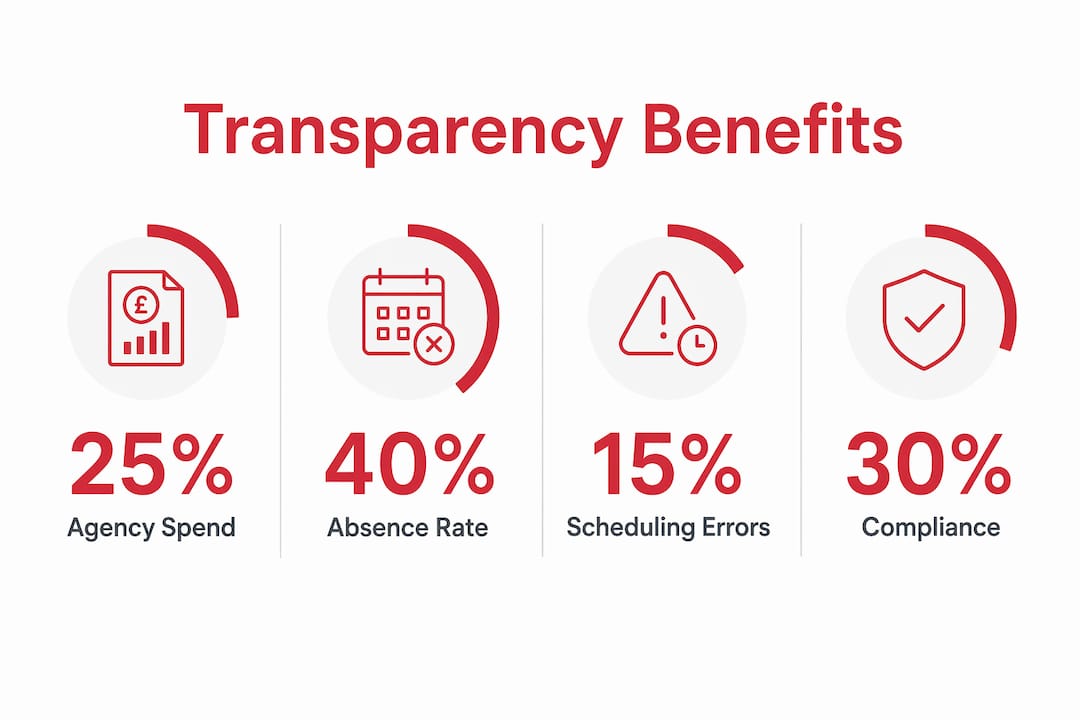
- Reduced unplanned absences because staff can see rota changes, shift claims, and cover requests in real time
- Higher staff engagement because people understand how decisions about their schedules are made
- Faster compliance readiness because audit records, credential tracking, and attendance logs are always current
- Lower agency spend because open shift visibility allows internal staff to claim shifts before external cover is needed
- Improved patient outcomes because adequate, well-informed staffing directly supports care quality
Pro Tip: Link your transparency metrics to operational KPIs from the start. Track agency spend, unplanned absence rates, and shift fill times before and after introducing transparent workforce tools. The numbers will make the case for continued investment far more convincingly than staff surveys alone.
How does workforce transparency affect operational efficiency and compliance?
Operational efficiency in care depends on having accurate, integrated workforce data. Integrated workforce data systems enable health systems to align operational, financial, and clinical information, driving improved productivity, cost control, and patient care quality. When scheduling, attendance, skills records, and payroll data sit in separate systems, managers spend hours reconciling information that should be instantly visible.
Compliance is the other pressure point. CMS reporting rules and equivalent UK regulatory requirements in 2026 demand detailed workforce data tracking. Transparency is no longer just a cultural aspiration. It is a critical requirement for regulatory readiness, particularly for organisations using outsourced or agency labour.
The table below summarises how workforce transparency affects key operational metrics in care settings.
| Operational area | Effect of transparency |
|---|---|
| Shift scheduling | Real-time rota visibility reduces gaps and last-minute agency calls |
| Credential management | Live licence and skills tracking prevents unqualified deployment |
| Attendance and clocking | Geofenced clock-in data creates accurate, audit-ready attendance records |
| Payroll accuracy | Verified hours reduce disputes and overpayments |
| Regulatory reporting | Centralised data makes CMS and CQC submissions faster and more accurate |
Managers who rely on scheduling error reduction as a transparency goal find that the discipline of accurate data entry creates a secondary benefit: staff begin to trust the rota because it reflects reality, not guesswork.
What challenges and contextual factors influence effective workforce transparency?
Transparency does not work the same way in every care organisation. A 2025 systematic review identified 137 positive outcomes from healthcare transparency, but also warned that poor application causes risk aversion and unintended negative reactions. The finding is significant. Transparency implemented without cultural preparation can backfire.
The core challenge is context-dependence. Transparency initiatives must align with the organisational culture, structure, and economic context to succeed. A large NHS trust and a small residential care home face entirely different dynamics. What works in one setting may provoke resistance or information overload in the other.
Three contextual factors consistently determine whether transparency succeeds or fails.
Organisational culture and readiness
Staff who have operated under opaque management for years do not automatically welcome visibility. Managers need to introduce transparency gradually, explaining the purpose of each new data-sharing practice before implementing it. Framing matters: transparency should be presented as a tool for fairness, not surveillance.
Privacy and professional boundaries
Not all workforce data should be shared with all staff. Pay rates, disciplinary records, and personal health information remain confidential. The goal is operational transparency, not personal exposure. Managers who conflate the two create legal and ethical risks.
Leadership consistency
Transparency fails when managers share data selectively or inconsistently. If staff see that shift information is visible one week and hidden the next, trust erodes faster than it would under a fully opaque system. Consistency is the foundation.
Pro Tip: Before rolling out any transparency initiative, audit what information you currently share, with whom, and through which channels. Identify the gaps and the overlaps. Oversharing sensitive data is as damaging as withholding operational data. A clear information-sharing policy, reviewed by HR and legal, protects both staff and the organisation.
How can healthcare managers successfully implement workforce transparency?
Successful implementation starts with technology, but it does not end there. The right workforce management platform gives managers a single source of truth for rotas, attendance, skills, and communications. Without that foundation, transparency remains aspirational rather than operational.
Practical implementation follows a clear sequence. Managers who try to introduce cultural change before fixing the underlying data infrastructure consistently struggle. The common scheduling challenges that undermine transparency, such as double-bookings, skills mismatches, and last-minute gaps, are technology problems before they are leadership problems.
The following steps reflect what works in care settings specifically:
- Audit your current data landscape. Identify every system where workforce data currently lives, including spreadsheets, WhatsApp groups, and paper rotas. Fragmentation is the enemy of transparency.
- Select a platform that connects scheduling, attendance, and communication. A shift management system that integrates these functions removes the manual reconciliation that consumes manager time and introduces errors.
- Define what information staff can see and what remains restricted. Role-based access controls allow you to share shift data with all staff while keeping payroll and HR records appropriately restricted.
- Train managers before staff. Transparency requires managers to model the behaviour. If team leaders do not use the system consistently, frontline staff will not trust it.
- Set measurable goals and review them quarterly. Track shift fill rates, agency spend, absence rates, and staff satisfaction scores. Transparency without measurement is just noise.
- Communicate the purpose clearly and repeatedly. Staff need to understand why the organisation is moving toward greater visibility. Connect it to patient care quality, fairness in scheduling, and their own working conditions.
Real-time workforce control is the operational outcome that transparency enables. When managers can see live staffing levels, credential status, and shift coverage across multiple sites, they make better decisions faster.
Key takeaways
Workforce transparency in care is a compliance requirement and a clinical quality driver, not merely a cultural aspiration, and it succeeds only when technology, leadership, and clear information-sharing policies work together.
| Point | Details |
|---|---|
| Define transparency clearly | Workforce transparency covers rotas, attendance, skills, and costs, not personal or pay data. |
| Link it to patient outcomes | Transparent workforce practices are directly associated with improved patient satisfaction scores. |
| Address compliance first | CMS and CQC reporting requirements make integrated workforce data tracking a regulatory necessity in 2026. |
| Tailor to your context | A one-size-fits-all approach causes resistance; align transparency initiatives with your organisation’s culture and scale. |
| Measure from day one | Track agency spend, absence rates, and shift fill times before and after implementation to demonstrate impact. |
Why I think most care managers underestimate what transparency actually requires
I have worked with healthcare managers who believe that publishing a rota on a shared drive counts as workforce transparency. It does not. Transparency is not a document. It is a system, a culture, and increasingly, a compliance obligation.
The managers who get this right share one characteristic: they treat transparency as infrastructure, not initiative. They invest in platforms that make accurate data available by default, rather than relying on individuals to remember to share information. They define access rules clearly, so staff know exactly what they can see and why. And they hold themselves to the same standard they expect from their teams.

The uncomfortable reality is that opacity in workforce management is often a symptom of deeper problems: poor data quality, fragmented systems, or a management culture that equates information control with authority. Addressing transparency properly means addressing those root causes, not just adding a communication channel.
Healthcare ethicists are right that information opacity is detrimental to trust and quality. But the solution is not radical openness. It is disciplined, purposeful sharing of the information that enables better decisions at every level of the organisation. That is what workforce transparency in care actually looks like in practice.
— Michael
How Timeprof supports workforce transparency in care
Timeprof is built specifically to give care managers the real-time visibility that workforce transparency requires.
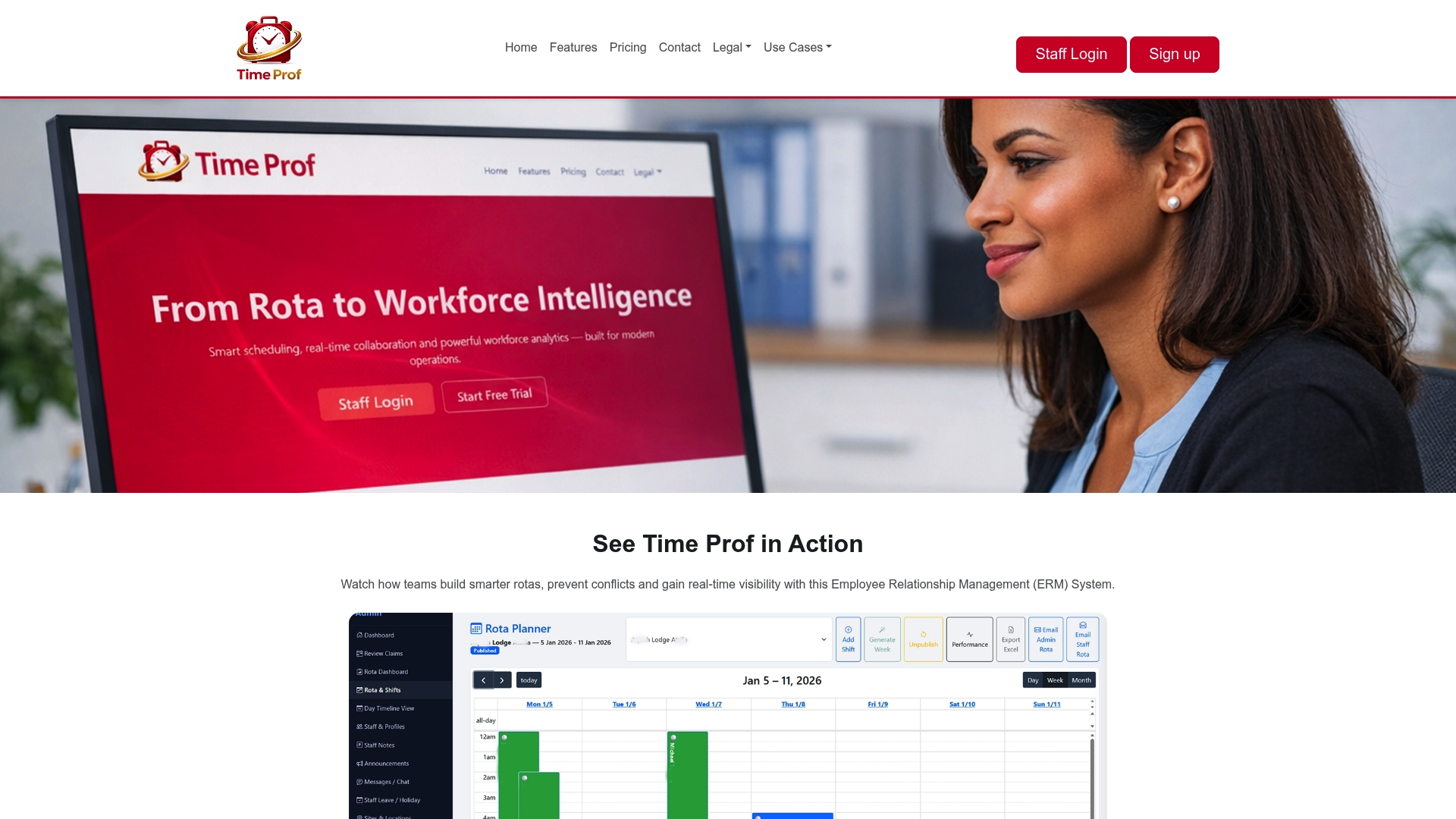
The platform brings rotas, attendance, skills records, shift communications, and compliance data into one place, replacing the spreadsheets and disconnected apps that make transparency impossible. Managers get live dashboards across all sites. Staff get a mobile portal where they can view their schedules, claim open shifts, and receive instant notifications. Geofenced clock-in creates audit-ready attendance records without manual input. Role-based access means every team member sees exactly what they need to, and nothing they should not. Explore Timeprof’s workforce intelligence platform to see how it supports transparency from rota to operational reporting.
FAQ
What is workforce transparency in care?
Workforce transparency in care is the open sharing of staffing data, shift information, skills records, and operational decisions with relevant managers and staff. It gives everyone the information they need to deliver safe, efficient care.
Why does workforce transparency matter for patient outcomes?
Hospitals with transparent workforce practices show measurable improvements in patient satisfaction. A 2025 study linked pay-transparency laws to a 7.69% improvement in patient satisfaction scores relative to overall ratings’ standard deviation.
How does workforce transparency support regulatory compliance?
CMS reporting rules and CQC requirements in 2026 demand detailed, accurate workforce data. Integrated platforms that track attendance, credentials, and hours in real time make compliance reporting faster and more reliable.
What are the biggest risks of poor workforce transparency?
A 2025 systematic review found that poorly implemented transparency can cause risk aversion and unintended negative reactions among staff. The key risk is introducing visibility without the cultural preparation and clear information-sharing policies to support it.
How can managers start improving workforce transparency today?
Audit every system where workforce data currently lives, consolidate it into a single platform with role-based access, and define clearly what information each staff group can see. Measure shift fill rates and absence before and after to track progress.