How seasonal demand affects care staffing: a manager's guide
Discover how seasonal demand affects care staffing. Learn key strategies to manage capacity gaps, improve staff morale, and control costs.

Seasonal demand creates predictable, recurring capacity gaps that threaten care continuity, damage staff morale, and push labour costs sharply upward. The good news: because these patterns repeat, they are manageable. The managers who handle peaks well treat them as an operational control problem, not a hiring emergency.
TL;DR
- Check three KPIs right now: fill rate, overtime hours, and sickness rate. These tell you whether you are already in a gap.
- Open your 8–12 week planning window before the next known peak. Waiting until the pressure arrives is too late to secure quality cover.
- Activate flexible cover options in layers: bank staff first, per-diem pool second, agency as a last resort.
Table of Contents
- What drives seasonal demand in UK care services?
- How does seasonal demand affect staffing, care quality, and costs?
- How to forecast seasonal demand and build an operational plan
- Which flexible staffing models work best for seasonal peaks?
- Rostering, incentives, and wellbeing during peak seasons
- How does workforce technology reduce seasonal staffing risk?
- UK compliance and regulatory considerations during seasonal peaks
- Planning timelines, cost shapes, and KPIs to track
- Workforce intelligence in action: how Timeprof supports seasonal planning
- Key takeaways
- The trade-offs managers actually face during seasonal peaks
- Timeprof turns your seasonal forecast into a filled rota
- Useful sources for further reading
What drives seasonal demand in UK care services?
Seasonal pressure in UK care is not random. It follows recognisable patterns tied to weather, illness, leave behaviour, and the calendar, and the services that feel it most acutely are those with the least scheduling slack.
Winter (October–March) is the most consistently pressured period. Respiratory syncytial virus (RSV) and influenza drive admissions up across residential, nursing, and acute settings. Norovirus outbreaks close bays and force cohort nursing, which compresses available staff across a site. Home care routes lengthen because carers travel more slowly in ice and snow, and some staff call in because they cannot reach clients safely. The NHS winter surge ripples into community and residential care as hospitals discharge patients earlier to free beds, increasing acuity in receiving services.
Summer (June–August) brings a different problem: holiday clustering. Staff take annual leave in overlapping blocks, and managers who have not capped simultaneous leave per unit discover the rota has collapsed by July. School holidays amplify this because a significant proportion of part-time care workers are parents. Demand from clients does not fall proportionally, particularly in home care and learning disability services.
Public holidays compress demand into short windows. Bank holiday weekends see reduced GP and community service availability, pushing acute need toward residential and home care providers. Staffing these days costs more and attracts fewer volunteers.
Heatwaves are an increasingly relevant driver in the UK. High temperatures increase the risk of dehydration, falls, and cardiovascular events among older and frail clients, raising care intensity at exactly the moment when staff attendance tends to dip.
Research consistently shows that hospital occupancy and staffing needs can swing by 15–25% between peak and trough months. Residential and home care services show comparable swings, though the shape differs by service type.
| Service type | Primary peak | Primary trough | Key seasonal driver |
|---|---|---|---|
| Residential / nursing care | November–February | July–August | Winter respiratory illness, norovirus |
| Home care | December–February | August | Weather, holiday clustering |
| Acute / inpatient | October–March | July | Flu, RSV, winter pressures |
| Learning disability / community | August, December | September | School holidays, public holidays |
Using two to three years of your own historical data is the most reliable way to find the repeating windows that matter for your specific service. Aggregate occupancy figures tell you the shape; your own call-out logs and agency spend records tell you where the rota actually broke.
How does seasonal demand affect staffing, care quality, and costs?
The effects are operational, clinical, financial, and human, and they compound each other quickly once a peak arrives.
Operationally, the first sign is unfilled shifts. Fill rate drops, overtime climbs, and managers start calling agency at short notice. Reactive staffing is a primary cause of burnout; the scramble itself exhausts the permanent team before the peak has even peaked.

On care quality, the risks are real and documented. Disrupted continuity of care, missed visits in home care, delayed admissions, and slower response times all correlate with understaffing. The WHO’s quality of care framework identifies staffing adequacy as a foundational condition for safe, effective care. When the rota is held together by goodwill and overtime, that foundation is fragile.
On workforce morale and retention, the timing is particularly damaging. January and February consistently show the highest resignation rates across care settings, arriving just as winter respiratory pressure peaks. Staff who have worked through a difficult December are already depleted when the post-Christmas resignation window opens. Losing experienced staff in Q1 strips institutional knowledge at the worst possible moment.
The financial impact is direct:
- Agency premium rates typically run significantly above the cost of bank or permanent staff.
- Overtime at time-and-a-half or double time accumulates fast across a team.
- Proactively planned facilities save 20–30% on premium labour costs compared with reactive hiring during peaks.
- Recruitment and onboarding costs for staff lost in the January resignation spike add a further delayed cost that rarely appears in the seasonal budget.
The pattern is self-reinforcing. Understaffing increases workload on remaining staff, which accelerates burnout and resignations, which deepens the gap. Breaking that cycle requires acting before the peak, not during it.
How to forecast seasonal demand and build an operational plan
Use a two to three year rolling baseline at weekly granularity. That is the answer. Everything else is the method.
Model-based forecasting that incorporates individual resident or patient acuity data produces materially better daily staff-time predictions than simple hour-counting. The principle applies directly to UK care settings: a unit can show enough scheduled hours on paper yet still lack the right competency at the right time or place. Good forecasting tests skill mix and, in home care, route travel time before the peak arrives.
Forecast inputs checklist
| Input | What it tells you |
|---|---|
| Historical census / occupancy by week | Where volume peaks and troughs fall across the year |
| Resident / patient acuity scores | Whether volume increases also mean higher care intensity |
| Authorised contracted hours by role | Your baseline capacity before leave and absence |
| Approved annual leave by week | Planned gaps in permanent team availability |
| Expected unplanned absence rate | Typical call-out pattern by season (use your own data) |
| Pending referrals and discharge pipeline | Forward demand signal, especially post-hospital discharge |
| Skill mix requirements by shift | Whether the right competencies are present, not just headcount |
| Travel time between visits (home care) | Route viability in winter conditions |
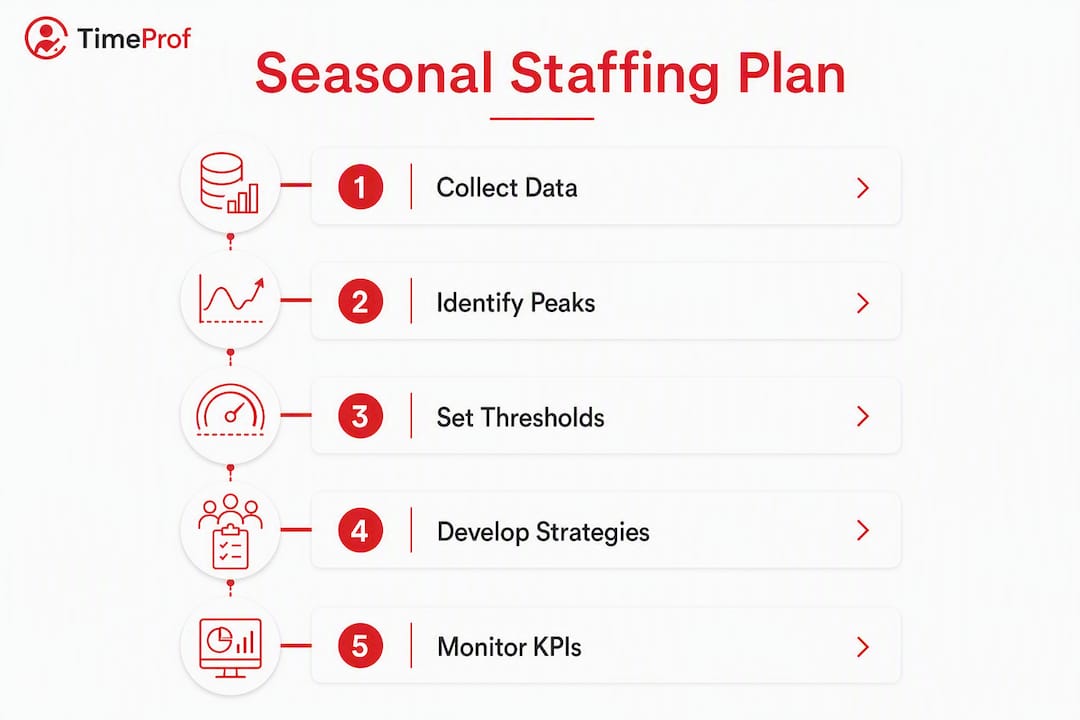
Once you have assembled these inputs, convert the forecast into decision triggers. Define the threshold at which you escalate: for example, if projected fill rate drops below 90% for two consecutive weeks, activate the bank pool. If it drops below 85%, open agency requests. Document those thresholds and review the forecast weekly during pressure windows.
Treating capacity forecasting as a live operational control rather than an administrative report is what separates managers who stay ahead of peaks from those who are perpetually reacting to them.
Pro Tip: The 8–12 week window before an expected peak is your operational sweet spot. Finalise staffing strategies and open conversations with bank and agency partners at that point. Waiting until the peak is visible on the rota is almost always too late to secure experienced temporary staff.
Which flexible staffing models work best for seasonal peaks?
Mix internal and external options in layers. Defaulting straight to agency cover is the most expensive and most morale-damaging response to a seasonal gap.
The right combination depends on your service type, lead time, and the competency requirements of the shifts you need to fill. The table below maps the main models against the dimensions that matter most when evaluating them.
| Model | Responsiveness | Cost shape | Morale impact | Compliance / audit | Scalability |
|---|---|---|---|---|---|
| Internal bank pool | Medium (days) | Low premium | Positive: familiar faces | Strong: existing records | Limited by pool size |
| Per-diem / zero-hours pool | Medium–high | Low–medium premium | Neutral to positive | Moderate: requires active management | Good if pool is maintained |
| Cross-trained internal staff | Low (requires lead time) | Minimal premium | Positive: development opportunity | Strong | Limited by training capacity |
| Internal float / supernumerary | High | Low | Positive | Strong | Limited to multi-site operators |
| Agency (framework) | High | High premium | Negative if overused | Variable: depends on agency systems | High |
Bank pool staff know your environment, your clients, and your documentation systems. They fill shifts faster in practice because induction is minimal. The constraint is pool depth: a bank that covers 10% of your peak demand is useful; one that covers 40% is a genuine buffer.

Per-diem and zero-hours arrangements give you flexibility without the agency margin, but they require active relationship management. Workers who feel underused outside peaks will not be available when you need them.
Cross-training is the most underused lever in residential and home care. A care worker trained to cover a second unit, or a support worker with medication competency, doubles the flexibility of your permanent team without adding headcount. The lead time is the catch: cross-training must happen in the trough, not the peak.
Agency has its place, particularly for specialist roles or when a sudden surge outstrips every internal option. The risk is normalisation. When agency becomes the default response to seasonal pressure rather than the last resort, costs compound and permanent staff notice the disparity in pay rates.
One residential care provider managing three sites reduced agency spend materially over two winters by building a shared bank pool across all three sites, maintaining a small per-diem pool for weekend cover, and cross-training eight care workers to cover two units each. The investment in cross-training took one quarter; the savings in agency premiums began the following winter.
Rostering, incentives, and wellbeing during peak seasons
Protect your permanent team first. Incentives and transparent rostering are not perks; they are the mechanisms that keep goodwill from being the only buffer between a safe rota and a dangerous one.
Roster controls that prevent collapse
Cap simultaneous annual leave per unit at a level you have tested against your minimum safe staffing threshold. Publish holiday rotas for the next quarter at least eight weeks in advance so staff can plan. Use a fair rotation rule for public holidays: if someone worked Christmas last year, they should not be first on the list this year. Structured shift swaps are useful, but only when competence is checked before the swap is approved. A swap that puts an unqualified worker in a medication round is not a solution.
Incentives that actually work
Shift differentials for bank holiday and weekend cover are the most straightforward tool. A targeted bonus for completing a full winter rota without unplanned absence rewards exactly the behaviour you need. Extra time off in lieu (TOIL) or additional annual leave for staff who cover peak periods costs less than agency and is valued highly by part-time workers. Shift differentials, bonuses, and extra PTO materially reduce burnout and agency reliance during peaks when combined with fair rostering.
Wellbeing check-ins during the peak period are not a luxury. A brief, structured conversation between a line manager and each team member every two to three weeks during winter pressure catches early signs of burnout before they become a resignation or a sickness absence. Pair that with protected rest breaks and you have a visible signal to staff that the organisation is paying attention.
Pro Tip: Record every incentive offer in writing, including who was offered it, when, and on what terms. Verbal incentive offers that are inconsistently applied are a reliable source of fairness disputes and grievances. A simple log in your scheduling system is enough.
Good scheduling practices directly affect carer retention; the way you manage the rota during a peak sends a clear signal about how the organisation values its staff.
How does workforce technology reduce seasonal staffing risk?
Real-time visibility of availability, skills, and open shifts materially reduces the time it takes to fill a gap. That is the core value. Everything else follows from it.
When a manager can see, on a single screen, which bank staff are available, which have the right competency for the shift, and which are already approaching their weekly hours limit, the decision that previously took three phone calls and a spreadsheet check takes minutes. That speed matters most during peaks, when gaps appear faster than manual systems can track them.
Features that make a practical difference
- Real-time availability: staff update their availability via a mobile app; managers see it instantly rather than waiting for a reply.
- Open-shift claims: publish an unfilled shift to eligible staff and let them claim it, rather than calling down a list.
- Skills and site matching: the system filters available staff by competency and site familiarity, preventing mismatches before they happen.
- Mobile scheduling: staff receive shift notifications, confirm or decline, and swap shifts from their phone. Mobile scheduling improves staff engagement and open-shift uptake significantly compared with phone-based coordination.
- Geofenced clocking: confirms that staff are physically present at the care location when they clock in, which matters for both safety and payroll accuracy.
- Audit trails and compliance reports: every scheduling decision, shift change, and attendance record is logged automatically, producing the documentation CQC and commissioners expect.
The downstream effect on costs is significant. Faster fill rates mean fewer last-minute agency calls. Better communication reduces no-shows. An auditable decision trail removes the ambiguity that leads to payroll disputes. Workforce data that is structured and accessible improves care decisions at every level of the organisation, not just during peaks.
A home health scheduling platform that integrates availability, skills, and mobile workflows demonstrates how these features translate directly into faster shift coverage and fewer coordination errors in community care settings.
UK compliance and regulatory considerations during seasonal peaks
Every flexible staffing arrangement must preserve safe practice and produce clear payroll and audit records. That is the non-negotiable baseline. The specific UK checks are below.
CQC and safe staffing
The Care Quality Commission expects providers to demonstrate that staffing levels are safe at all times, including during peaks. “We were short-staffed because it was winter” is not a defence in an inspection. What does carry weight is documented evidence that pressure was anticipated, monitored, and actively managed. Commissioners expect documented evidence that seasonal pressure is monitored and managed; capacity forecasting records are a strong defence when negotiating referral start dates or temporary service limits.
Working Time Regulations 1998
Staff working extended hours during peaks must still receive their 11-hour rest period between shifts and their 20-minute break in any shift over six hours. The 48-hour average weekly limit applies unless a worker has signed an opt-out. Track actual hours worked, not just scheduled hours, because the two diverge during peaks when overtime is common.
HMRC, payroll, and IR35
Agency workers and contractors engaged to cover seasonal peaks may fall within IR35 if they work in a way that resembles employment. Providers using personal service companies for clinical or care roles should take advice before the engagement, not after. For PAYE bank staff, holiday pay accrual must be calculated correctly even for workers on irregular hours; the Supreme Court’s ruling in Harpur Trust v Brazel [2022] changed how holiday entitlement is calculated for part-year workers.
Pension auto-enrolment
Bank and per-diem workers who meet the earnings trigger in any pay period must be auto-enrolled. Short-term seasonal engagements do not exempt a worker from assessment. This is an administrative burden that grows with pool size, so build it into your onboarding process rather than treating it as an afterthought.
This article provides general operational and informational guidance. Confirm current legal and regulatory requirements with a qualified employment lawyer or HR professional and check the latest CQC guidance directly.
Planning timelines, cost shapes, and KPIs to track
Start planning 8–12 weeks before an expected peak. Review weekly during the peak. Those two rules cover most of what goes wrong when seasonal staffing fails.
Implementation timeline
| Weeks before peak | Actions |
|---|---|
| 12–10 weeks | Pull historical data; identify forecast gaps; review bank pool depth |
| 10–8 weeks | Finalise leave caps; publish holiday rota; open bank and agency conversations |
| 8–6 weeks | Confirm cross-training completions; set incentive offers; brief team leads |
| 6–4 weeks | Weekly forecast review begins; activate open-shift process |
| — | Daily or twice-weekly fill rate check; escalate to agency if thresholds breached |
| During peak | Weekly capacity review; track KPIs; document all decisions |
| Post-peak | Debrief; update historical data; note what worked and what did not |
Cost shapes to understand
Agency premium rates vary by role and framework, but they consistently exceed bank and overtime rates. Overtime at time-and-a-half is cheaper than agency for a single shift but becomes expensive across a team over several weeks. Bank staff at a modest premium above contracted rate is usually the lowest-cost flexible option when the pool is deep enough. The cost of not planning, measured in agency spend and staff turnover, consistently exceeds the cost of the planning itself.
KPIs to monitor
| KPI | Definition | Target during peak |
|---|---|---|
| Fill rate | Percentage of shifts filled by scheduled start | — |
| Agency spend | Agency cost as a percentage of total staffing spend | ≤10% |
| Overtime hours | Total overtime hours as a percentage of contracted hours | ≤8% |
| Sickness rate | Percentage of shifts lost to unplanned absence | ≤4% |
| Staff turnover | Annualised resignation rate | Stable vs baseline |
| Missed visits / delayed admissions | Count of care commitments not met on time | Zero tolerance |
Workforce intelligence in action: how Timeprof supports seasonal planning
Workforce intelligence that links forecast to open shifts and skills mapping closes gaps faster than manual systems. Timeprof operationalises exactly that flow, from the forecast inputs through to the filled shift and the audit record.
Implementation checklist
- Connect your data inputs. Load historical census, contracted hours, approved leave, and skill profiles into Timeprof before the planning window opens.
- Configure skills and site requirements. Map which competencies are required for each shift type and site so the system can filter available staff correctly.
- Set up open-shift workflows. Define which roles can claim which shifts, and set the notification rules so eligible staff are alerted immediately when a gap appears.
- Train team leads on the weekly forecast review. Assign one named person per site to review the capacity dashboard weekly during pressure windows and document the outcome.
- Pilot on one site first. Run the full workflow, from forecast to fill to clock-out, on a single site for four to six weeks before scaling. Identify configuration gaps before they affect multiple sites.
- Activate geofenced clocking. Enable location verification for all shifts at the pilot site. This produces the attendance records CQC and commissioners expect without additional administrative effort.
- Generate and save compliance reports. Run the audit and staffing reports weekly during the peak. Store them in a format your CQC inspector or commissioner can access quickly.
A residential care provider using Timeprof across two sites reported that open-shift claims via the mobile app filled the majority of gaps within two hours of posting, compared with an average of several hours using phone-based coordination. Agency spend as a proportion of total staffing cost fell over the following winter as the bank pool became the primary cover mechanism. The audit trail produced by the platform was cited by the provider’s registered manager as a significant time-saver during their subsequent CQC inspection.
The workforce management tools checklist on the Timeprof blog gives a detailed breakdown of the features and procurement questions to ask when evaluating any workforce intelligence platform.
Key takeaways
Seasonal demand creates predictable capacity gaps that cost more to fix reactively than to prevent through structured forecasting, flexible staffing layers, and workforce technology.
| Point | Details |
|---|---|
| Start planning 8–12 weeks out | Finalise staffing strategies and open bank/agency conversations before the peak is visible on the rota. |
| Use a 2–3 year rolling baseline | Historical census, call-out logs, and agency spend data reveal your repeating pressure windows. |
| Layer flexible staffing options | Bank pool first, per-diem second, agency last; cross-training in the trough reduces peak dependency. |
| Track six KPIs during peaks | Fill rate, agency spend, overtime hours, sickness rate, turnover, and missed visits signal problems early. |
| Timeprof links forecast to filled shifts | Skills matching, open-shift claims, geofenced clocking, and audit trails replace manual coordination during peaks. |
The trade-offs managers actually face during seasonal peaks
The conventional wisdom on seasonal staffing tends to focus on the planning side: build a bank pool, forecast early, use technology. All of that is correct. What gets less attention is the moment when the plan meets reality and the trade-offs become personal.
The hardest decision during a winter peak is not whether to call agency. It is whether to ask a member of your permanent team to work their fourth consecutive weekend because the bank pool is exhausted and the agency cannot supply anyone with the right competency by 7 AM. You make that call knowing it will cost you something in trust, even if the person says yes. The incentive structures and rostering rules discussed earlier exist precisely to reduce how often you face that moment, but they do not eliminate it entirely.
What commissioners and CQC inspectors see is the outcome: was the shift covered, was it safe, is there a record? What your staff experience is the process: were they asked fairly, were they thanked, did the manager notice? Both matter, and the manager who treats them as separate problems will eventually lose staff they cannot afford to lose.
The lesson most managers take from their first difficult winter is to start the cross-training earlier, cap the leave sooner, and open the bank pool conversations before they feel urgent. The lesson from the second difficult winter is usually that the technology investment they deferred would have paid for itself in the first one.
Timeprof turns your seasonal forecast into a filled rota
When winter pressure arrives, the difference between a covered rota and a crisis often comes down to how quickly you can match an available, qualified worker to an open shift. Timeprof is built for exactly that moment.
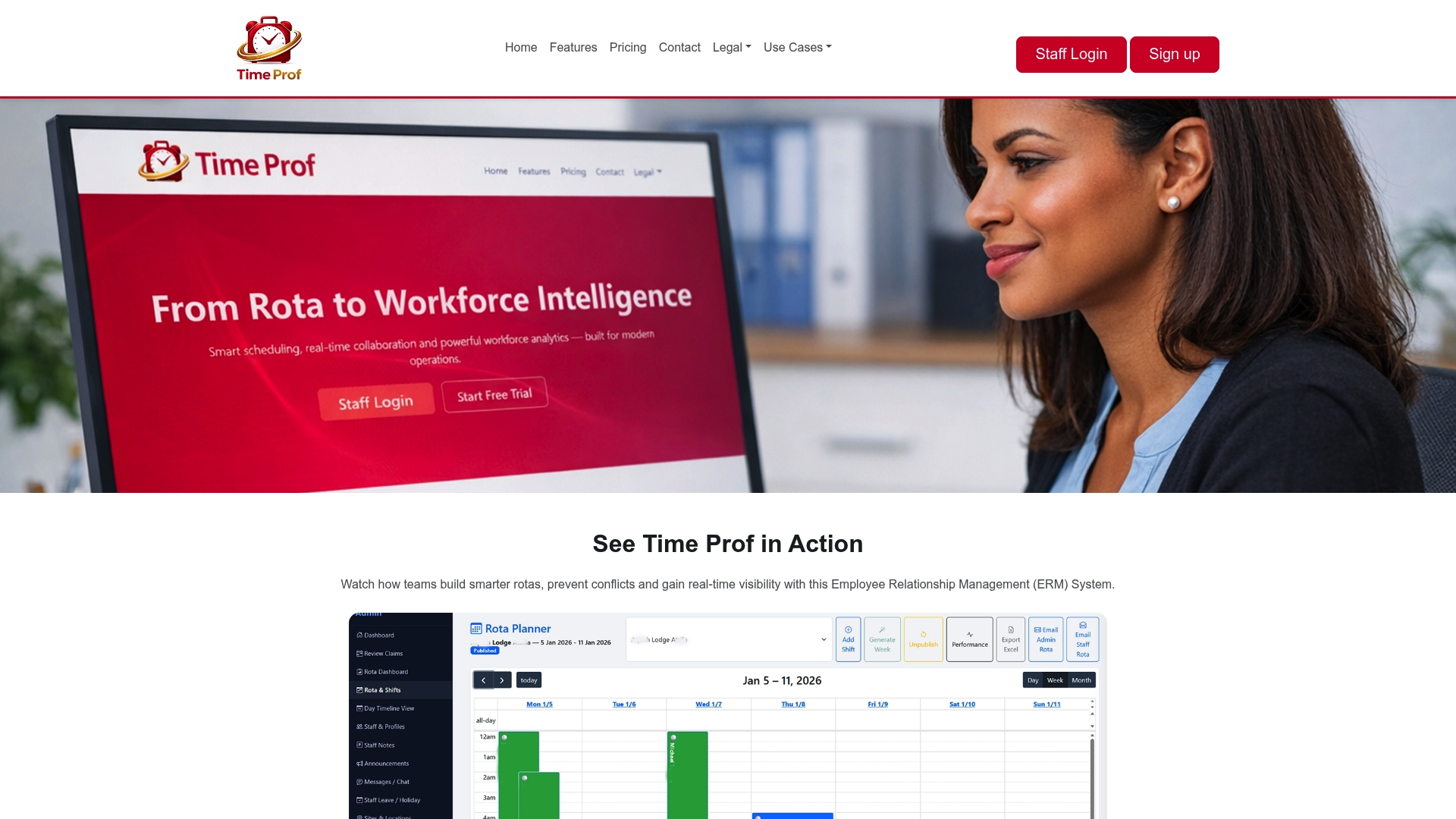
The platform connects your forecast inputs, bank pool, skills data, and open-shift workflow in one place. Staff claim shifts from their phone. Managers see real-time availability filtered by competency and site. Geofenced clocking confirms attendance automatically. Every decision is logged, producing the audit trail your CQC inspector and commissioners expect without anyone having to compile it manually.
For care providers managing seasonal pressure across multiple sites, Timeprof replaces the spreadsheets, group chats, and phone lists that break down under peak demand with a single, reliable system that scales.
Ready to see it in practice? Book a demo or start a free trial at timeprof.co.uk and see how Timeprof handles your next seasonal peak before it arrives.
Useful sources for further reading
The sources below were used in preparing this guide and provide authoritative further reading for managers assembling evidence for commissioners or CQC.
- Forecasting daily service need using resident acuity data — peer-reviewed research on model-based forecasting using individual assessment data for nursing homes.
- Innovative forecasting models for nurse demand — PMC research on advanced nurse demand forecasting methods relevant to care settings.
- WHO quality of care — the WHO framework identifying staffing adequacy as a foundational condition for safe, effective care.
- Timeprof workforce management blog — operational guides, templates, and feature explainers for UK care and health managers.