Why mobile scheduling helps care staff: 2026 guide
Discover why mobile scheduling helps care staff streamline operations, enhance communication, and reduce errors. Get insights for 2026!
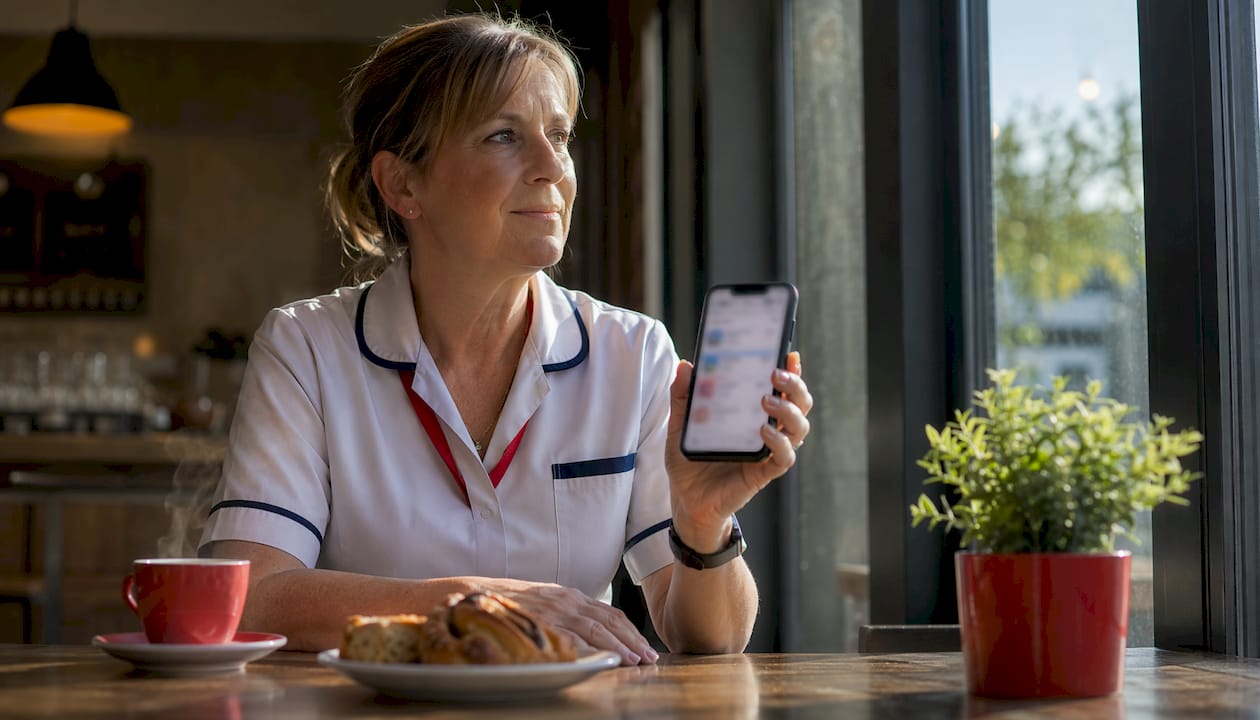
Mobile scheduling is the practice of using dedicated mobile applications to manage, update, and communicate staff rotas in real time. For care staff and their managers, it is the single most effective way to reduce scheduling errors, speed up communication, and give frontline workers genuine control over their working lives. Over 80% of frontline workers lack desk or email access, which makes phone-based tools not a convenience but a necessity. Understanding why mobile scheduling helps care staff means understanding how the care workforce actually operates: on the move, across multiple sites, and rarely near a desktop computer.
Why mobile scheduling helps care staff communicate faster
Poor communication is the root cause of most scheduling failures in healthcare. A missed phone call about a shift change can leave a ward understaffed. An email that goes unread until morning can trigger a cascade of cover requests, overtime costs, and staff frustration.
Mobile push notifications solve this directly. Push notification response times average just 8.5 minutes from staff, compared to the far longer waits typical of phone calls or email chains. That speed matters enormously in care settings where shift gaps need filling within the hour, not the next working day.
Automated shift reminders compound this benefit. One logistics case study found that automated communications reduced unplanned absence hours from 64.1 to 39.4 per month. The principle translates directly to care: when staff receive a reminder the evening before a shift, they are far less likely to miss it or forget a change.
Read receipt tracking adds another layer of reliability. Mobile scheduling platforms that implement comprehensive notification systems see 30–40% fewer scheduling errors and miscommunications. That reduction directly cuts the administrative burden on managers who would otherwise spend hours chasing confirmations.
- Push notifications reach staff in under 9 minutes on average, versus hours for email.
- Automated reminders cut unplanned absences by nearly 40%.
- Read receipts confirm that shift changes have been seen, removing guesswork.
- In-app messaging keeps all scheduling dialogue in one place, not scattered across WhatsApp threads.
Pro Tip: Set automated reminders to fire at two points: 24 hours before a shift and again two hours before. This two-stage approach catches both the planners and the last-minute forgetters.
How mobile scheduling supports care staff wellbeing
Burnout in the care sector is directly linked to unpredictable schedules and a lack of control. When a carer cannot see their rota until a manager posts a paper notice, or has to ring the office to request a shift swap, the administrative friction alone adds stress to an already demanding job.
Mobile scheduling removes that friction. Caregivers who manage availability flexibly via mobile apps report fewer cancellations and more sustainable working patterns. Setting precise availability through an app takes seconds. Requesting a shift swap does not require a phone call during office hours. These small reductions in effort accumulate into a meaningfully less stressful working life.
Pay transparency is a less-discussed but equally important benefit. Digital scheduling reduces payroll disputes by giving staff real-time visibility of their hours and pay. A carer who can check their logged hours against their expected pay at any point is far less likely to discover a discrepancy on payday, and far more likely to trust their employer. Caregivers who engage with schedules and pay details in real time feel more respected and valued, which directly supports retention.
The link between scheduling transparency and job satisfaction for care staff is well established. When staff can see their upcoming shifts, track their hours, and flag availability changes without involving a manager for every small request, they feel trusted. That sense of trust is a more powerful retention tool than many managers realise.
- Availability management lets staff set precise working windows, reducing unwanted shifts.
- Shift swap requests are handled in the app, cutting out phone calls and delays.
- Real-time pay tracking reduces payroll disputes and builds financial confidence.
- Schedule visibility gives staff the predictability they need to plan their personal lives.
Pro Tip: Encourage care staff to review their upcoming two weeks of shifts every Sunday evening via the app. This habit catches conflicts early and reduces last-minute swap requests that disrupt the whole team.
How do managers benefit from mobile scheduling tools?
Managers in care settings rarely sit at a desk for eight hours. They are on the floor, in meetings, travelling between sites, or responding to incidents. A scheduling system that requires desktop access is a system that slows them down.
Mobile-first workforce management platforms allow managers to update rotas and approve shifts in real time from wherever they are. A manager who spots a coverage gap at 7:00 AM can post an open shift, review claims, and confirm cover before the morning handover. That speed is impossible with spreadsheets or desktop-only systems.
Real-time workforce visibility via mobile apps lets managers see staff availability and coverage gaps across multiple sites simultaneously. This matters particularly in care organisations running several residential homes or community teams. A manager overseeing three sites does not need to ring each site coordinator; the dashboard shows the full picture instantly.
The operational gains stack up in a clear sequence:
- Rota updates are made from any location, cutting the delay between a gap appearing and cover being arranged.
- Open shift claims are visible in real time, so the most suitable available carer gets the shift rather than the first person the manager can reach by phone.
- Attendance tracking with geofenced clock-in confirms that staff are on site, removing the need for manual sign-in sheets.
- Compliance records are generated automatically, giving managers audit-ready timesheets without manual data entry.
- Skills matching ensures that shifts requiring specific qualifications are only offered to staff who hold them, reducing risk.
| Task | Traditional method | Mobile scheduling |
|---|---|---|
| Filling a last-minute shift | Phone round of available staff | Post open shift; receive claims within minutes |
| Confirming attendance | Paper sign-in or phone check | Geofenced clock-in with automatic record |
| Approving a shift swap | Email or verbal agreement | In-app request and approval in seconds |
| Checking coverage gaps | Manual rota review | Live dashboard across all sites |
The efficiency gains from reducing scheduling errors are not marginal. Fewer errors mean fewer emergency calls, less overtime, and less time spent correcting mistakes that should never have occurred.
Mobile scheduling versus traditional scheduling in healthcare
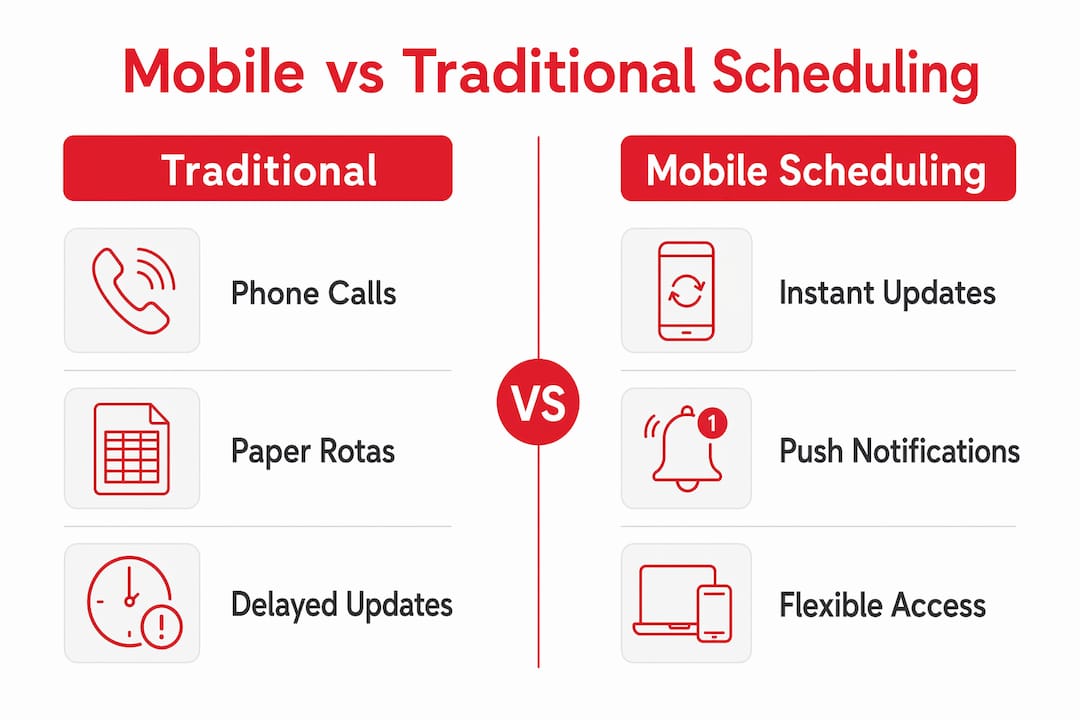
Traditional scheduling in healthcare relies on phone calls, emails, paper rotas, and physical notice boards. Each of these channels introduces delay and the possibility of miscommunication. A rota pinned to a staffroom wall is invisible to a carer working a night shift at a different location.
Mobile apps centralise all scheduling information in one place. Every member of staff sees the same rota, receives the same notifications, and has access to the same shift history. This single source of truth eliminates the version-control problem that plagues paper and spreadsheet-based systems, where two people can be working from different versions of the same rota without knowing it.
The impact on absenteeism is measurable. Automated reminders and real-time notifications address the two most common causes of unplanned absence: forgetting a shift and failing to receive a change notification in time. Caregivers report higher job satisfaction when schedules are transparent and flexible, and satisfied staff take fewer unplanned days off.
The common scheduling challenges that managers face with traditional methods, including double-bookings, missed communications, and skills mismatches, are structural problems with the medium, not the manager. Mobile scheduling changes the medium entirely.
- Traditional rotas require HR intervention for every change. Mobile apps give staff self-service access.
- Phone-based communication leaves no audit trail. Mobile notifications are logged automatically.
- Paper rotas cannot account for real-time availability changes. Mobile platforms update instantly.
- Spreadsheet errors compound over time. Mobile scheduling platforms apply rule-based validation at the point of entry.
Key takeaways
Mobile scheduling is the most direct way to reduce errors, speed up communication, and improve staff wellbeing in care settings.
| Point | Details |
|---|---|
| Communication speed | Push notifications reach staff in under 9 minutes, far faster than calls or email. |
| Absence reduction | Automated reminders cut unplanned absence hours by nearly 40%. |
| Staff wellbeing | Real-time schedule and pay visibility reduces stress and builds trust with employers. |
| Manager efficiency | Mobile access lets managers fill gaps, approve shifts, and track attendance from any location. |
| Error reduction | Read receipt tracking and rule-based validation cut scheduling errors by 30–40%. |
The case for mobile-first: a view from the field
The conversation about mobile scheduling in care often focuses on efficiency metrics. Response times, absence rates, error percentages. Those numbers matter, but they miss the more fundamental point.
Care is a deskless profession. It always has been. The tools built for office workers, the desktop scheduling systems, the email-based approval chains, the shared spreadsheets, were never designed for people who spend their days in someone else’s home or on a hospital ward. Applying those tools to care staff is like issuing a lorry driver with a bicycle and calling it a vehicle upgrade.
What I have seen repeatedly is that the organisations making the biggest gains from mobile scheduling are not the ones with the most sophisticated platforms. They are the ones that genuinely commit to mobile as the primary channel, not a secondary add-on to a desktop system. When managers update rotas from their phones as a matter of course, and when staff check their shifts on the app rather than ringing the office, the whole system starts to work as intended.
The wellbeing argument is the one I find most compelling. Scheduling uncertainty is a form of chronic low-level stress. A carer who does not know their shifts for next week cannot plan childcare, cannot commit to social arrangements, and cannot rest properly. Mobile scheduling does not just make the manager’s job easier. It gives care staff back a degree of control over their own lives. That is not a minor operational improvement. It is a meaningful change in how people experience their work.
The platforms that will define workforce management in care over the next five years are the ones being built around the shift planning practices that frontline workers actually need, not the ones retrofitting office software for a care context.
— Michael
Timeprof: mobile scheduling built for care teams
Care managers dealing with last-minute gaps, paper rotas, and staff ringing in to check their shifts will recognise the problems that Timeprof is built to solve.
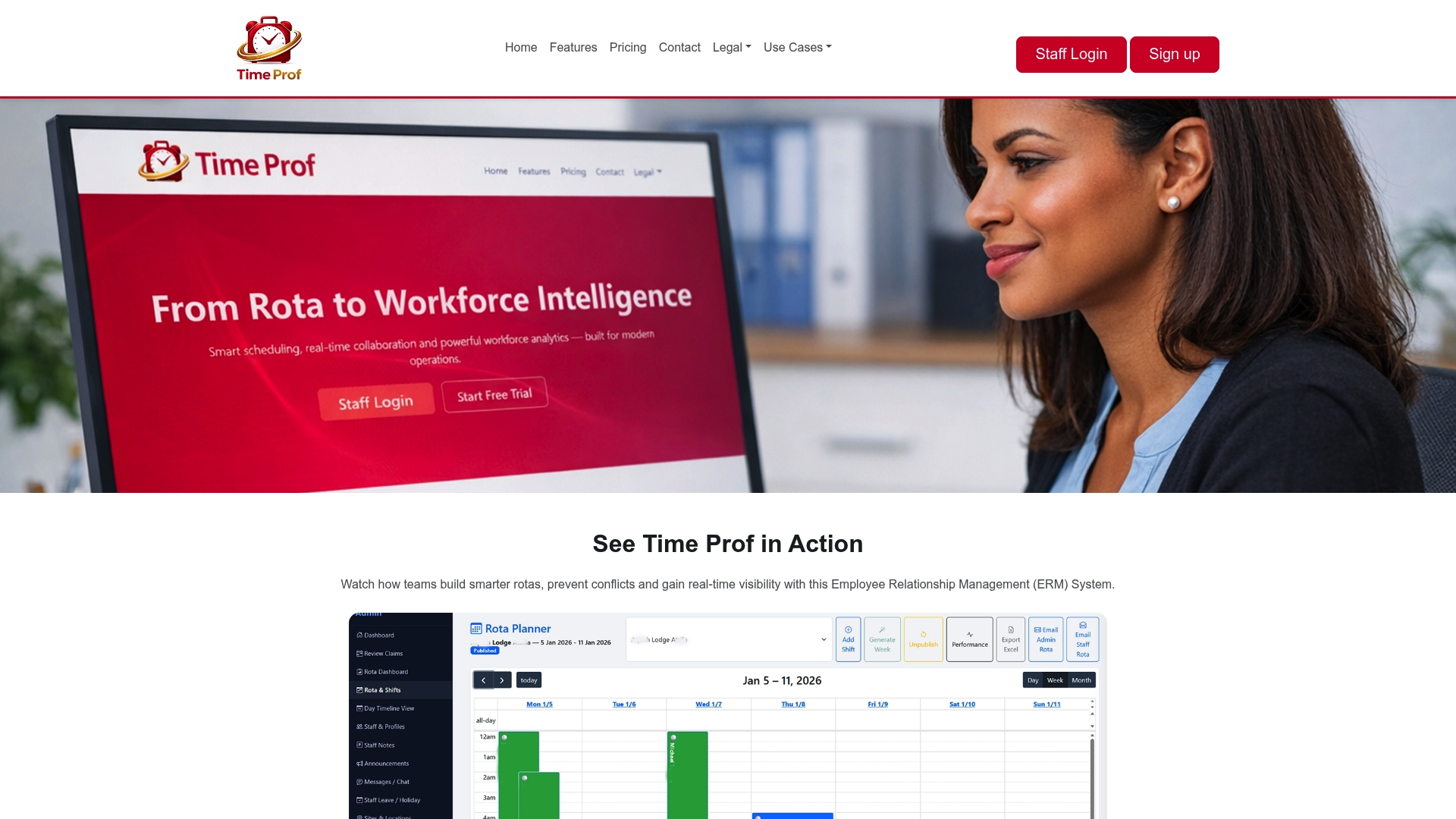
Timeprof is a mobile-first workforce intelligence platform that brings rota management, real-time notifications, shift claims, geofenced clock-in, and payroll-accurate timesheets into one place. Care staff access their schedules, set availability, and request changes through a secure mobile portal. Managers get live visibility across all sites, with audit-ready records generated automatically. The platform replaces the phone calls, spreadsheets, and disconnected systems that slow care teams down. Visit Timeprof’s workforce platform to see how it works for care organisations of every size.
FAQ
Why do care staff need mobile scheduling?
Care staff work in deskless environments where over 80% have no company email access. Mobile scheduling gives them instant, reliable access to rotas, shift changes, and communications without requiring a desktop or office visit.
How does mobile scheduling reduce no-shows?
Automated shift reminders sent via push notification address the two main causes of unplanned absence: forgetting a shift and missing a change notification. Case data shows this approach can cut unplanned absence hours by nearly 40%.
Can mobile scheduling improve staff retention in care?
Caregivers report higher job satisfaction when they have real-time visibility and control over their schedules. Transparency and flexibility delivered via mobile are directly linked to lower turnover in care settings.
How quickly do staff respond to mobile schedule notifications?
The median response time to a push notification about a schedule change is 8.5 minutes. That compares favourably to the hours typically required when relying on phone calls or email.
What is the difference between mobile scheduling and a paper rota?
A paper rota is static, location-dependent, and leaves no audit trail. Mobile scheduling updates in real time, reaches staff wherever they are, logs all changes automatically, and gives both managers and staff a single, accurate view of the rota at all times.