How CQC affects workforce scheduling: 2026 guide
Discover how CQC affects workforce scheduling.Learn to optimize staffing in real-time, meeting care demands effectively in 2026.

How the CQC directly shapes your workforce scheduling
The CQC affects workforce scheduling by requiring that staffing levels, skills, and deployment consistently match the assessed needs of service users — not fixed ratios, not historical patterns, and not convenience. Under the Single Assessment Framework, inspectors evaluate staffing through the “Safe” and “Well-Led” quality statements, scrutinising whether your rota reflects real care demand at any given moment.

Static schedules are a liability. The CQC expects real-time responsiveness: when a resident’s needs increase overnight, your records should show how staffing was adjusted or the on-call system activated. Audit trails of rota changes and management decisions are not optional extras — they are the evidence inspectors reach for first.
Key staffing elements under CQC scrutiny include:
- Skills mix: the right balance of senior and junior staff on every shift, mapped to the specific needs of people in your care
- Continuity: consistent staff allocation to reduce the disruption caused by unfamiliar faces
- Contingency planning: documented processes for covering unexpected absences without defaulting to unvetted agency workers
- Audit trails: timestamped records linking rota decisions to care outcomes and risk assessments
- Governance oversight: leadership demonstrating proactive, not reactive, workforce management
Inspection backlogs add a further operational pressure. The time taken to re-inspect after a “Requires Improvement” rating rose from 142 days in 2015 to 360 days in 2024. Providers stuck on a poor rating face real commercial consequences: commissioners and NHS discharge teams can and do refuse contracts on that basis.
Table of Contents
- What CQC compliance actually demands from your scheduling practices
- Timeprof gives you the scheduling evidence CQC expects
- Key takeaways
What CQC compliance actually demands from your scheduling practices
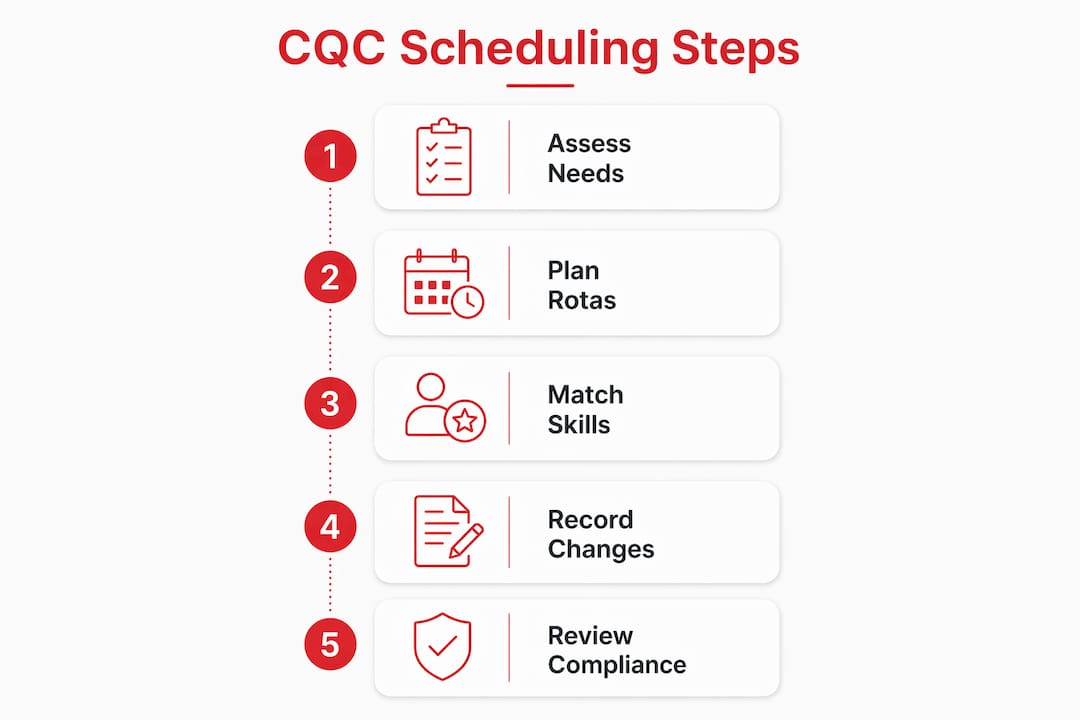
Needs-led rota planning
Rotas must reflect assessed dependency and risk, not what worked last month. Workforce deployment evidence must show how staffing decisions are made, reviewed, and adjusted when risk changes — not simply that shifts were filled.
Regulation 17 and governance obligations
Regulation 17 (Good governance) requires leaders to integrate staffing data with care delivery outcomes and proactively adjust staffing levels. Inspectors favour this over reactive scheduling. A registered manager who can show monthly governance reviews, staffing audits, and documented trend analysis is demonstrating exactly what the CQC wants to see.
The burnout loop and agency dependency
Running permanently lean on staff forces your permanent workforce into excessive overtime, which drives sickness spikes and resignations. High reliance on emergency, unvetted agency staff is a direct red flag for inspectors: it lowers “Well-Led” ratings immediately, and inspectors cross-check agency credentials rigorously. Your bank staff should be a strategic resource, not a crisis measure — and your records should show the difference.
What inspectors actually look at
The CQC prioritises planned versus actual staffing data above almost any other workforce metric. If a shift ran short due to last-minute sickness, the question is whether you documented the risk assessment, adjusted care delivery, and recorded your mitigation. Inspectors also conduct direct staff interviews: consistent reports of unsafe or unrealistic schedules signal leadership failure, regardless of what the rota says on paper.
Pro Tip: Build a monthly “Safe Staffing” review into your governance meetings. Compare dependency assessments against actual rota delivery, and record the outcome. That single habit creates the audit trail inspectors look for.
For managers wanting to reduce common scheduling errors before an inspection, addressing skills-matching gaps is often the fastest win. Pairing skills-based rostering with real-time attendance data closes the gap between what the rota planned and what actually happened on the floor.
Technology platforms that combine scheduling, attendance tracking, and audit-ready reporting give managers the live oversight needed to meet CQC expectations. Platforms with real-time staff oversight capabilities and geofenced clock-in remove the guesswork from planned-versus-actual comparisons. For broader workplace safety compliance, integrating safety monitoring with scheduling data strengthens the evidence base further.
Timeprof gives you the scheduling evidence CQC expects
Spreadsheets and disconnected systems cannot produce the audit trails, real-time adjustments, and governance evidence that CQC inspections now demand. Timeprof brings scheduling, attendance, skills matching, and compliance reporting into one platform — so the evidence is built automatically as your team works, not assembled in a panic before an inspection.
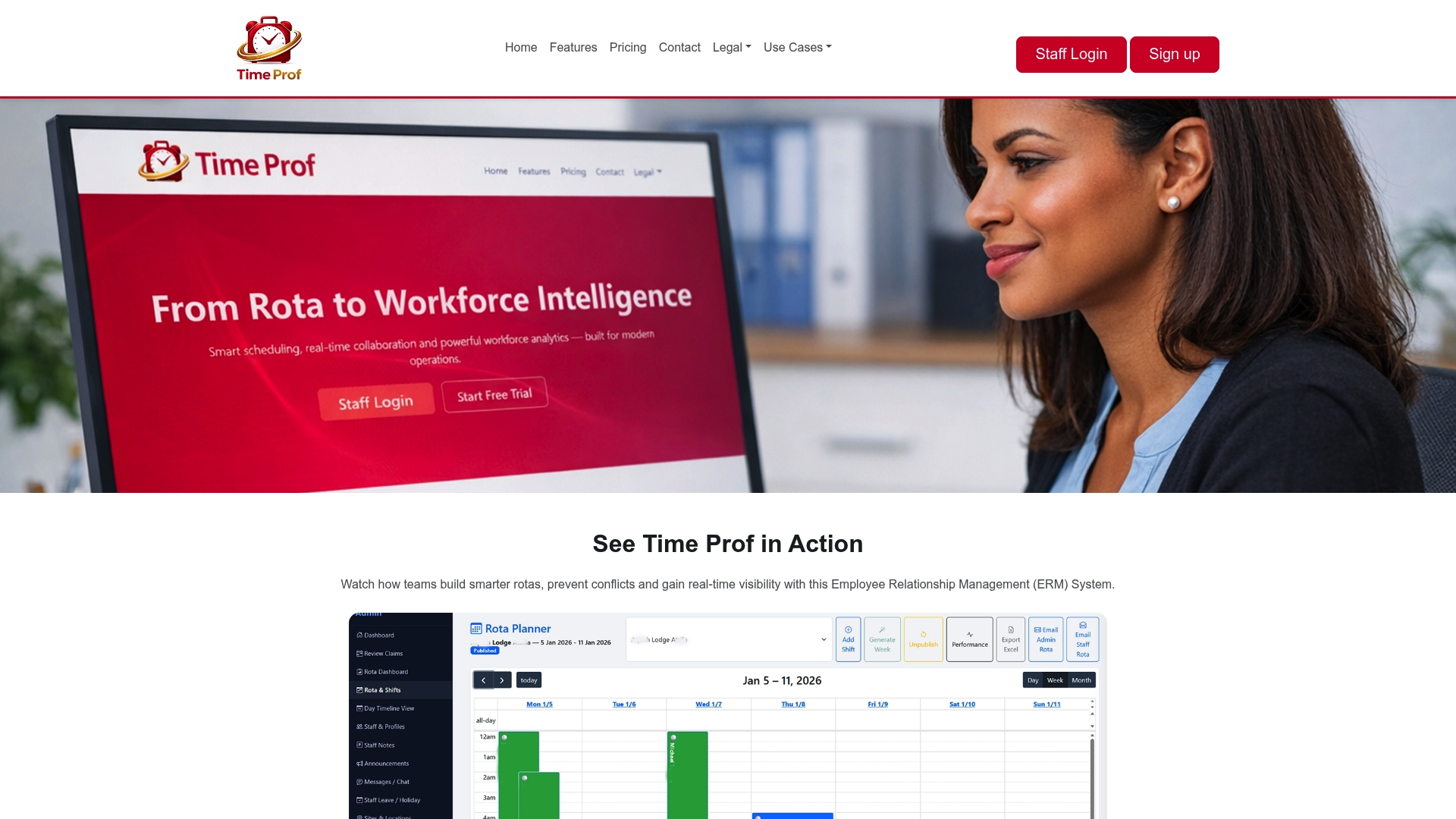
Timeprof’s live multi-site dashboards show planned versus actual staffing at a glance. Geofenced clock-in confirms who is actually on site. Audit records capture every rota change with a timestamp. For managers across care, healthcare, security, hospitality, cleaning, and retail, that means inspection-ready documentation without extra administration.
Start with Timeprof and replace fragmented rotas with a single, reliable source of workforce truth.
Key takeaways
CQC-compliant workforce scheduling requires needs-led rotas, documented real-time adjustments, and governance evidence that links staffing decisions directly to care outcomes.
| Point | Details |
|---|---|
| Needs-led rotas | Staffing must reflect assessed dependency and risk, not historical patterns or convenience. |
| Planned vs actual data | Inspectors prioritise documented evidence of how staffing gaps were mitigated, not just the original rota. |
| Regulation 17 compliance | Leaders must integrate staffing data with care outcomes and show proactive, not reactive, adjustments. |
| Inspection backlog pressure | Re-inspection after “Requires Improvement” ratings can experience notable delays, making every rating commercially significant. |
| Timeprof for audit-ready evidence | Timeprof automates audit trails, real-time attendance, and skills matching to support CQC compliance across sectors. |