Common timesheet errors businesses make (and how to fix them)
Discover common timesheet errors businesses make and learn simple fixes to streamline payroll accuracy. Avoid compliance issues today!

Missing punches, wrong pay rates, and time theft cause the majority of payroll mistakes in UK businesses. The fixes are not complicated: require manager sign-off each pay period, lock timesheets after the payroll cut-off, and replace paper logs with geofenced clock-ins. Around 44% of small businesses name timesheet errors as their biggest time-tracking problem, yet most of those errors repeat month after month because no corrective process is ever formalised. HMRC expects employers to keep accurate wage records for multiple years; sloppy timesheets are not just an admin headache, they are a compliance liability.
The most common errors at a glance:
- Missed clock-ins/outs — staff forget to punch; managers estimate and get it wrong. Fix: automated reminders plus a mandatory manager review before payroll runs.
- Incorrect pay rates — wrong rate applied to a shift, especially where multiple rates exist (nights, weekends, bank holidays). Fix: link shift types directly to pay rules in your system.
- Rounding errors — rounding to the nearest 15 or 30 minutes masks overtime leakage and can produce systematic underpayment. Fix: minute-accurate tracking.
- Duplicate entries — the same hours logged twice, often when staff self-report and a manager also enters data. Fix: single-entry source with role-based edit permissions.
- Unapproved overtime — hours worked beyond contracted time that nobody signed off. Fix: exception reports that flag overtime before payroll closes.
- Buddy punching / time padding — a colleague clocks in on someone else’s behalf. Fix: geofenced clock-ins tied to a named device or location.
- Late submissions — timesheets arrive after the payroll cut-off, forcing estimates or delays. Fix: hard submission deadlines enforced by the system, not by email reminders.
Timeprof’s audit-ready platform addresses every one of these failure modes in a single system. The sections below explain the causes, costs, and a step-by-step corrective process you can put in place this week.
Table of Contents
- What are the most common timesheet mistakes and why do they keep happening?
- Why do timesheet errors cost more than most managers expect?
- Paper versus electronic timesheets: which one actually reduces risk?
- How do you prevent timesheet errors and correct them when they occur?
- How Timeprof maps its features to each of these problems
- Key takeaways
- Why the real problem is not the errors themselves
- Timeprof gives you the controls to stop errors before payroll runs
- Useful UK sources and further reading
What are the most common timesheet mistakes and why do they keep happening?
Most timesheet problems are not caused by dishonest staff. They are caused by unclear rules, fragmented systems, and the absence of any formal review step. Here is what each error actually looks like in practice.

1. Missed clock-ins/outs A care worker finishes a night shift and forgets to clock out. The manager estimates the end time, gets it slightly wrong, and a payroll dispute follows two weeks later. This is the single most frequent failure mode, and it compounds quickly across a multi-site operation.

2. Late timesheet submissions Staff submit hours after the payroll cut-off. Payroll either estimates or delays the run. Both options carry cost and risk. The root cause is almost always the absence of a hard system deadline.
3. Duplicate or overlapping hours This happens when two data sources feed the same payroll: a self-reported spreadsheet and a manager’s rota, for example. The same four-hour shift appears twice. Without an automated overlap check, it passes unnoticed until a finance query surfaces it.
4. Incorrect pay rates Variable pay is common in UK sectors such as hospitality, care, and security. A Saturday rate applied to a Sunday shift, or a standard rate applied to a bank holiday, produces an underpayment that is both a payroll error and a potential National Minimum Wage breach.
5. Missed rest breaks UK Working Time Regulations require a 20-minute rest break for shifts longer than six hours. If breaks are not recorded, the timesheet overstates hours worked and the employer cannot demonstrate compliance during an inspection.
6. Rounding errors Rounding to the nearest 15 or 30 minutes is a habit left over from paper timesheets. It systematically hides overtime leakage and makes project cost tracking unreliable. Minute-accurate records are the only way to see true labour costs.
7. Misallocated project or cost codes In cleaning, security, and facilities management, hours must be allocated to specific client sites or contracts. A wrong code means one client is overbilled and another underbilled. The error is invisible until a contract review.
8. Unapproved overtime Missing punches, unapproved overtime, and duplicate entries are the most frequently flagged timecard issues in employer guides. Overtime that is worked but never approved creates a liability: the employer owes the pay but has no record of authorising it.
9. Buddy punching and time padding Buddy punching often stems from unclear expectations rather than deliberate fraud. When there is no location verification and no cultural norm around accurate reporting, the behaviour spreads. Clear policies combined with verification tools reduce both the incentive and the opportunity.
10. Manual transcription errors Copying hours from a paper sheet into a spreadsheet, then from a spreadsheet into payroll software, introduces a transcription error at every transfer point, but adopting booking software to reduce admin time can help automate these processes and minimize errors. Each step is a chance for a digit to be transposed or a row to be skipped.
UK-specific complications worth noting: shifts that cross midnight need to be split across two calendar dates for correct statutory leave accrual. Variable pay elements (unsocial hours supplements, sleep-in rates in care) must be mapped to the correct shift type. Get either wrong and the downstream effect on holiday pay calculations can be significant.
Why do timesheet errors cost more than most managers expect?
The immediate cost of a payroll error is visible: an overpayment or underpayment that needs correcting. The hidden cost is the staff time consumed in finding, investigating, and fixing it.
| Cost element | Typical impact |
|---|---|
| Single error correction | Estimated cost per error in combined staff investigation and processing time (industry research puts the typical figure near $291 per error when factoring in combined investigation and correction steps) |
| Time per dispute | Resolving one discrepancy typically takes several hours across manager, HR, and payroll |
| Annual admin cost | Manual processing and corrections estimated at £10,000–£13,000 per year in staff time |
| HMRC audit risk | Poor records increase exposure during a National Minimum Wage or Working Time compliance check |
Those correction hours involve at least three people: the manager who investigates the original shift, the payroll administrator who recalculates, and often an HR contact who handles any staff dispute. A single missed punch can consume an afternoon.
The compliance dimension is separate but equally serious. HMRC requires employers to retain payroll records for at least three years, and Working Time records for two years. If records are incomplete or inconsistent, an inspection becomes far harder to defend. Businesses in care and security face additional scrutiny because their sector regulators may also request attendance evidence.
Damaged staff trust is the cost that rarely appears on a spreadsheet. An employee who is underpaid, even by a small amount, loses confidence in the organisation. Repeated payroll errors are one of the more reliable predictors of staff turnover.
Paper versus electronic timesheets: which one actually reduces risk?
The short answer: paper timesheets are adequate only for very small, single-site teams where the manager personally oversees every shift. For any business with more than a handful of staff, or with variable pay, multiple sites, or mobile workers, paper introduces more risk than it removes.
| Feature / control | Paper timesheets | Spreadsheets | Electronic system |
|---|---|---|---|
| Audit trail | None | Limited (version history if enabled) | Full, timestamped, tamper-evident |
| Duplicate entry detection | Manual check only | Formula-dependent | Automated |
| Geofenced clock-in | Not possible | Not possible | Available |
| Payroll integration | Manual re-entry | Semi-manual export | Direct integration |
| Overtime exception alerts | None | Manual formula | Automated flags |
| HMRC-ready export | Manual compilation | Manual compilation | One-click report |
| Mobile workforce support | Poor | Poor | Strong |
Spreadsheets sit in an awkward middle ground. They feel structured, but they carry most of the same risks as paper: no real audit trail, no automated overlap detection, and a manual transfer step into payroll. The benefits of moving to an integrated platform become clear the moment you calculate how many hours your payroll team spends on manual reconciliation each month.
For multi-site operations in care, hospitality, or security, the case for an electronic system is not really about convenience. It is about having a single source of truth that every manager, payroll administrator, and auditor can access without having to chase paper files or reconcile competing spreadsheets.
Pro Tip: Before committing to any electronic system, check whether it can export attendance data in a format your payroll provider accepts directly. A system that still requires manual re-entry at the payroll stage has not solved the transcription problem.
How do you prevent timesheet errors and correct them when they occur?
Prevention is a combination of policy, training, and system controls. Correction is a documented workflow. Both need to exist before the next payroll run.
Prevention checklist
- Set a written timesheet policy. Define submission deadlines, who approves, what counts as an authorised absence, and how disputes are raised. Distribute it at onboarding and review it annually.
- Enforce manager approval before every payroll run. Payroll specialists recommend closing timecards and requiring manager sign-off during the pay cycle to prevent overtime creep and late corrections.
- Lock timesheets after the cut-off. Staff and line managers should not be able to edit a submitted timesheet once payroll has started processing. Role-based edit permissions enforce this automatically.
- Run exception reports before closing payroll. Flag missing punches, overlapping entries, and unapproved overtime before they become corrections.
- Enable geofenced clock-ins for mobile or multi-site staff. Location verification removes the opportunity for buddy punching and confirms the worker was actually on site.
- Use minute-accurate tracking. Drop rounding policies. They hide overtime and make project cost allocation unreliable.
- Train staff and managers together. Most errors are procedural, not deliberate. A 30-minute walkthrough of the submission and approval process at onboarding prevents months of corrections.
- Integrate time data directly with payroll. Automating the data flow between time and payroll systems eliminates the transcription step where most manual errors occur.
Correction workflow
When an error is discovered after payroll has run, follow this sequence:
- Document the discrepancy — record the original entry, the correct entry, and the date the error was identified.
- Investigate the cause — was it a missed punch, a wrong rate, or a system configuration issue?
- Calculate the adjustment — overpayment and underpayment are handled differently; underpayments must be corrected in the next pay run at minimum.
- Communicate with the employee — explain what happened and what the correction will be, in writing.
- Process the payroll adjustment — follow your payroll provider’s correction procedure and retain the documentation.
- Update the audit record — log the original error, the correction, and the root cause.
- Close the loop — if the same error has occurred before, adjust the policy or system setting that allowed it.
Pro Tip: Review timesheets weekly, not just at the payroll cut-off. A weekly approval cadence catches errors while the shift is still fresh in everyone’s memory, and it prevents a backlog of disputed hours arriving all at once on payroll day.
How Timeprof maps its features to each of these problems
Timeprof is built around the premise that most timesheet errors are preventable at the system level, not just the policy level. Here is how specific platform features address the errors covered above.
- Geofenced clock-in removes buddy punching and confirms on-site attendance. Staff clock in from their mobile device; the system verifies their location against the assigned site before accepting the entry.
- Automated approval workflows mean a timesheet cannot proceed to payroll without manager sign-off. Overtime that has not been authorised is flagged before it becomes a liability.
- Audit-ready records provide a full, timestamped history of every clock-in, edit, and approval. When HMRC or a sector regulator requests attendance evidence, the export is available immediately rather than requiring manual compilation from paper files.
- Role-based access prevents staff from editing their own approved timesheets and stops managers from altering records outside their own team.
- Exception reporting flags missing punches, overlapping shifts, and unapproved overtime automatically, so payroll administrators see problems before the run closes rather than after.
- Direct payroll integration eliminates the manual transfer step. Hours flow from the clock-in record to the payroll calculation without a spreadsheet in between.
- Shift-linked pay rules attach the correct rate to each shift type automatically. A bank holiday shift carries the bank holiday rate; a night shift carries the night rate. No manual rate selection, no wrong-rate errors.
For UK businesses in care, security, hospitality, or cleaning, the compliance reporting is particularly relevant. Timeprof’s workforce reports give managers visibility into labour costs and overtime patterns across multiple sites, which is the kind of oversight that prevents the slow accumulation of unapproved hours that nobody notices until a contract review or an inspection.
The platform also supports structured onboarding, so new managers learn the approval workflow from day one rather than inheriting the informal habits of whoever they replaced.
Key takeaways
Preventing timesheet errors requires three things working together: a clear written policy, a manager approval cycle that runs before every payroll cut-off, and a system that automates the controls that humans forget.
| Point | Details |
|---|---|
| Most errors are preventable | Missed punches, wrong rates, and duplicate entries account for the majority of payroll corrections and are all addressable at the system level. |
| Hidden costs are significant | Resolving a single discrepancy typically takes several hours across manager, HR, and payroll; annual admin costs can be significant. |
| Manager approval is the single most effective control | Closing timecards and requiring sign-off before payroll runs prevents overtime creep and catches errors while they are still easy to fix. |
| Paper and spreadsheets carry structural risk | Neither provides an audit trail, automated overlap detection, or direct payroll integration; electronic systems remove the manual transfer step where most transcription errors occur. |
| Timeprof addresses each failure mode directly | Geofenced clock-in, approval workflows, exception reports, and audit-ready exports map to the specific errors covered in this article. |
Why the real problem is not the errors themselves
Most articles on timesheet accuracy focus on the errors. The more useful question is why the same errors recur in the same organisations, month after month, despite everyone knowing they are a problem.
The honest answer is that timesheet accuracy is treated as a staff responsibility when it is actually a systems and management responsibility. If there is no hard submission deadline enforced by the platform, staff will submit late. If there is no approval step, overtime will creep. If there is no location verification, buddy punching will happen in environments where attendance pressure is high and oversight is low.
The businesses that eliminate recurring payroll corrections are not the ones with the most disciplined staff. They are the ones that have removed the conditions that allow errors to persist: a single data source, a mandatory approval cycle, automated exception flags, and a correction workflow that is documented rather than improvised.
Measuring progress is straightforward. Track the number of payroll corrections per pay period and the hours your payroll team spends on manual reconciliation each month. Both figures should fall within two or three pay cycles of implementing proper controls. If they do not, the policy exists but the system is not enforcing it.
The combined approach matters. Policy without tools relies on memory and goodwill. Tools without policy create a system nobody uses correctly. Training without either produces staff who know what to do but have no mechanism to do it. All three need to be in place at the same time.
Timeprof gives you the controls to stop errors before payroll runs
Fixing timesheet errors after the fact costs more than preventing them. Timeprof brings approval workflows, geofenced clock-in, exception reporting, and audit-ready exports into one platform, so the controls that most businesses manage manually are handled automatically.
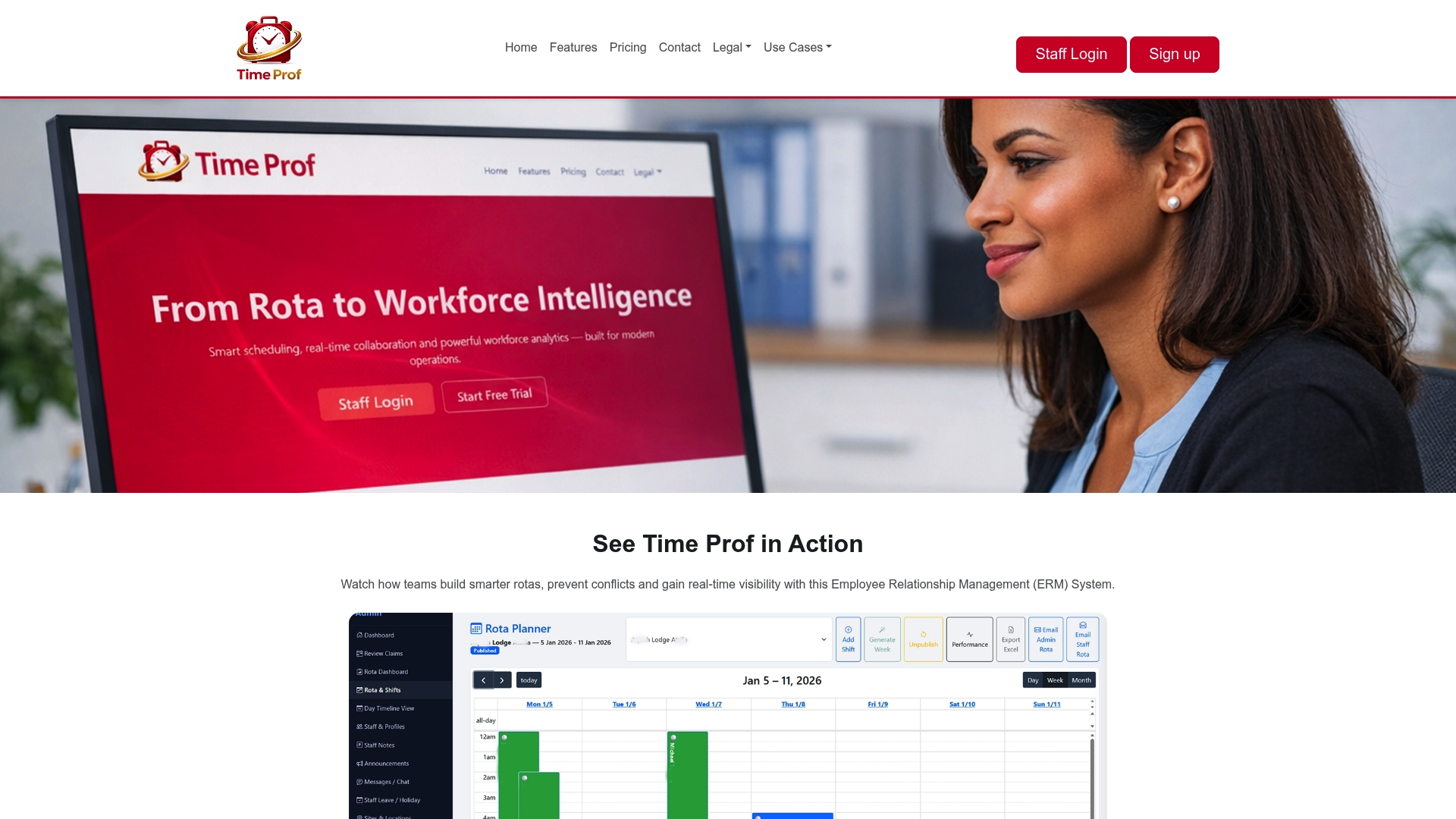
For UK businesses managing variable shifts, multiple sites, or complex pay rules, the practical difference is fewer payroll corrections, less time spent on manual reconciliation, and attendance records that hold up under HMRC scrutiny. Setup is supported, and the platform scales from a single site to a large multi-site operation without changing how managers use it.
If you want to see how it works for your team, book a demo with Timeprof and see the approval and reporting features in a live walkthrough. The first step is usually the exception report: run it against your current timesheets and see what it surfaces.
Useful UK sources and further reading
These sources are worth bookmarking if you are building or reviewing your timesheet and payroll processes.
- Harvard Business Review: Workers are bad at filling out timesheets and it costs billions a day — a useful starting point for understanding the scale of the problem and the behavioural reasons behind inaccurate reporting.
- American Payroll Association — research and guidance on payroll accuracy standards; useful for benchmarking error rates and correction costs, noting that figures apply to the US market.
- Time Tracking Mistakes Employers Make: 8 Costly Errors — a practical breakdown of employer-side failures, with guidance on controls and corrective steps.
- Common Timesheet Mistakes and How to Avoid Them — covers submission errors, approval gaps, and system configuration issues with actionable fixes.
- How much are timesheet errors costing your business? — a UK-focused cost analysis from a payroll services provider, useful for building a business case for automation.
- Timeprof workforce management platform — for UK businesses looking to implement the controls described in this article, including geofenced clock-in, approval workflows, and compliance reporting.