48 Hour Average: UK Managers' Guide to Working Time and Proof
Clear guide for UK managers and workers on the 48 hour average, rest entitlements and opt outs, plus practical steps and software to prove compliance.

Under the Working Time Regulations 1998, most UK workers cannot be made to work more than an average of 48 hours a week unless they’ve signed a voluntary opt-out. Alongside that cap sit clear rest rights: a 20-minute break after six hours’ work, 11 hours’ rest between shifts, and a weekly rest period, either 24 hours in every seven-day period or 48 hours in every 14-day period. Young workers get tighter limits, and employers must keep records proving they’re sticking to all of it.
TL;DR:
- Workers can legally work over 48 hours in a week if their 17-week average remains within the limit, with some roles like senior managers and emergency personnel exempt.
- Employers must record opt-out agreements, working hours, and rest periods, as poor record-keeping increases tribunal risks and non-compliance penalties.
- Night workers face a strict 8-hour average limit during their shifts, require health assessments, and cannot opt out of these restrictions.
- Not all on-call or travel time counts as working hours, especially if spent at home or commuting; on-site on-call time usually does count.
- Workforce management software that automatically tracks hours, records rest, and flags risk patterns reduces errors and supports compliance efforts.
Table of Contents
- What is the maximum weekly working time under UK law?
- Rest breaks and time off between shifts
- Young workers and night workers face stricter limits
- Exceptions and what actually counts as working time
- Employer duties: records, health checks and proving compliance
- What to do if working time rules are broken
- How workforce management software supports compliance
- A manager’s view: what actually needs fixing first
- A practical alternative to manual compliance tracking
- Where to check the primary rules yourself
- Sources
- FAQ
What is the maximum weekly working time under UK law?
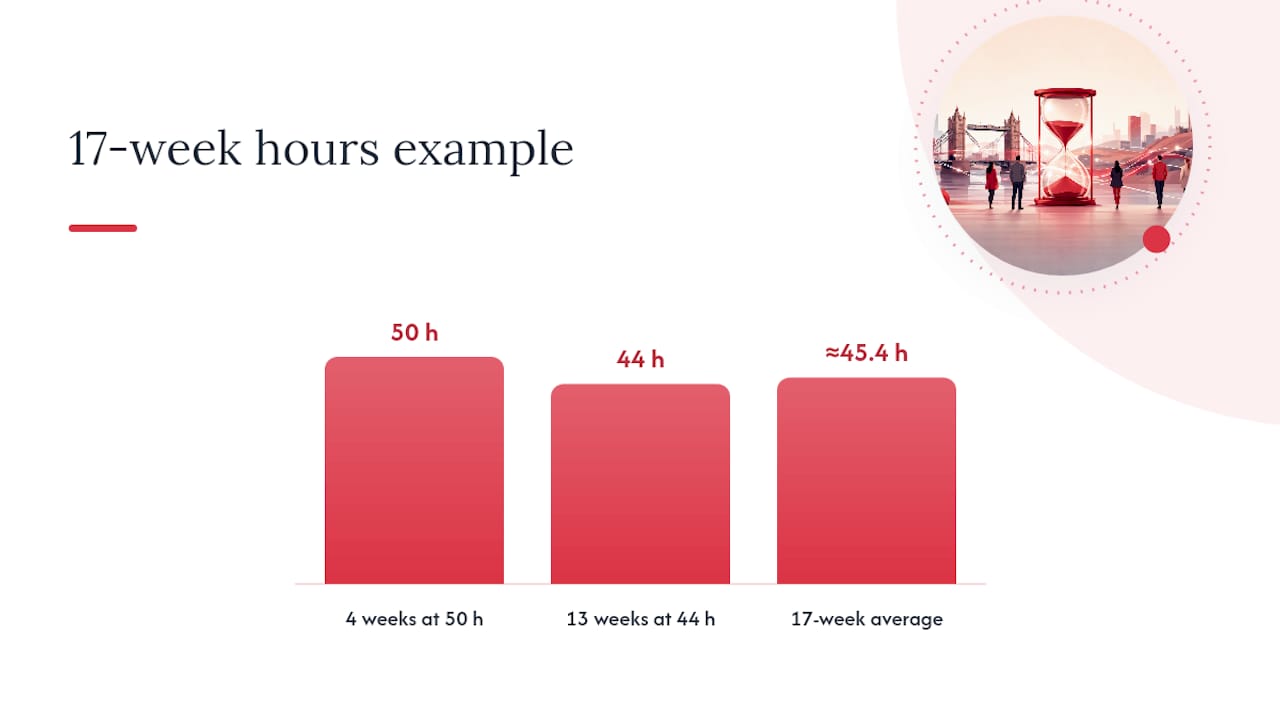
The 48-hour average weekly maximum is calculated over a 17-week reference period, not week by week. That distinction matters more than most people realise: you could legally work 55 hours one week and 40 the next, as long as the average across 17 weeks stays at or below 48.
Say a warehouse worker does 50 hours in weeks one to four, then drops to 44 hours for the rest of the reference period. Add it up, divide by 17, and the average lands comfortably under the cap, even though several individual weeks looked excessive on paper.
Workers can sign an opt-out agreement to work beyond 48 hours voluntarily. It must be in writing, and either party can cancel it, though the worker may need to give notice depending on what the agreement says. Employers who rely on opt-outs still need to keep records showing consent was genuinely voluntary, not a condition of getting hired.
A handful of roles sit outside the standard 48-hour limit entirely, including:
- Senior managers and other workers with genuine control over their own hours
- Armed forces personnel and some emergency services roles
- Domestic workers in private households
- Certain transport and seafaring roles governed by separate regulations
Rest breaks and time off between shifts
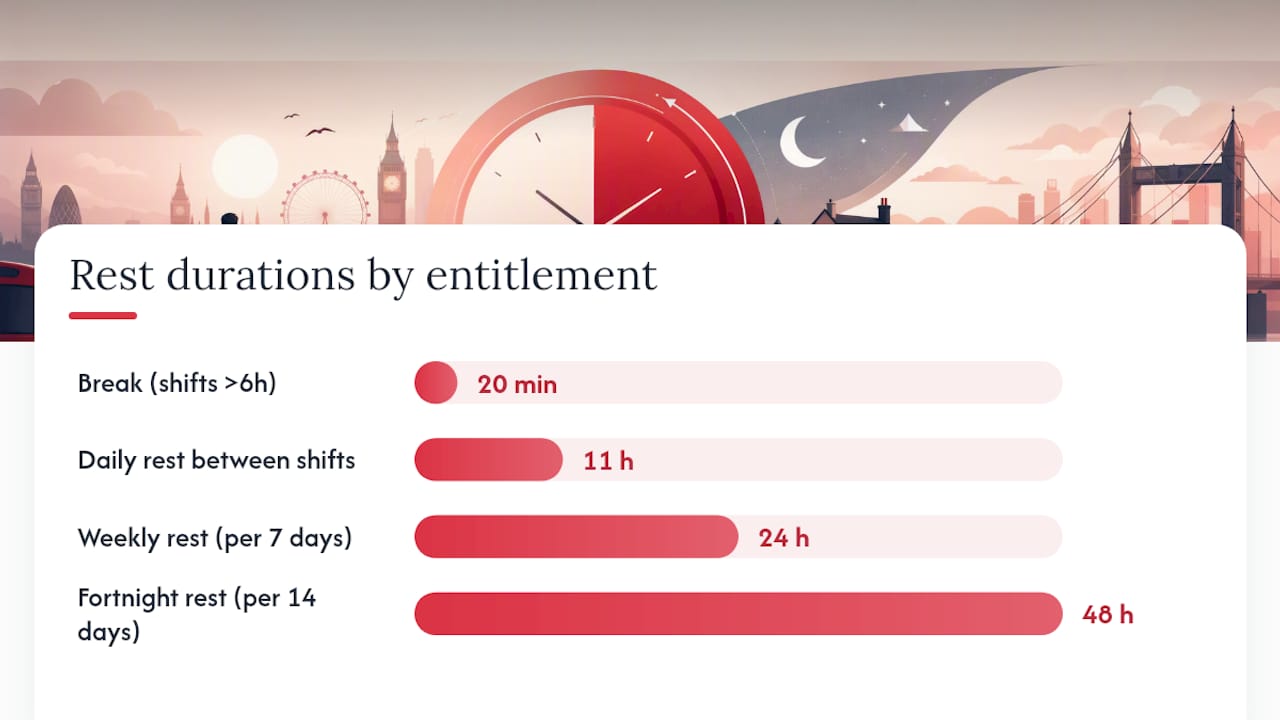
Anyone working more than six hours in a day is entitled to a 20-minute rest break, taken during the shift and away from their workstation, not tacked onto the start or end of the day. Beyond that single break, the regulations set out three further entitlements: 11 hours’ uninterrupted rest between finishing one shift and starting the next, either 24 hours’ weekly rest in every seven-day period or 48 hours in every 14-day period, and the right to have missed breaks made up through compensatory rest.
- 20-minute break for shifts over 6 hours
- 11 hours’ daily rest between shifts
- 24-hour weekly rest, or 48-hour fortnightly rest as an alternative pattern
Compensatory rest applies when normal breaks genuinely can’t be taken, an emergency callout, a security shift that overruns, that sort of thing. The employer still owes the worker an equivalent break at the next reasonable opportunity, and needs to log when it was given.
Pro Tip: Build compensatory rest into your rota software as a flagged task, not a verbal promise. Verbal promises are the first thing that gets forgotten during a busy week, and the first thing an employment tribunal will ask you to prove.
Young workers and night workers face stricter limits
Workers under 18 get considerably tighter protection than adults. They cannot work more than 8 hours a day or 40 hours a week, and must get a 30-minute break if their shift runs longer than 4.5 hours. Crucially, young workers generally cannot opt out of these limits the way adults can opt out of the 48-hour average.
Night workers, defined as those regularly working at least three hours during the night, face their own separate cap: an average of 8 hours in any 24-hour period. They’re also entitled to a free health assessment before starting night work and periodically afterwards, with a right to transfer to daytime work if a doctor finds the role is affecting their health.
- Young workers: 8-hour daily cap, 40-hour weekly cap, limited opt-out rights
- Night workers: 8-hour average nightly cap, free health assessments, right to transfer if unfit
Identifying who counts as a “young worker” or “night worker” isn’t always obvious on a rota built around adult shift patterns, so it’s worth flagging these staff distinctly in whatever scheduling system you use.
Exceptions and what actually counts as working time
Not every hour spent connected to a job counts as working time, and not every worker falls under the standard rules. Roles requiring round-the-clock staffing, certain armed forces positions, and some senior autonomous roles sit outside parts of the regulations, though the detail depends on the specific exemption.
Working time itself is defined fairly broadly: it includes time spent actively working, training required by the employer, and travelling as part of the job, but generally excludes ordinary commuting and most on-call time spent at home where the worker is free to do as they please. On-call time spent on-site, ready to work, usually does count.
- Genuine 24-hour staffing roles and some transport/seafaring jobs sit outside standard limits
- Required training and work-related travel count as working time; commuting doesn’t
- On-call time at home rarely counts; on-call time on-site usually does
One issue that catches employers out: the 48-hour limit applies to a worker’s total hours across all jobs, not just the hours worked for you. If you know, or reasonably should know, that a staff member holds a second job, you’re expected to factor that into their overall hours.
Employer duties: records, health checks and proving compliance
Compliance isn’t just about setting the right rota. Employers need to show it, which means keeping records that stand up to scrutiny if a claim ever reaches a tribunal.
- Keep hours records covering at least the current 17-week reference period, ideally longer, showing actual hours worked against the 48-hour average.
- Log opt-out agreements in writing, with dates and a clear note of how consent was given.
- Record night-worker health assessments, including offer dates, outcomes, and any resulting adjustments to shift patterns.
- Track compensatory rest separately from normal breaks, so gaps are visible rather than buried in a general attendance log.
Acas is clear that weak record-keeping is one of the biggest drivers of tribunal risk: a business that can’t produce hours data quickly is a business that struggles to defend itself.
Pro Tip: Don’t rely on paper timesheets or memory for night-worker health checks. Tribunals look for a documented offer and a documented response, not just a manager’s recollection that “we sorted that ages ago.”
Scheduling policy should be designed with these limits built in from the start, flagging when a rota pattern risks breaching the 48-hour average before shifts are published, not after.
What to do if working time rules are broken
Workers who believe their hours or breaks are being handled unlawfully should start by raising it informally with their manager or HR, and keep a written record of dates, hours worked, and any breaks missed. If that doesn’t resolve things, Acas early conciliation is the next step before any employment tribunal claim, and it’s usually a required step rather than an optional one.
Employers who spot a problem, whether through an audit, a complaint, or a near-miss, should act rather than wait for a claim to land.
- Audit recent hours data against the 48-hour average and rest entitlements
- Offer compensatory rest where breaks were missed, and log it
- Correct scheduling errors and consult affected staff on the fix
- Escalate to the Health and Safety Executive or local authority enforcement team for serious or repeated breaches
How workforce management software supports compliance
Spreadsheets and paper rotas make working time compliance harder than it needs to be, mainly because averaging 48 hours over 17 weeks by hand is slow and error-prone, and errors are exactly what tribunals go looking for. Consolidated digital time records give managers a running average at a glance, rather than a manual recalculation every time a rota changes.
Time Prof approaches this through a handful of specific features: shift-linked clock-in and clock-out, optional geofence verification so recorded hours match actual location, audit logs that timestamp every schedule change, and rule-based scheduling that can flag a shift pattern likely to breach the 48-hour average or the 11-hour rest rule before it’s published.
- Automatic averaging across the reference period, rather than manual spreadsheet maths
- Geofenced clock-ins that tie recorded hours to actual attendance
- Audit-ready logs covering opt-outs, compensatory rest and schedule changes
- Rule-based alerts when a proposed rota risks breaching rest or hours limits
Software like this reduces the administrative gap where breaches usually creep in, particularly across multi-contract staff whose aggregate hours are easy to lose track of. It doesn’t replace the underlying legal duties, and it’s no substitute for offering a night-worker health assessment or judging whether a role is genuinely exempt. Those calls still sit with the employer.
A manager’s view: what actually needs fixing first
Most working time breaches don’t come from bad intentions. They come from nobody owning the rota’s hours maths. Prioritise three things: accurate records, simple scheduling rules that flag risk before publishing, and honest consultation with staff before asking anyone to sign an opt-out. Watch particularly for aggregated hours across two jobs and for compensatory rest that gets promised verbally and then quietly forgotten. If you fix nothing else this month, fix your record-keeping.
— Michael
A practical alternative to manual compliance tracking
This platform offers an alternative to spreadsheet-based rota management for businesses trying to keep the 48-hour average, rest entitlements, and opt-out records straight without a full-time compliance officer. Where a paper rota or a bolted-together spreadsheet leaves gaps, particularly around aggregated hours and compensatory rest, Time Prof’s rule-based scheduling flags risky shift patterns before they’re published, and its audit logs mean you’re not scrambling for evidence if a query ever lands on your desk.
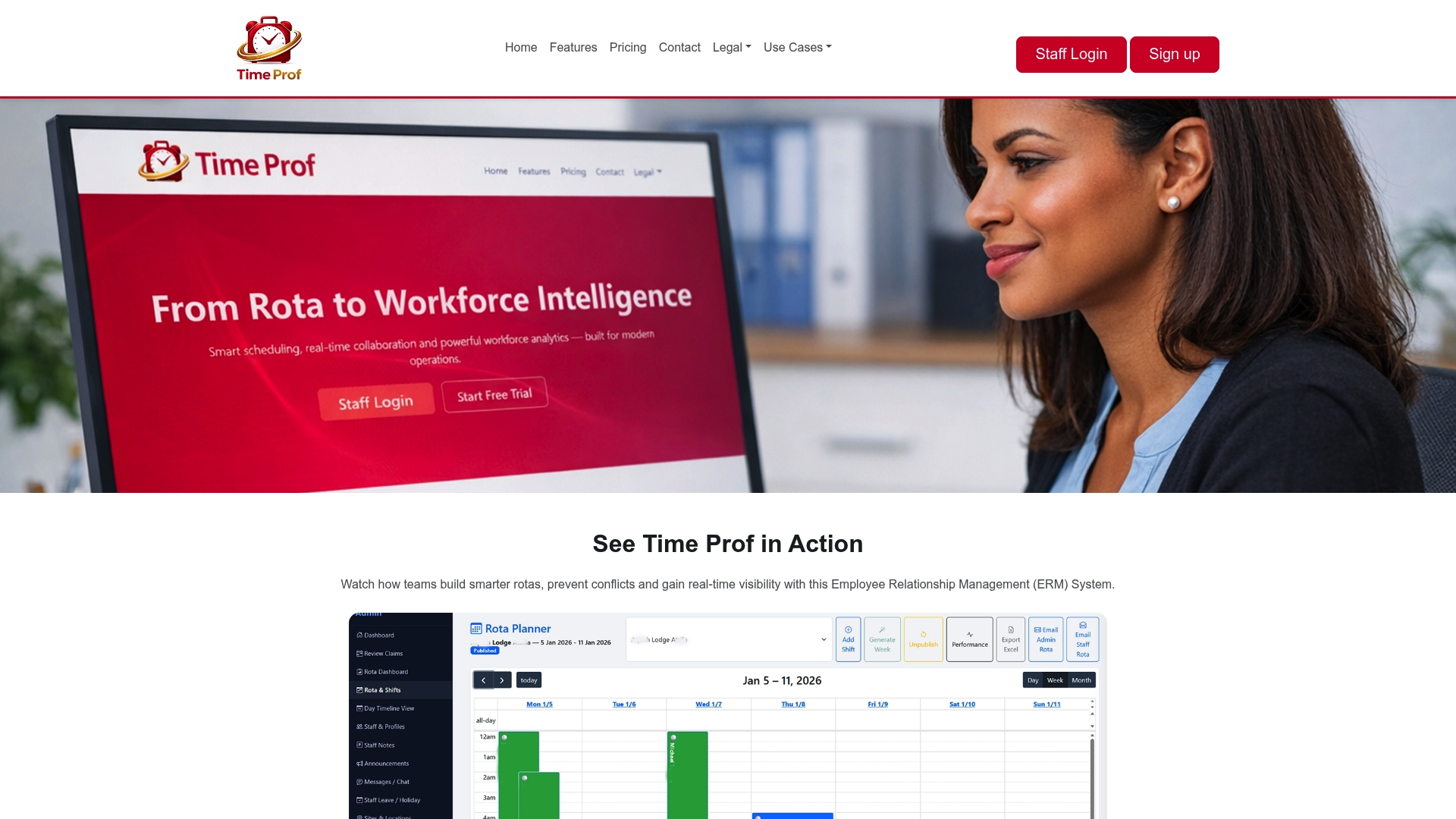
The platform’s shift-linked clocking and geofenced check-ins also make it far easier to prove hours actually worked, which matters when calculating overtime or defending a 17-week average. For businesses juggling on-call staff and hybrid teams, pairing this with sound communication tooling closes another common gap around who’s reachable and when. If your current rota process relies on someone remembering to check the maths, book a demo of Time Prof and see what audit-ready compliance reporting actually looks like.
Where to check the primary rules yourself
For the legal text itself, read The Working Time Regulations 1998 on legislation.gov.uk. For plain-English guidance, GOV.UK covers maximum weekly hours and rest breaks, while Acas explains how the rules apply in practice.
Sources
FAQ
What are the rules for working hours in the UK?
Workers cannot average more than 48 hours a week over a 17-week period unless they’ve opted out, and they’re entitled to daily and weekly rest breaks plus 11 hours’ rest between shifts.
Is a 13-hour shift legal in the UK?
Yes, a single shift longer than six hours is legal as long as the worker still gets their 11 hours’ rest before the next shift and the shift doesn’t push their 17-week average over 48 hours.
Can I work 16 hours a day in the UK?
There’s no specific daily hours cap for adult workers under the regulations, so a long day is legal provided 11 hours’ rest follows it and the weekly average stays within limits or an opt-out is in place.
Is it legal to work 72 hours a week in the UK?
A single week with hours above the average limit is legal if it’s balanced by lower hours elsewhere so the 17-week average doesn’t exceed 48 hours, or if the worker has signed a valid opt-out agreement.
Do young workers have different working time rules?
Yes, workers under 18 face an 8-hour daily and 40-hour weekly limit, a 30-minute break after 4.5 hours, and cannot opt out of these limits the way adult workers can.