What is hospitality shift planning for busy managers?
Discover how effective hospitality shift planning improves service, matches skills to demand, and reduces payroll leakages for busy managers.

Hospitality shift planning is the practice of working out how many staff you need, when, and with what skills, based on expected demand, before you ever type a name into a rota. It rests on three things: a demand forecast (bookings, covers, arrivals), a set of shift templates built to match that demand, and a clear picture of who is available and qualified to work each one.
The distinction that trips up most managers: shift planning happens before scheduling. Planning decides how many people and what skills a Tuesday lunch service needs. Scheduling puts actual names against those shifts and handles the swaps, sickness and last-minute cover once the plan exists. Skip the planning stage and you’re just guessing with extra steps.
Get the planning right and three things follow directly:
- Service holds up under pressure because the right skill mix is on the floor when covers peak, not when the rota happened to land that way.
- Payroll stops leaking because hours are matched to actual demand instead of habit, guesswork, or last week’s printout.
- Compliance risk drops because rest breaks, maximum hours and contracted terms are built into the plan rather than checked after the fact.
Key takeaways
Hospitality shift planning works when managers forecast demand first, convert it into department hours, and publish rotas on a fixed two-week rhythm that respects skills, contracts and legal limits.
| Point | Details |
|---|---|
| Forecast before you schedule | Pull bookings, occupancy and event data before touching the rota template, never copy last week’s plan. |
| Build department by department | Convert demand into hours separately for housekeeping, front desk and food and beverage. |
| Publish two weeks ahead, on a fixed day | This horizon balances forecast accuracy with giving staff time to plan their lives. |
| Tag every shift by skill, not just role | Skill tags make swaps and sickness cover a two-minute fix instead of a group-chat scramble. |
| Consider a platform like Timeprof for the mechanics | It automates forecast-to-rota conversion, skill tagging, open shifts and compliance checks in one system. |
Table of Contents
- Why hospitality shift planning actually moves the numbers
- Shift planning versus scheduling: where the confusion starts
- The building blocks every shift plan needs
- A seven-step process for building a hospitality shift plan
- Common shift planning mistakes and how to fix them
- What to look for in hospitality shift management software
- What forecast-based shift planning looks like on a platform
- How far ahead should you plan, and what does it cost?
- A checklist and template you can use this week
- What changed when I stopped copying last week’s rota
- If you want software to handle the mechanics: a vendor option worth knowing
- Frequently asked questions
- Sources
Why hospitality shift planning actually moves the numbers
Shift planning isn’t an admin task you tolerate before the “real work” of running service. It’s one of the few levers a hospitality manager controls that touches guest experience and payroll at the same time. Get the plan wrong and you either overstaff (wasted wage cost) or understaff (queues, missed covers, exhausted staff cutting corners). Get it right and both problems shrink together.
The mechanics are straightforward once you see them laid out. A hospitality shift plan built from actual demand forecasts, rather than copied from the previous week, cuts labour waste and tends to improve staff retention, according to a practical hotel scheduling guide that recommends building department by department. That single habit change (forecast first, names second) is what separates a rota that merely exists from one that’s actually doing its job.
Here’s what good planning delivers in practice:
- The right number of people, with the right skills, on the floor at the right time.
- Fewer last-minute call-outs, because shifts are realistic rather than punishing.
- Lower staff turnover, since people aren’t burning out on chaotic or unfair rotas.
- Payroll that’s predictable enough to forecast against revenue, not just react to.
The pattern shows up clearly around peak service. Picture a Sunday brunch service where covers are usually noticeably higher than a weekday lunch. A manager who copies last week’s Sunday rota onto this week’s grid, without checking the actual reservations book, either overstaffs a quiet week or leaves two servers drowning during a fully booked one. A manager working from the forecast adjusts the shift templates to the expected covers days in advance, and briefs the kitchen and front of house on the same numbers. One approach reacts. The other plans.
Shift planning versus scheduling: where the confusion starts
Most of the frustration managers feel with rotas comes from treating planning and scheduling as the same task done at the same time. They’re not. Planning answers “how many people, doing what, when?” Scheduling answers “which specific person covers which specific shift, and what happens when Dave calls in sick?”
Academic work on hospitality rostering breaks this into distinct sub-problems: demand modelling, shift scheduling, and days-off scheduling, each of which has to account for staff skills, availability, contracts and even social preferences like weekends off, according to an overview of rostering approaches in hospitality management. Treating it as one blended task is exactly why so many rotas fall apart under real-world pressure.
The horizons differ too. Planning typically looks two to four weeks out, working from bookings, events and seasonal patterns. Scheduling operates day to day and week to week, filling the plan’s structure with actual people and absorbing the inevitable changes.
| Axis | Shift planning | Shift scheduling |
|---|---|---|
| Objective | Match staffing capacity to forecast demand | Fill confirmed shifts with named staff |
| Time horizon | Two to four weeks ahead | Days to one week ahead |
| Primary input | Occupancy, bookings, event calendar, sales history | Availability, leave requests, swap requests |
| Output | Shift templates and headcount by role/skill | A published rota with names against shifts |
| Who owns it | Department heads or operations manager | Shift leaders or duty managers |
| Frequency of change | Reviewed weekly, adjusted for trends | Adjusted daily as circumstances shift |
Once you see the split this clearly, a lot of “our rota is always a mess” complaints resolve themselves. The mess usually isn’t a scheduling failure at all. It’s the absence of a plan for scheduling to fill.
The building blocks every shift plan needs
A shift plan that actually holds up during a busy Friday service has a handful of non-negotiable components. Miss one, and the whole structure gets shaky when demand shifts unexpectedly, which in hospitality is most weeks.
- Demand or fixture calendar. Bookings, expected covers, local events, seasonal patterns, and anything else that predicts footfall days or weeks out.
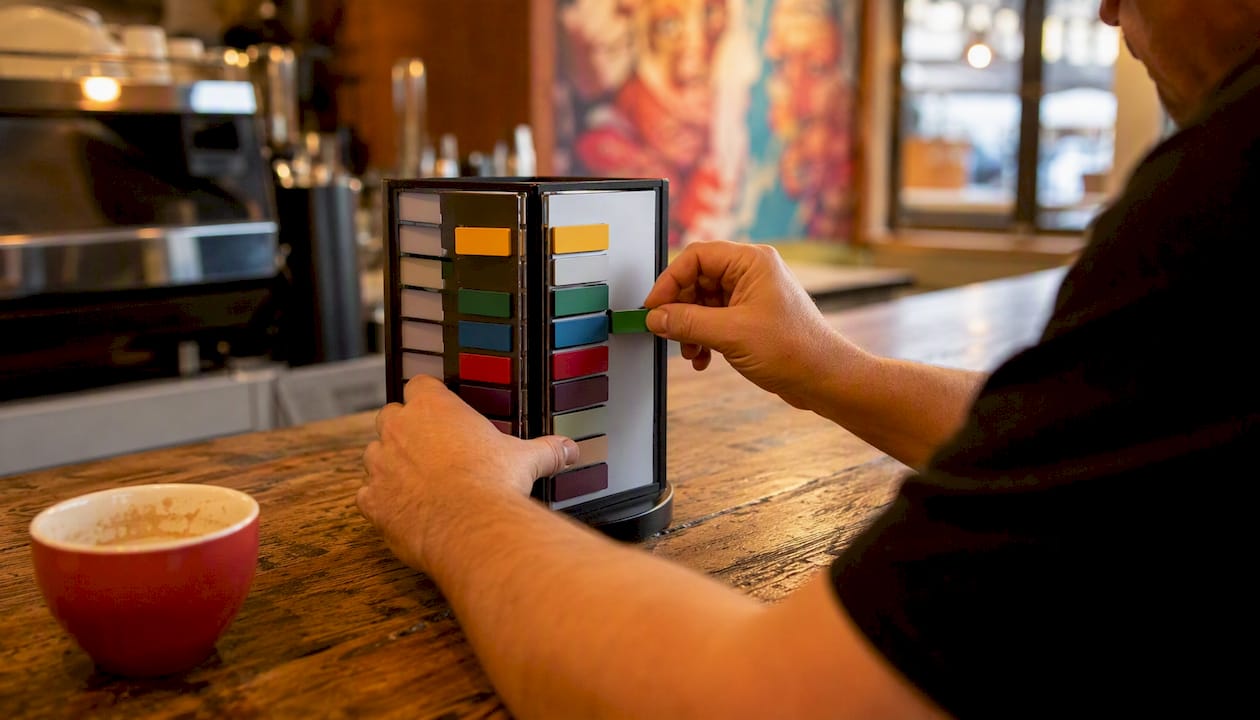
- Shift templates. Pre-built shift shapes (opening, mid, closing, split shifts) sized to typical demand for each day type, so you’re adjusting a template rather than starting from a blank grid.
- Role and skill tags. Which shifts need a supervisor, a trained barista, a certified first-aider, or someone who can run the till unsupervised.
- Staff availability and contract terms. Contracted hours, part-time restrictions, student availability windows, and any agreed patterns that limit how a shift can be filled.
- Legal constraints. Rest break entitlements, maximum weekly hours, and any sector-specific rules that the plan has to respect before a single shift gets assigned.
- Contingency and open-shift rules. A pre-agreed process for what happens when someone can’t work: who gets first refusal, how open shifts get advertised, and who approves the fix.
- Communication protocol. How and when the plan gets published, and how changes get flagged so nobody finds out about a shift swap by accident.
Departments genuinely differ here. Housekeeping planning revolves around checkout and turnover volume; front desk around arrival and departure peaks; food and beverage around covers and event bookings. A single generic template applied across all three sectors almost always underserves at least one of them.
Pro Tip: Add skill tags to every shift template, not just job titles. A “server” tag tells you nothing about who can run the bar solo during a rush. A “server, bar trained” tag means you can cover a sickness call in minutes instead of scrambling through a group chat.
A seven-step process for building a hospitality shift plan
This is the practical part. Most guides to shift planning converge on a version of this sequence, and for good reason: it works whether you’re planning a single restaurant’s week or a hotel’s fortnight, according to a seven-step shift planning framework widely used across hospitality and event operations.
-
Gather your demand forecast. Pull bookings, occupancy figures, event bookings and historical sales for the period you’re planning. Action: export the next two weeks of reservations and occupancy data before you touch the rota template.
-
Convert demand into labour hours. Translate covers or occupancy percentages into required staff hours per department, using your own historical ratios (covers per server, rooms per housekeeper). Action: calculate expected hours needed for each daypart, not just each day.
-
Set your service standards. Decide the minimum coverage each shift needs regardless of quiet patches (someone always on reception, a supervisor always present). Action: write down your non-negotiable minimums so nobody cuts them under pressure.
-
Build shift templates around the forecast. Adjust your standard templates to match the hours you calculated, not the shape of last week’s rota. Action: for a forecast weekend brunch peak, add a mid-morning overlap shift rather than stretching existing shifts thin.
-
Tag shifts with required skills and roles. Mark which shifts need specific certifications, seniority or cross-training. Action: flag every shift that needs a keyholder or supervisor before you assign anyone.
-
Assign people and publish. Match available, qualified staff to shifts, respecting contracts and preferences, then publish on a fixed day each week. Action: pick one publishing day (Wednesday works for many teams covering the following week) and stick to it.
-
Monitor, review and refine. Track no-shows, overtime and guest feedback against the plan, then adjust the next cycle’s templates. Action: note which shifts ran short-staffed and fix the template, not just the rota, next time.
Step one flags the booking spike. Step two converts that into two extra server hours and one extra kitchen hour. Step four adds a staggered arrival shift rather than scheduling everyone from opening. By step six, you’re publishing a rota that’s already sized correctly, not discovering the gap mid-service.
Common shift planning mistakes and how to fix them
Most shift planning failures trace back to a small set of repeated habits. Recognising them is most of the fix.
- Mistake: copying last week’s rota. Fix: build shifts from this week’s forecast every time, even when demand looks similar. Managers who mistakenly reuse the previous week’s rota rather than working from bookings or event forecasts are consistently flagged as the most common source of over and understaffing, according to NetSuite’s hospitality scheduling research.
- Mistake: relying on a spreadsheet as your only system. Fix: adopt one shared source of truth that staff and managers both check, so version confusion (three different “final” spreadsheets circulating by Thursday) stops happening.
- Mistake: ignoring skills when assigning shifts. Fix: tag shifts by required skill from the template stage, not as an afterthought when someone calls in sick.
- Mistake: treating multi-site rotas as separate problems. Fix: use one system across sites so a manager covering two venues isn’t juggling incompatible spreadsheets with no shared visibility.
- Mistake: optimising purely for lowest labour cost. Fix: balance cost against service standards and staff preferences. Approaches that respect employee preferences such as weekends off tend to outperform rigid cost-only optimisation on both retention and service quality, according to the rostering approaches overview.
Case in point: a mid-sized hotel restaurant kept losing servers to burnout during a run of understaffed weekends, traced back to a manager who’d been reusing the same Saturday template for months regardless of bookings. Switching to forecast-based templates, and publishing a week later than she’d been managing, cut last-minute call-outs within a month. Nothing else changed except the starting point for the rota.
Pro Tip: Publish on the same day every week, without exception. Unpredictable publishing is one of the quietest causes of last-minute call-outs, because staff can’t plan childcare, second jobs or study around a rota that might land anywhere from Tuesday to Friday.
What to look for in hospitality shift management software
Once your process is solid, the right tool removes the manual grind of applying it every week. The features worth prioritising map directly onto the pain points above.
- PMS/POS or booking integrations that pull occupancy, covers or bookings automatically, so forecasts don’t depend on someone manually checking three separate systems, a feature area highlighted in NetSuite’s scheduling guidance.
- Reusable shift templates you can adjust to a forecast in minutes rather than rebuilding from scratch each week.
- Skills and availability tracking built into the assignment step, so the system flags a mismatch before you publish, not after a shift goes uncovered.
- Rules-based auto-scheduling that suggests coverage based on your standards, cutting the manual matching that eats a manager’s Wednesday afternoon.
- Open-shift workflows that let qualified staff claim gaps directly, instead of a manager working a group chat by hand.
- Real-time notifications so published changes reach staff instantly rather than sitting unread in an email.
- Compliance checks that flag rest-break or maximum-hours breaches automatically, before the shift is live.
- Reporting on labour percentage, overtime and no-shows, so the review step in your process has real numbers behind it.
Prioritise the two features that solve your worst current pain point first. If under-forecasting is your biggest issue, PMS integration and templates matter more than reporting depth. If compliance slip-ups are the recurring headache, rules enforcement and audit trails move to the top of the list. A broader look at workforce management tools worth considering covers this in more depth.
What forecast-based shift planning looks like on a platform
Seeing the seven-step process mapped onto an actual system makes the theory concrete. A typical workflow on a modern hospitality workforce platform runs like this: import bookings or occupancy data, convert that demand into required hours by department, generate shift templates against those hours, tag each shift with the skills it needs, assign available staff automatically or manually, publish to the team, then track swaps, clock-ins and attendance against the live plan.
On screen, the details worth checking during any demo are whether shift templates can be tagged by skill and site, whether open shifts surface automatically to qualified staff rather than needing a manual broadcast, and whether the reporting view breaks labour cost down by department rather than giving you one blended number.
The practical benefits managers report from this kind of setup tend to cluster around three things:
- Time saved on manual rota-building each week, since templates and forecasts do most of the heavy lifting.
- Fewer scheduling errors, because skill mismatches and rule breaches get flagged before publishing rather than discovered mid-shift.
- Better visibility, particularly across multiple sites, where a single manager might otherwise be juggling separate spreadsheets with no shared view of coverage. A closer look at how automated shift scheduling benefits managers covers the operational side of this in more detail.
How far ahead should you plan, and what does it cost?
Two weeks is the sweet spot most hospitality operations should aim for. Forecasts beyond that window get progressively less reliable, since bookings shift, events get rearranged, and staff availability changes, so publishing on a fixed day within a one to two-week horizon is the recommendation that practical hotel scheduling guidance settles on, and it measurably reduces call-outs and turnover compared with rotas published erratically or at the last minute.
The trade-off is straightforward: plan too far ahead and you’re forecasting against stale data, forcing constant revisions that erode staff trust in the published rota. Plan too close to the shift and staff lose the ability to arrange their lives around it, which is exactly what drives call-outs and turnover in the first place.
Cost and effort considerations worth weighing before you commit to a new process or tool:
- Time to build the initial templates is the biggest upfront cost, typically a few hours per department to set realistic shift shapes against historical demand.
- Software or subscription cost scales with headcount on most platforms, so weigh it against current overtime spend, not just against doing nothing.
- Expected payroll improvement comes primarily from cutting overstaffing on quiet days and overtime on busy ones, both of which forecast-based planning directly targets.
- Turnover reduction compounds over time, since predictable, fair rotas are one of the more controllable levers a manager has over staff retention.
As a rule of thumb, the fastest payback usually comes from eliminating unplanned overtime and reducing the reactive scrambling that happens when a rota wasn’t built against real demand in the first place.
A checklist and template you can use this week
Before you publish any rota, run through this checklist:
- Forecast pulled and converted into department hours for the full period.
- Shift templates adjusted against that forecast, not copied from last week.
- Every shift tagged with required skills and seniority.
- Staff availability and contracted hours checked against assignments.
- Rest breaks and maximum weekly hours verified for every person on the rota.
- Open-shift and contingency process confirmed and communicated.
- Rota reviewed by a second manager or department head before publishing.
- Published on the agreed fixed day, with a clear channel for change requests.
A simple template row structure works whether you’re using a spreadsheet or dedicated software:
For first publish, agree in advance who signs off the final rota (usually the department head or duty manager) and how change requests get communicated, whether that’s a dedicated channel, a messaging feature within your rota system, or a simple rule that no swap is confirmed until it’s visible on the published plan.
What changed when I stopped copying last week’s rota
Running hospitality teams for long enough teaches you that most rota chaos is self-inflicted. Not through carelessness, but through habit: it’s genuinely faster to duplicate last week’s grid than to sit down and forecast properly, especially on a Wednesday afternoon with fifteen other fires to put out.
The shift that actually changed things wasn’t a new piece of software. It was forcing myself to check the bookings diary before touching the rota template, every single week, no exceptions. Three habits made the difference. First, publishing on the same day regardless of how “finished” the rota felt, because an imperfect rota published on time beats a perfect one published late. Second, tagging shifts by skill rather than job title, which turned covering a sickness call from a ten-minute phone-a-friend exercise into a two-minute lookup. Third, treating swap requests as data, not just admin: if the same shift kept getting swap requests, that was the template telling me something, not the staff being difficult.
The real-world change after moving to forecast-based planning wasn’t dramatic overnight. It showed up gradually, in fewer Sunday-night panics about Monday’s cover and in staff actually believing the published rota would hold. That trust, once it builds, is worth more to retention than almost anything else a manager can offer.

If you want software to handle the mechanics: a vendor option worth knowing
Everything in this guide can be run on a well-organised spreadsheet and a lot of manager discipline. It’s not the only route, and plenty of smaller operations manage perfectly well that way. But once you’re juggling multiple sites, skill tags, compliance checks and open shifts by hand, the admin load starts eating the time you should be spending on the floor.
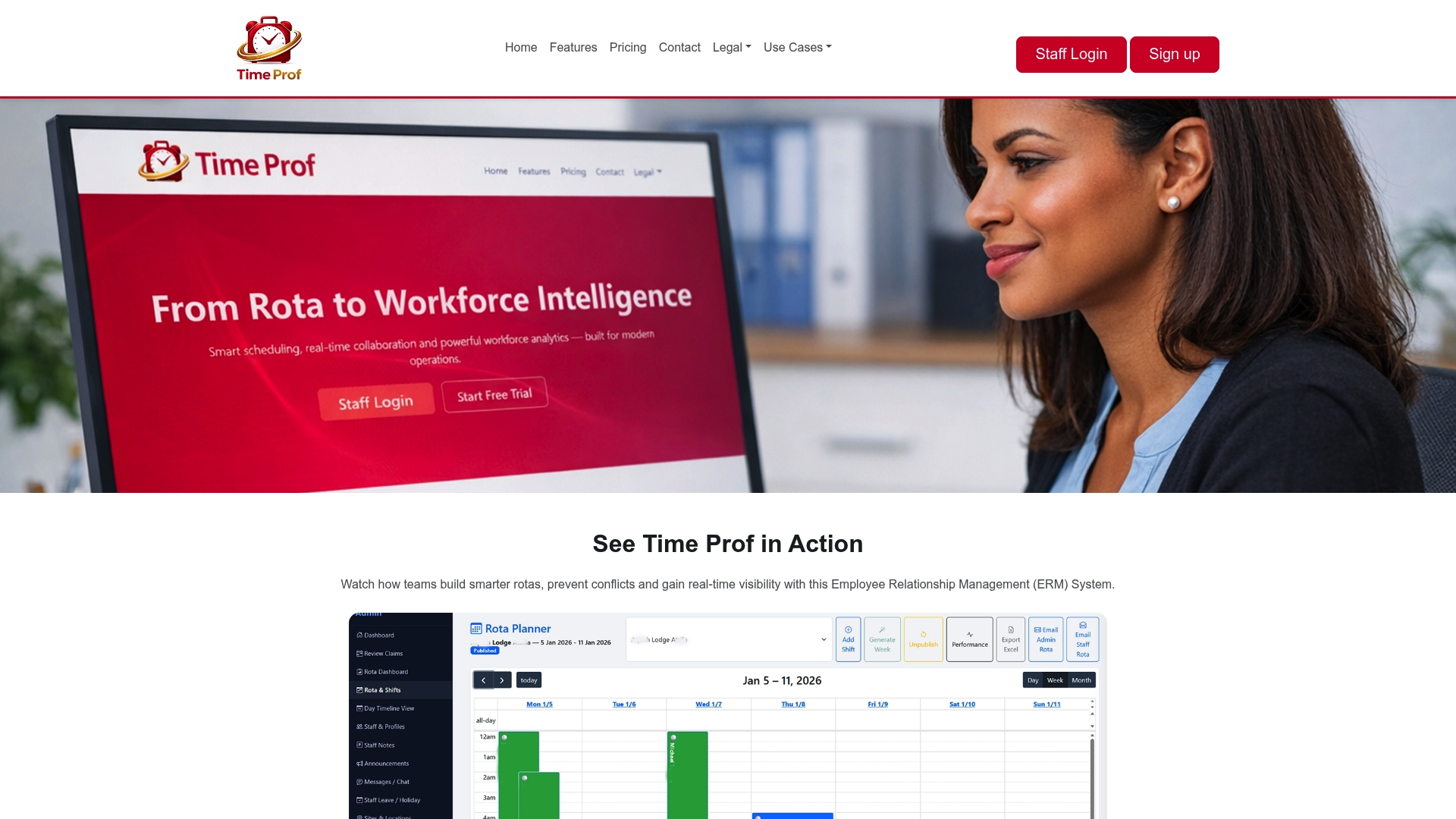
Timeprof was built around exactly the workflow this guide describes: forecast-driven shift templates, skill and site requirements baked into every shift, open-shift claims that staff can pick up themselves, and compliance rules that flag rest-break or maximum-hours issues before you publish, not after. It replaces the scattered spreadsheets, group chats and separate clocking systems most hospitality teams cobble together, with one shared source of truth for managers and staff alike, covering everything from shift management fundamentals to real-time attendance tracking.
If you want to see how the seven-step process from this guide runs on an actual platform, from forecast import through to publish and swap tracking, book a demo at Timeprof and ask specifically to see the skill-tagging and open-shift workflow in action, since that’s where most of the weekly time savings come from.
Frequently asked questions
What is the difference between shift planning and shift scheduling? Shift planning decides how many staff, with which skills, are needed for a given period based on forecast demand. Shift scheduling assigns actual named staff to those planned shifts and handles day-to-day changes like swaps and sick cover.
How far in advance should hospitality rotas be planned? One to two weeks is the horizon most practical guidance recommends, since demand forecasts become less reliable further out, and publishing consistently on a fixed day reduces call-outs.
What causes most hospitality scheduling problems? Copying the previous week’s rota instead of building from current bookings or occupancy forecasts is the most commonly cited cause of over and understaffing in hospitality operations.
Do small hospitality businesses need shift-planning software? Not necessarily. A well-run spreadsheet and a disciplined forecast-first process can work for a single small site. Software becomes worthwhile once you’re managing multiple sites, tracking skills and compliance manually, or losing significant time to manual rota-building each week.
How do you handle last-minute shift swaps fairly? Set an open-shift process in advance: qualified staff get first refusal on uncovered shifts, changes require manager sign-off, and every swap is visible on the published rota so nobody finds out by accident.
What legal factors should a hospitality shift plan account for? Rest break entitlements, maximum weekly working hours, and contracted terms all need to be checked before shifts are assigned, not after a rota is published. This article offers general guidance only; confirm current rules with the relevant employment authority or a qualified adviser for your specific situation.
Sources
- How to Optimize Hospitality Staff Scheduling | NetSuite
- Quantitative Approaches on Staff Scheduling and Rostering in Hospitality Management: An Overview
- Hotel staff scheduling: a practical 2026 guide