What is an announcement system workforce: a manager's guide
Discover what an announcement system workforce is and how it streamlines communication, ensuring no one misses vital information. Learn more!

A workforce announcement system is a centralised platform designed to deliver structured internal messages to all employees across multiple communication channels simultaneously. Managers in care, security, hospitality, retail, and dozens of other sectors rely on these systems to reach every worker, whether they sit at a desk, work a night shift, or operate across multiple sites. The industry term for the broader category is “mass notification system,” though workforce announcement system describes the internal, staff-facing application more precisely. Understanding what this technology does, and how to deploy it well, is the difference between a workforce that acts on information and one that misses it entirely.
What is an announcement system workforce and how does it work?
A workforce announcement system is a centralised platform that syncs with workforce data to reach employees by role, location, or shift through mobile, desktop, and digital signage simultaneously. That targeting capability is what separates these systems from a group email or a WhatsApp broadcast. A message about a site closure reaches only the staff assigned to that site. A policy update goes to the relevant department. No one receives noise that does not apply to them.
The operational mechanics rely on integration with existing workforce data. The system pulls employee records, shift assignments, and location data to build precise recipient lists automatically. Messages then travel across whichever channels the organisation has configured: mobile push notifications, desktop alerts, digital signage screens in break rooms, or public address systems in warehouses and factories.

Reaching deskless workers presents a specific challenge, because around 80% of the global workforce does not sit at a company computer. Modern systems solve this through authentication methods such as Single Sign-On (SSO) or QR code scanning, which give frontline staff secure access without requiring a corporate email account.
The distinction between a standard announcement and an emergency alert matters operationally. Routine announcements carry operational updates, shift changes, or policy reminders. Emergency alerts trigger immediately, override normal notification settings, and may activate physical systems such as sirens or PA speakers. Both live within the same platform architecture, but they follow different escalation rules.
Pro Tip: Centralise all staff messages through one system rather than splitting them across email, messaging apps, and notice boards. Fragmented channels create alert fatigue and cause staff to tune out even urgent messages.
What are the main benefits of workforce announcement systems?
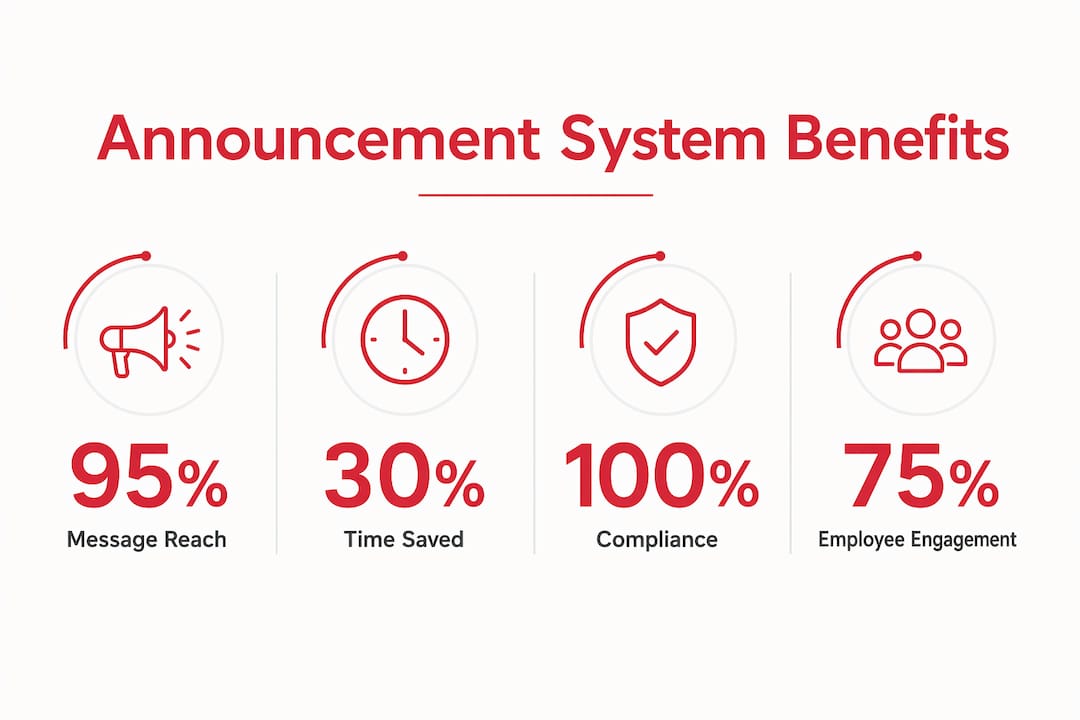
The core benefit is reach. A well-configured workforce communication system delivers messages to 100% of the workforce, including remote, hybrid, and deskless staff, without relying on managers to cascade information manually. Manual cascading introduces delay, distortion, and gaps. A system removes all three.
The benefits extend well beyond reach:
- Employee engagement improves when messages are targeted and relevant. Staff who receive only the information that applies to them pay closer attention to every message they receive.
- Compliance and audit readiness become straightforward. Workforce announcement systems produce audit trails and delivery reports that demonstrate who received a message and when. Regulators and inspectors increasingly treat this documentation as a legal requirement.
- Emergency response times shorten. Clear, intelligible voice evacuation messages integrated with fire alarms decrease evacuation time and reduce panic, producing measurably better safety outcomes than sirens alone.
- Behavioural change becomes measurable. Turning announcements into actionable tasks by requiring acknowledgement or triggering automated training means managers can confirm that staff have not just received a message but acted on it.
- Communication delays shrink during crises. When a system sends a message in seconds rather than minutes, the gap between an incident and a coordinated response narrows significantly.
Organisations that treat workforce announcements as one-way broadcasts miss the most powerful feature these systems offer: the ability to prompt a specific action, confirm completion, and feed that data back into operational records.
Pro Tip: Place announcements on the screens and platforms staff already use rather than asking them to check a separate portal. Visibility on existing touchpoints consistently outperforms standalone notification apps in message engagement.
How do workforce announcement systems integrate with emergency alert systems?
Emergency announcement systems occupy a distinct technical category from standard workforce communication platforms, though the two increasingly share infrastructure. The key difference is that emergency systems must integrate directly with fire alarms, security systems, and building management controls. A standard announcement platform sends a push notification. An emergency system simultaneously triggers speakers, strobes, and automated zone-based evacuation messages.
British and European standards govern the technical requirements for voice alarm systems used in buildings. BS EN 50849 and the EN 54 series set out the performance, design, and testing criteria that voice evacuation systems must meet. These standards require that voice messages be intelligible above background noise, that systems operate independently of the main power supply, and that automated health monitoring detects faults before they become failures.
Fail-safe design is non-negotiable for emergency communications. Systems must operate with battery backups and automated health monitoring to remain effective during power or network failures. A system that goes silent during a fire because the mains power failed is not a safety system. It is a liability.
The practical integration looks like this in a multi-site building:
- Zone-based messaging: A fire detected in Zone B triggers an automated voice message to Zone B occupants while other zones receive a standby alert.
- Escalation logic: If Zone B is not cleared within a set time, the system escalates to a full building evacuation message.
- Simultaneous channel activation: The same trigger activates PA speakers, digital signage, and mobile push notifications at once.
- Audit logging: Every activation, acknowledgement, and system test is recorded automatically for compliance reporting.
The cost and complexity of emergency announcement systems depend on building size, speaker density, and zone complexity. Organisations planning to integrate emergency capabilities with their workforce communication platform should assess these variables before selecting a solution.
What should managers consider when selecting a workforce announcement system?
The selection process starts with one question: does this system reach every worker, not just the ones with a desk and a laptop? Implementation timelines for modern workforce announcement platforms typically run from 2 to 4 weeks, with many enterprise solutions charging no additional onboarding fees. That speed is achievable only when the system integrates cleanly with existing HRIS and scheduling data.
Managers should evaluate platforms against these criteria:
- Inclusivity for frontline staff: Does the system support SSO and QR code authentication for workers without corporate email accounts?
- Channel coverage: Does it reach staff via mobile, desktop, digital signage, and PA systems from a single interface?
- Integration depth: Does it sync with shift schedules and HRIS records to automate targeting, or does someone have to build recipient lists manually?
- Audit and compliance tools: Does it produce delivery reports, read receipts, and acknowledgement records suitable for regulatory inspection?
- Alert fatigue controls: Does it allow message prioritisation and channel rules to prevent staff from being bombarded with low-priority notifications?
Aligning the system with scheduling and HRIS data is the step most managers underestimate. When a system knows who is on shift, where they are working, and what their role is, it can target messages automatically. That removes the manual step of building distribution lists every time a message needs to go out.
Training requirements are lighter than most managers expect. Staff need to know how to receive and acknowledge messages. Managers need to know how to compose, target, and schedule them. A phased rollout, starting with one site or one department, allows the team to identify gaps before the system goes live across the whole organisation.
Pro Tip: Collect staff feedback during the first four weeks after launch. The messages that get ignored or generate confusion reveal targeting or channel problems that no pre-launch test will catch.
Key takeaways
A workforce announcement system is the most direct way to guarantee that every employee, regardless of location or work pattern, receives the right message at the right time.
| Point | Details |
|---|---|
| Core definition | A workforce announcement system delivers structured internal messages to all staff across multiple channels simultaneously. |
| Deskless worker access | Around 80% of the global workforce needs SSO or QR code authentication to receive messages without a corporate email. |
| Emergency integration | Emergency systems must meet BS EN 50849 and EN 54 standards, with fail-safe power and automated health monitoring. |
| Compliance value | Delivery reports and audit trails from announcement systems satisfy regulatory inspection requirements. |
| Implementation speed | Most modern platforms deploy within 2 to 4 weeks and require no additional onboarding fees. |
Why most announcement systems fail before they start
The failure mode I see most often is not technical. It is organisational. A manager selects a platform, the IT team installs it, and then the business continues sending shift updates by WhatsApp, policy changes by email, and urgent notices by phone call. The announcement system becomes another channel rather than the channel. Staff learn to ignore it because the important messages still arrive elsewhere.
The second failure is treating announcements as broadcasts rather than conversations. Actionable announcements that require acknowledgement or trigger a follow-up task generate far more engagement than passive messages. When a staff member has to confirm they have read a new procedure, the manager knows the message landed. When a message just goes out, the manager only knows it was sent.
The deskless worker problem is also consistently underestimated. Organisations assume their frontline staff will download an app or check a portal. Most will not, unless the system is built into the tools they already use and the authentication is frictionless. QR codes and SSO solve this, but only if the platform supports them and the rollout includes proper setup for those workers specifically.
The future of workforce communication sits in tighter integration between announcement systems and real-time workforce control. When a system knows who is on site right now, it can send a message to exactly those people in seconds. That is not a future capability. It exists today in platforms that connect scheduling, attendance, and communication in a single data layer.
— Michael
How Timeprof supports workforce announcements and communication
Timeprof is an AI-powered workforce intelligence platform that connects announcements directly to scheduling, attendance, and site data. Managers can send targeted messages to staff by role, site, or shift without building manual distribution lists, because the platform already holds that data.
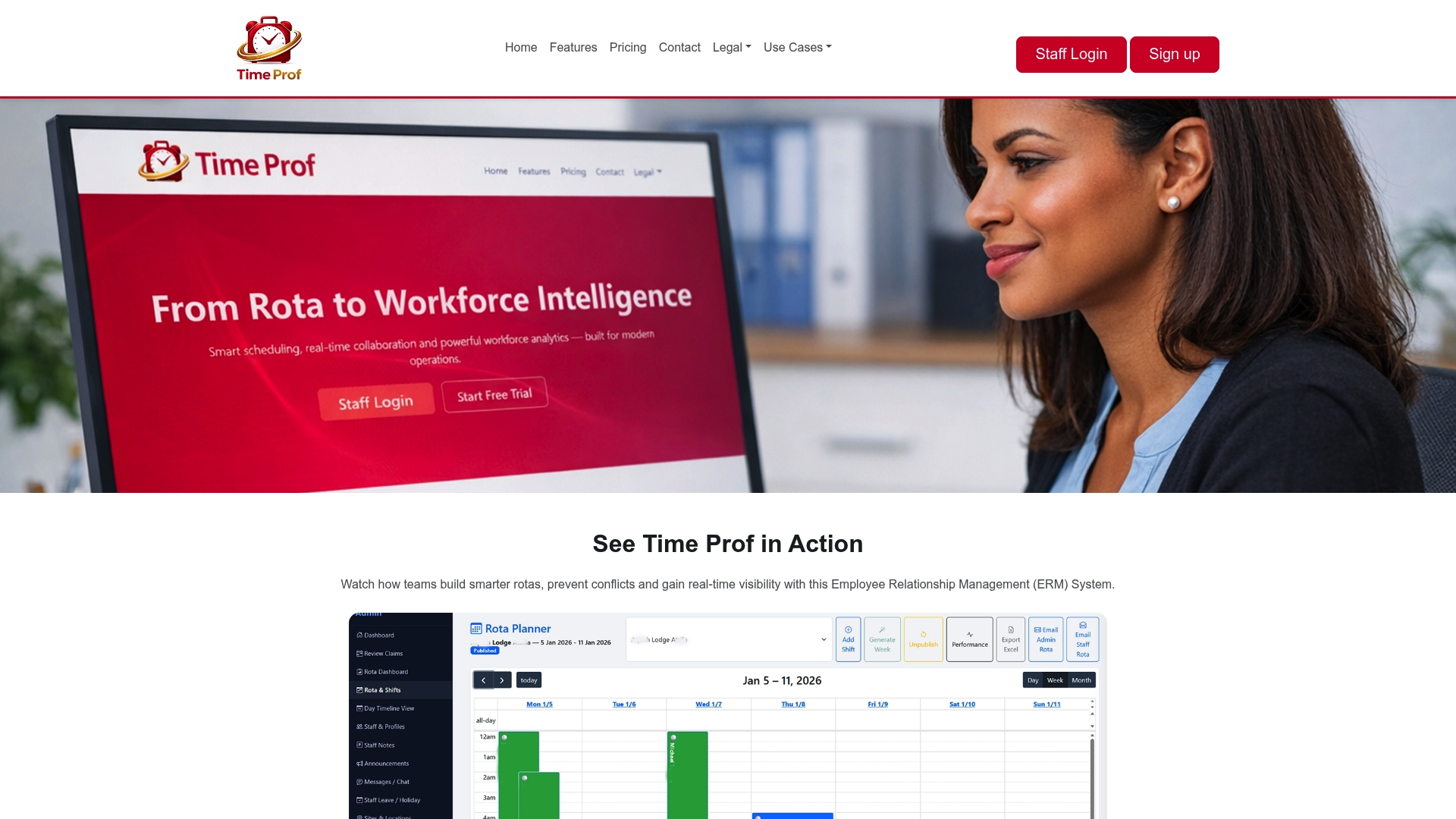
For multi-site and hybrid workforces, Timeprof removes the gap between who is scheduled and who receives the right message. The platform supports private messaging, site-based announcements, and real-time notifications alongside rota planning, clocking in, and compliance reporting. Everything sits in one place, which means staff get fewer, more relevant messages and managers spend less time chasing confirmation. Visit Timeprof to see how the platform handles workforce communication alongside scheduling and operational management.
FAQ
What is a workforce announcement system?
A workforce announcement system is a centralised platform that delivers structured internal messages to all employees across multiple channels, including mobile, desktop, and digital signage, simultaneously. It syncs with workforce data to target messages by role, location, or shift.
How does a workforce announcement system differ from email?
Email reaches only staff with a corporate account and relies on individuals checking their inbox. A workforce announcement system reaches all staff, including deskless and frontline workers, through push notifications, digital signage, and PA systems, with delivery confirmation built in.
What are the main announcement system benefits for compliance?
Workforce announcement systems produce audit trails and delivery reports that record who received a message and when. This documentation satisfies regulatory inspection requirements and is increasingly treated as a legal obligation for modern enterprises.
How long does it take to implement a workforce announcement system?
Most modern platforms deploy within 2 to 4 weeks. Many enterprise solutions charge no additional onboarding fees, though integration complexity with existing HRIS and scheduling systems affects the timeline.
What standards apply to emergency announcement systems in the UK?
Emergency voice alarm systems in the UK must comply with BS EN 50849 and the EN 54 series. These standards require intelligible voice messages, fail-safe operation with battery backup, and automated health monitoring to detect faults before they cause system failure.