Annual leave planning: a UK guide for staff and managers
Master annual leave planning to enhance staff wellbeing and ensure smoother operations. Learn key tactics for successful requests.

Check your contractual entitlement and employer notice rules first, then map the days you want against bank holidays, team cover and any submission deadline before you request them. Everyone in the UK gets at least 5.6 weeks of paid holiday by law, and a manager tracking that entitlement properly (a platform like Timeprof automates this) will approve early requests faster. The sections below cover the calculations, the employee tactics and the manager checklists you need.
TL;DR:
- The statutory UK holiday entitlement for full-time workers is 28 days, but many employers provide more, often including bank holidays within that total.
- Proper leave planning involves spreading holidays throughout the year, setting deadlines, and reviewing bookings weekly to prevent last-minute rushes and staffing gaps.
- Automated systems like Timeprof streamline leave requests, approvals, and tracking of accruals and carry-over, reducing manual errors and disputes.
- Calculating leave entitlement and accrual must account for pro-rata factors, part-time patterns, and employer-specific policies on carry-over and buy-back schemes.
- Clear communication, visible team calendars, and early refusals based on policy help maintain fairness and prevent conflicts over leave requests.
Table of Contents
- Why annual leave planning matters for wellbeing and business continuity
- Core rules and statutory entitlements you must check first
- How to plan your annual leave in six practical steps
- How managers should plan and approve annual leave
- How to calculate annual leave entitlement and accrual
- Choosing the right planning tool: planners, optimisers or workforce software
- What annual leave planning does to payroll and tax
- Balancing employee preferences with business needs
- Communicating leave plans without causing conflict
- Our take: treat leave planning as shared infrastructure, not a favour
- Get annual leave planning under control with Timeprof
- Sources
Why annual leave planning matters for wellbeing and business continuity
Leave taken late, in a rush, or not at all tends to pile up around December, and that pile creates exactly the problems a policy is meant to prevent. Staff who bank their holiday until the last quarter report more stress and burn out faster, and businesses see the mirror image on the operations side: cover gaps, rushed rota changes, and a spike in approval requests that all land on a manager’s desk in the same six weeks.
Poor planning is a business risk, not just an HR inconvenience. A care home with three staff booking the same fortnight off in December has a staffing crisis, not a scheduling quirk. Retail and hospitality firms see the same pattern around summer half-terms. The businesses that avoid it tend to share three habits:
- Spread leave across the year. Encourage roughly a quarter of annual entitlement to be taken every three months rather than letting it bunch at the edges.
- Set a submission deadline. Give staff a clear date by which requests for peak periods must land, so nobody is blindsided by a last-minute rush.
- Review the leave board weekly. A five-minute check of who’s booked what, and where the gaps are forming, catches problems while there’s still time to fix them.
None of these require complicated systems. They require consistency, and a manager who actually looks at the calendar every week rather than once a quarter.
Core rules and statutory entitlements you must check first
Every full-time worker in the UK is legally entitled to 5.6 weeks of paid annual leave a year, which works out to 28 days for someone working a standard five-day week. That’s the floor, not the ceiling. Many employers offer more, and some fold bank holidays into that total rather than granting them separately, so the first thing to check is your contract, not the statutory minimum.
28 days. That’s the statutory paid holiday entitlement for a full-time, five-day-a-week worker in the UK, under the 5.6-week rule set by GOV.UK.
A few practical points trip people up regularly:
- Accruing vs flat allowance. Some employers grant the full entitlement on day one; others accrue it monthly, which matters if you join partway through the leave year.
- Pro rata on joining or leaving. Entitlement is calculated proportionally against the months actually worked, not rounded generously in either direction.
- Leave-year boundaries vary. Some run on the calendar year, others on the tax year or a bespoke 12-month cycle set by the employer.
- Carry-over is capped, not automatic. One NHS Trust policy permits up to 5 days’ carry-over in exceptional circumstances only, and the Northern Ireland Civil Service sets its own leave-year dates and limits on additional carry-over after long sickness absence, illustrating how much this varies between employers.
Selling leave back is not a statutory right either. Where it exists, it’s an employer scheme layered on top of the legal minimum, and it never applies to the statutory 5.6 weeks itself.
How to plan your annual leave in six practical steps
Planning your own leave properly takes less time than most people think, usually around 20 minutes with a calendar in front of you.
- Confirm your contracted allowance and company holidays. Check your contract or staff handbook for your exact entitlement, your leave year dates, and any fixed closure days (Christmas shutdowns are common and often deducted automatically).
- Pick a planning goal. Decide whether you’re after one long trip, several shorter breaks spread through the year, or maximum days off for minimum leave spent.
- Scan the calendar for bridge days. A single day booked next to a bank holiday and a weekend can turn one day of leave into a four-day break. Look at where bank holidays fall midweek. A bank holiday landing on a Thursday, for instance, makes the following Friday a high-value single-day booking.
- Check part-time and shift patterns separately. If you work three days a week, your entitlement and your “bridge day” opportunities look completely different from a five-day worker’s, so map your own actual working pattern rather than the standard week.
- Submit early and follow the etiquette. Give reasonable notice, generally at least double the length of the leave requested, and check with teammates informally before submitting for the same dates.
- Bank a mid-year break deliberately. Holding at least one week back for spring or summer, rather than spending everything early or leaving it all for December, avoids the scramble that catches out the disorganised every single year.
Online planning calculators can help you spot high-leverage dates by scoring candidate days against public holidays and weekends, but treat their output as a starting point. These PTO optimiser tools don’t know your company’s blackout dates or carry-over caps, so their suggestions still need checking against your actual policy before you submit anything.
Pro Tip: Book your mid-year break before booking anything else. It’s the slot people forget to protect, and once summer rotas fill up, it disappears.
How managers should plan and approve annual leave
A leave policy that actually works is written down, not assumed. It needs to state the leave year dates, the required notice period, whether carry-over is allowed and how much, whether leave can be sold back, and exactly who has authority to approve or refuse a request.
Getting the deadlines right matters more than getting the wording right. Publish submission cut-offs for high-demand periods (Christmas, half-terms, the first fine week of summer) well in advance, and use blackout or restricted dates sparingly. Every one you add signals distrust and invites resentment if it isn’t obviously justified by operational need.
Three operational habits keep leave planning from becoming a fire drill:
- Review pending requests weekly, not just when a deadline arrives, so clashes get resolved while there’s still room to negotiate.
- Cross-train staff and use seasonal hiring where demand is predictable, which reduces how much any single person’s leave can dent your cover.
- Open shift claims for gaps rather than cancelling approved leave, letting available staff pick up the slack voluntarily. General advice on managing holiday scheduling backs all three as ways to cut operational risk without restricting staff choice.
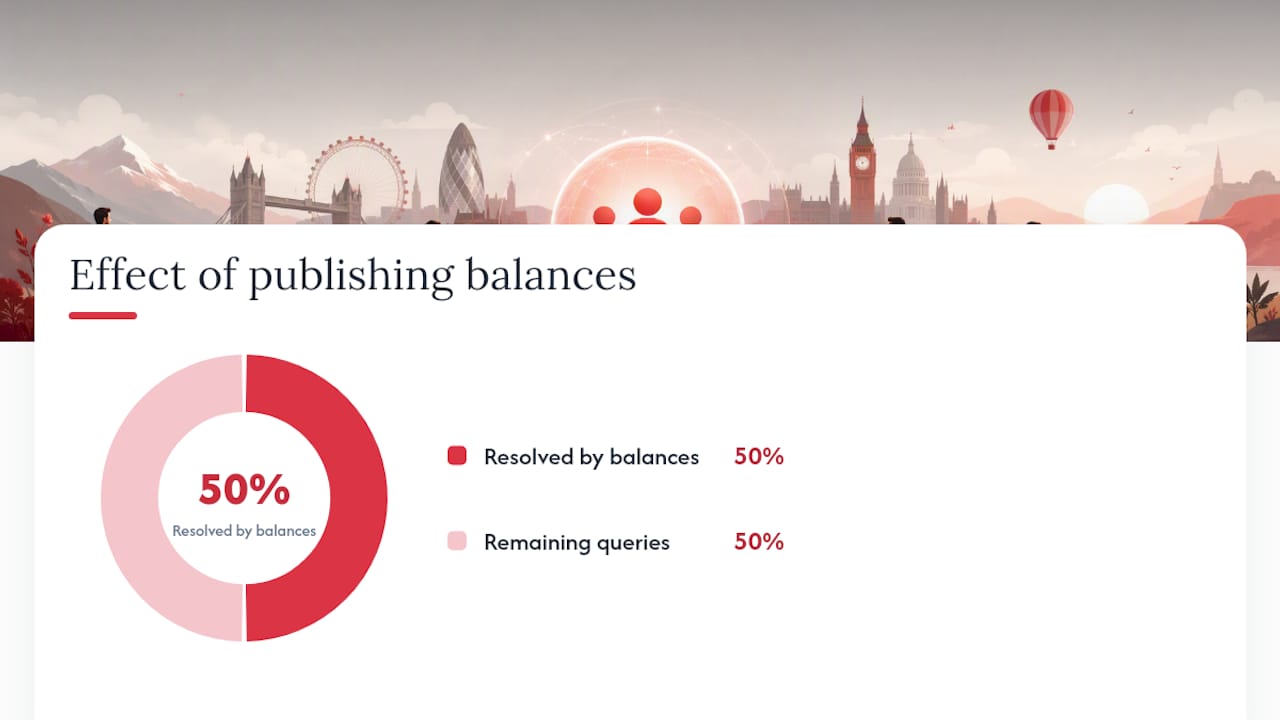
Keep accurate records and make them visible. Staff who can see their own taken and remaining balance query fewer requests and plan further ahead, because they aren’t relying on a manager’s memory or a spreadsheet nobody’s updated since March.
Pro Tip: Publish leave balances somewhere staff can check themselves. Half of all “how much have I got left” queries disappear once people can see the number.
How to calculate annual leave entitlement and accrual
Two formulas cover almost every calculation you’ll need. For accrual, a common method is: annual leave days × 8, divided by the number of pay periods in the year, gives hours accrued per paycheque. For pro rata entitlement when someone joins or leaves partway through the leave year, multiply their full annual entitlement by the proportion of the year actually worked.
Part-time workers use the same statutory multiplier as full-time staff (5.6 weeks), just applied to their own working pattern rather than a standard five-day week. This is sometimes called the “43 rule” in shorthand, referring to how some employers cap or round accrued fractions, though the underlying calculation is simple proportional maths, not a fixed legal formula.
- Round fractions in the employee’s favour where your policy allows it; rounding down consistently invites disputes.
- Recalculate immediately when working hours change, rather than waiting for the next leave year.
Choosing the right planning tool: planners, optimisers or workforce software
Not every planning job needs the same tool. A personal calendar or spreadsheet is fine for one person mapping their own bridge days. A PTO optimiser adds value when you’re trying to squeeze maximum leverage out of a handful of bank holidays, scoring candidate dates by how many days off you get per day of leave spent. Neither replaces what a manager actually needs: a system that handles approvals, accrual, carry-over and reporting for an entire team at once.
That’s where workforce management platforms come in, and it’s worth being honest about the limits of the first two tiers. A personal planner or optimiser can suggest dates, but it can’t approve them, check them against a carry-over cap, or flag a staffing gap forming three weeks out. General-market staff planner apps vary widely in whether they offer audit trails, two-factor authentication or multi-site visibility, features that matter once you’re managing more than a handful of people.
Timeprof sits at this manager-facing tier: self-service leave requests, approval workflows, and audit-ready reporting that turns a policy document into something enforced consistently rather than interpreted differently by every manager on the rota.
| Tool tier | Best for | Key limitation |
|---|---|---|
| Personal calendar/planner | One individual mapping their own leave | No approval or team visibility |
| PTO optimiser | Maximising bridge days around bank holidays | Ignores accrual, carry-over, blackout dates |
| Workforce management platform | Managers running approvals across a team or multiple sites | Requires setup and staff adoption |
Whichever tier you’re evaluating, check five things: compliance with statutory rules, ease of use for non-technical staff, reporting depth, genuine self-service (not just a request form), and data security standards suitable for HR records.
What annual leave planning does to payroll and tax
Booked leave doesn’t change how much someone is paid; it changes when the calculation gets tricky. Holiday pay is generally calculated at the worker’s normal rate, but for staff with variable hours or commission, employers often average pay over a reference period to work out what a week of leave should cost. Get that averaging period wrong and you either underpay staff (a compliance risk) or overpay them repeatedly without noticing.
Unused leave carried into a new tax year, or paid out when someone leaves a job, is treated as normal earnings for tax and National Insurance purposes. It’s taxed in the pay period it’s actually paid, not spread back across the year it was earned, which can push someone into a higher marginal tax band for that single payslip if a large balance is paid out in one lump sum.
Payroll teams also need to track leave taken against leave accrued in real time, because a mismatch between the two, someone taking days they haven’t technically accrued yet, creates a liability that needs correcting if they leave the business early. This is one of the quieter reasons manual spreadsheet tracking causes trouble: it’s easy to approve a request without checking the current accrued balance, and much harder to unwind the payroll consequences afterwards. Automated tracking closes that gap by refusing (or flagging) a request that would put someone into a negative balance before it’s approved, not after.
Balancing employee preferences with business needs
Every manager eventually hits the same problem: three good staff members want the same fortnight off, and only one of them can have it. Handling this fairly, rather than by whoever asked first or shouted loudest, is what separates a functioning leave policy from a source of long-running resentment.

A first-come, first-served rule is the simplest to administer and the easiest to defend when challenged, provided it’s applied consistently and staff know the rule in advance. Some employers rotate priority year on year, so whoever lost out on Christmas leave last year gets first refusal this year. Others weight decisions by seniority or by who has children in school during term-time restrictions, though this needs to be applied carefully and consistently to avoid claims of unfairness.
What works less well is deciding case by case with no stated rule at all. It feels flexible in the moment and creates a sense of arbitrary favouritism over time, particularly if the same names keep winning the good slots. Publishing the rule, whatever it is, before the requests start arriving removes most of the argument before it happens.
The other lever is capacity, not just fairness. If your business cannot run with multiple people off simultaneously, state this explicitly in the policy rather than leaving managers to invent justifications for refusals. Staff generally accept a stated operational limit far more readily than an unexplained “no”.
Communicating leave plans without causing conflict
Most leave disputes trace back to a communication gap rather than an actual policy failure. Someone finds out a colleague’s request was approved only after their own clashing request gets refused, and the sequence, not the decision itself, is what causes the friction.
Publishing the team leave calendar somewhere everyone can see it, updated in real time, removes the guesswork that fuels most of these arguments. Staff can check for clashes themselves before submitting, rather than finding out after the fact that someone beat them to it.
Timing matters too. Refuse a request as early as possible, not on the eve of the date requested, and give a reason tied to the stated policy rather than a vague “we can’t manage it.” A refusal that references a specific rule (notice period, blackout date, minimum staffing level) lands very differently from one that sounds like a personal decision, even when the outcome is identical.
Finally, keep the conversation two-way. A quick check-in message asking whether anyone else is already planning the same week, before a request is formally submitted, catches most clashes before they become a dispute that needs managing after the fact.
Our take: treat leave planning as shared infrastructure, not a favour
The conventional advice on annual leave planning treats it as two separate problems: employees squeezing value out of their days off, and managers policing a policy document. That split is the actual source of most friction. The employer policies referenced throughout this guide, from the NHS Trust’s carry-over rules to the Northern Ireland Civil Service’s leave-year structure, work precisely because they treat entitlement, notice and cover as one connected system rather than a set of separate negotiations.
What’s overrated is the bridge-day optimiser as a standalone solution. It’s a genuinely useful calculator, but it optimises for the individual’s leverage while staying blind to team cover, accrual limits and carry-over caps, which is exactly where most requests actually get refused. What’s underrated is the weekly review habit. A five-minute glance at the leave board catches clashes and coverage gaps while there’s still time to renegotiate, rather than after someone’s flights are booked.
If you take one thing from this guide, prioritise visibility before optimisation. Staff who can see the team calendar and their own balance in real time cause far fewer disputes than staff working from guesswork, regardless of how clever the underlying policy is.
— Michael
Get annual leave planning under control with Timeprof
Spreadsheets and group chats can just about track leave for a five-person team. Beyond that, they start hiding the exact gaps this guide has walked through: who’s actually accrued what, which requests clash, and whether next month’s rota has enough cover once the approved leave lands. Timeprof replaces that fragmented approach with one system where staff submit requests, managers approve against real accrual and carry-over rules, and every decision leaves an audit-ready record instead of a scroll of old messages.
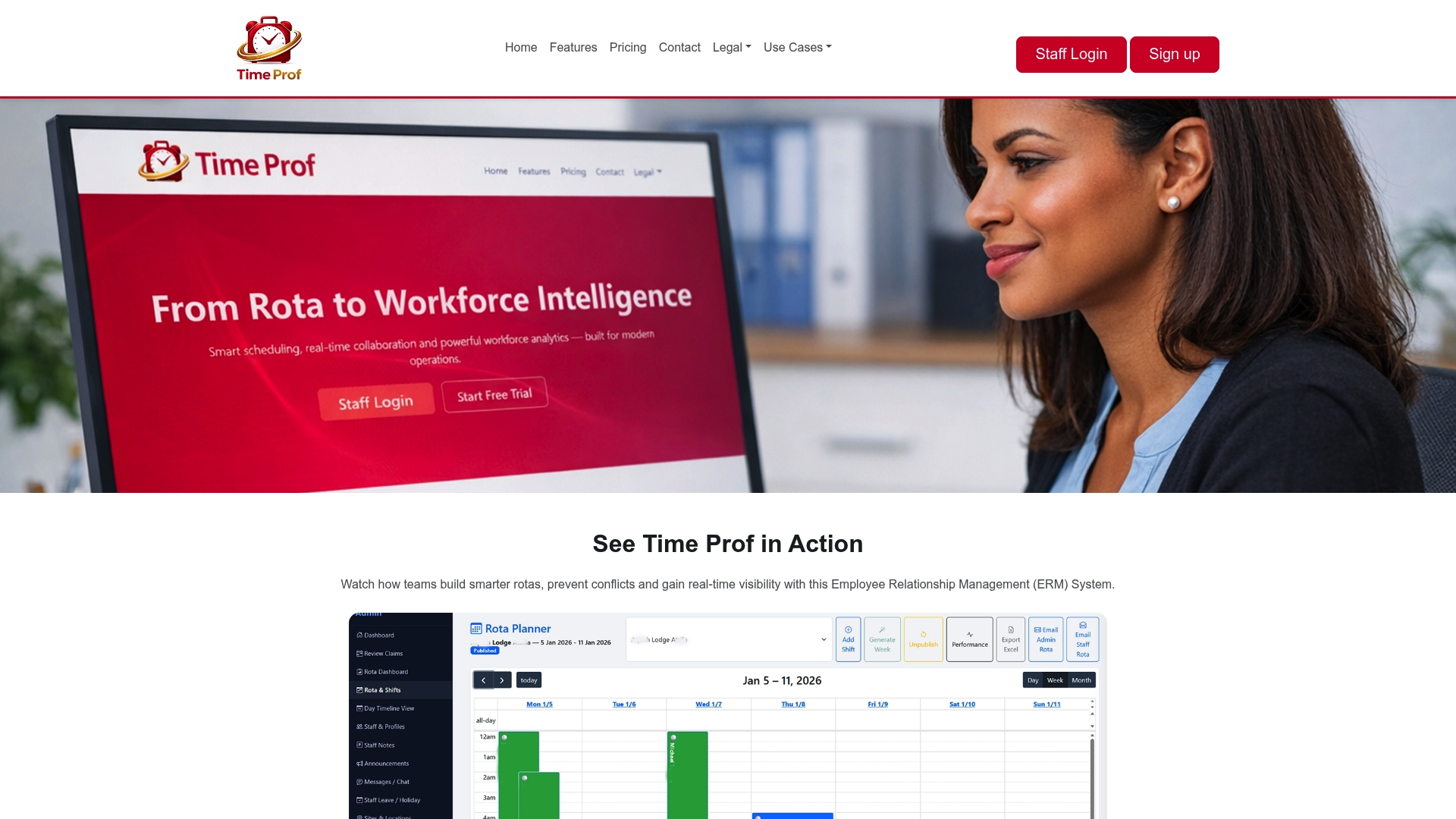
It’s built for the businesses that feel this pain hardest, care providers, hospitality teams, security firms, retail and cleaning operations, where a missed cover gap isn’t an inconvenience, it’s a shift nobody’s working. If you’re managing leave across more than a handful of staff or sites, start a trial of Time Prof and see your team’s current leave balances and pending requests in one place before your next approval deadline arrives.
Sources
- Gov
- Annual leave policy - Doncaster and Bassetlaw Teaching Hospitals NHS Foundation Trust (DBTH)
- HR policy 3.07 Annual Leave v7.0 - Northern Ireland Civil Service
- PTO & Vacation Day Optimizer (Free) — SnapToolSuite