The role of scheduling in security operations
Discover the critical role of scheduling in security operations. Ensure 24/7 coverage and protect against rising threats effectively.

Scheduling is the operational backbone of any security function, determining whether threats are caught in real time or missed entirely. Organisations cut security staffing by 50% during weekends and holidays, yet 60% of ransomware attacks occur precisely during those windows. That gap is not a coincidence. The role of scheduling in security operations goes far beyond filling shifts. It defines your exposure, shapes analyst wellbeing, and determines whether your security operations centre (SOC) can sustain 24/7 protection without burning through its people.
How scheduling models affect security coverage and risk
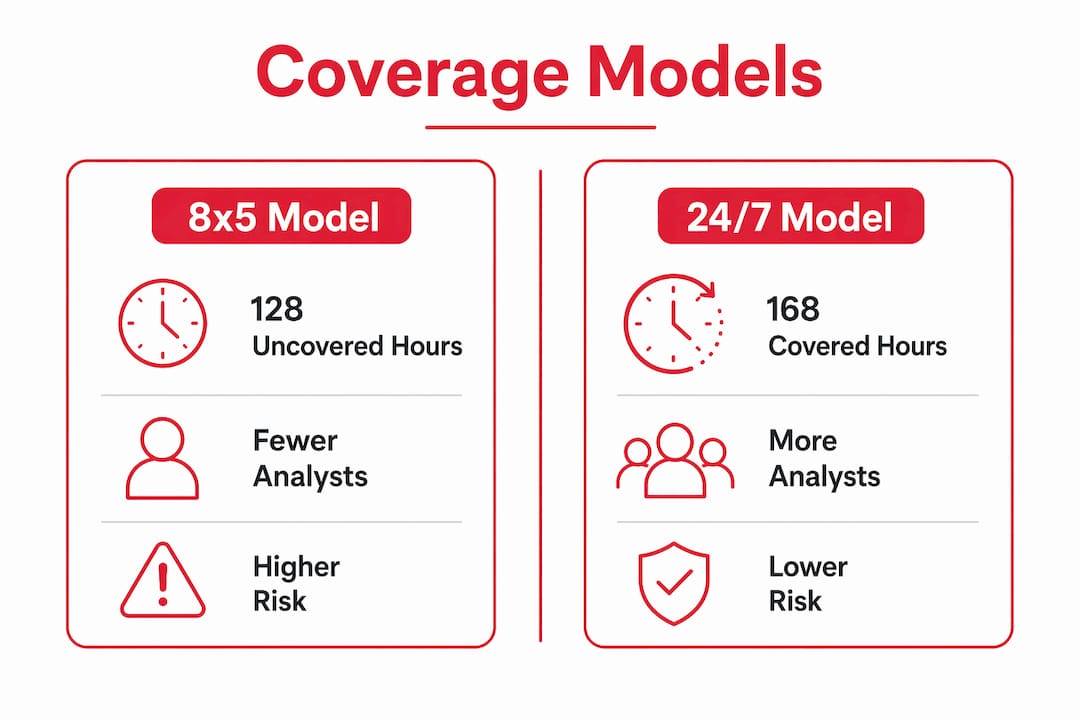
The choice between an 8x5 and a 24/7 staffing model is one of the most consequential scheduling decisions a security manager makes. An 8x5 model leaves 128 hours per week without active monitoring. That is more than five full days of unmonitored exposure every single week.

Attackers know this. Ransomware operators deliberately time their deployments for Friday evenings, bank holidays, and overnight windows when response capacity is lowest. A scheduling model that does not account for this reality is not a cost-saving measure. It is an open invitation.
True 24/7 coverage requires three overlapping shifts with 2–3 analysts per shift. Overlapping handover periods are not optional extras. They are the mechanism by which context transfers between teams, active incidents stay warm, and no threat falls through the cracks during a shift change.
Comparing coverage models
| Coverage model | Weekly monitored hours | Minimum analysts needed | Primary risk |
|---|---|---|---|
| 8x5 (standard business hours) | ~40 hours | 2–4 | 128 unmonitored hours per week |
| Follow-the-sun (regional handoffs) | ~120 hours | 6–9 | Handover gaps, time zone misalignment |
| 24/7 in-house | 168 hours | 15–20 FTEs | High cost, burnout without rotation |
| Hybrid (in-house plus managed service) | 168 hours | 6–10 in-house | Dependency on provider SLAs |
Hybrid SOC models, which combine in-house analysts with a managed service provider handling overnight Tier 1 alerts, offer a practical middle ground for teams with limited headcount. The managed provider covers the hours your team cannot, while your senior analysts focus on complex investigations during core hours.
The scheduling impact on security is direct and measurable. Every hour without coverage is an hour an attacker can operate undetected. Scheduling decisions are, in effect, risk decisions.
What challenges does scheduling present for security workforce management?
Analyst burnout is the hidden cost of poor scheduling in security operations management. Average SOC analyst tenure sits at just 18–24 months, driven largely by alert fatigue and unsustainable shift patterns. Replacing an experienced analyst costs far more than retaining one.
The problem compounds quickly. When analysts leave, remaining team members absorb their alert load. That increases fatigue, which accelerates further departures. Poor scheduling is the trigger for this cycle.
The alert load problem
Capping alerts below 50 per shift and reducing false positives below 15% are the two most effective levers for improving analyst retention. Both require deliberate scheduling decisions. Automating Tier 1 triage removes the most repetitive, low-value work from human queues. Scheduling that work as an automated process frees analysts to apply judgement to genuine threats.
- Alert volume caps: Limit each analyst to a manageable queue per shift. Overloading a single shift creates errors and missed detections.
- False positive reduction: Schedule regular tuning reviews as a recurring task, not an ad hoc activity. Untuned rules generate noise that erodes analyst confidence.
- Tier 1 automation: Automate initial triage for known threat signatures. Schedule these automated processes with the same rigour as human shifts.
- Role rotation: The most successful SOCs rotate analysts through different functions, extending average tenure beyond three years. Scheduling rotations deliberately prevents stagnation and builds cross-functional resilience.
Pro Tip: Build role rotation directly into your shift schedule rather than treating it as an informal arrangement. Analysts who know they will move between threat hunting, incident response, and monitoring stay engaged far longer than those locked into a single function.
SOC on-call rotation design should limit on-call weeks to one per month per analyst. Distributing the on-call burden fairly is not just a welfare consideration. It directly affects the quality of response when an analyst is actually paged at 3:00 AM.
How does scheduling govern automated security tasks?
Scheduling in security operations is not limited to human shift planning. Automated tasks, scripts, and workloads run on schedules too, and they carry their own security risks if left ungoverned.
Scheduled automated tasks in Kubernetes environments behave as non-human identities. Without proper governance, these CronJobs and workload identities can accumulate long-lived credentials and become vectors for lateral movement. An attacker who compromises a poorly governed scheduled task gains persistent, automated access to your environment.
The governance principles for automated scheduled workloads mirror those for human shift management:
- Named ownership: Every scheduled task must have an identified owner, just as every shift must have an accountable analyst.
- Short-lived credentials: Scheduled workloads should use short-lived, tightly scoped credentials that expire after each execution. Persistent credentials are a standing invitation for abuse.
- Audit records: Every automated task execution should generate a log entry. Scheduling without auditability is governance without accountability.
- Revocability: Any scheduled task should be revocable immediately if its behaviour becomes suspicious. Build that capability into your scheduling governance from the start.
Scheduling human shifts and automated jobs with strict governance prevents both coverage gaps and unauthorised automated actions. The discipline required is the same in both cases. The consequence of neglecting it is also the same: an attacker finds the gap before you do.
What are the best practices for scheduling in security operations?
Effective scheduling strategies for security operations start with honest maths. Maintaining 24/7 SOC coverage typically requires 15–20 full-time equivalents when you account for annual leave, sick days, training, and public holidays. Most managers underestimate this figure significantly when building their initial business case.
Building a realistic staffing model
- Calculate true availability. A full-time analyst works roughly 230 days per year after leave and training. Divide your required coverage hours by actual available hours, not contracted hours.
- Staff each shift role with 4–5 FTEs. Effective 24/7 coverage needs 4–5 FTEs per shift role to absorb absences without degrading capability. Staffing to the minimum creates fragility.
- Design overlapping handover windows. A 30-minute overlap between outgoing and incoming shifts costs little but prevents the context loss that allows incidents to go undetected.
- Schedule training as protected time. Analysts who cannot attend training become outdated. Outdated analysts miss novel threats. Training time is not a scheduling luxury.
- Build escalation paths into the rota. Every shift needs a documented escalation route to a senior analyst or incident commander. Scheduling the escalation chain is as important as scheduling the analysts themselves.
Pro Tip: Run a quarterly scheduling audit. Compare planned coverage against actual coverage, including late starts, early finishes, and unplanned absences. The gap between your rota and reality is where your true exposure lives.
Scheduling tools and technology
Spreadsheet-based rotas fail security operations teams for one fundamental reason: they cannot surface conflicts, skill gaps, or coverage holes in real time. A security manager building a rota in a spreadsheet on a Friday afternoon cannot see that three analysts have booked the same week off until it is too late to act.
Workforce intelligence platforms that combine shift planning, skills matching, and real-time attendance tracking give security managers the visibility they need to schedule with confidence. The ability to match analyst skills to shift requirements, flag coverage gaps automatically, and manage leave requests in one place removes the manual overhead that makes scheduling error-prone.
Key takeaways
Scheduling is the single most controllable variable in security operations risk management. Get it wrong and you hand attackers a predictable window of opportunity every week.
| Point | Details |
|---|---|
| Coverage gaps are measurable risks | An 8x5 model creates 128 unmonitored hours weekly, directly exploited by ransomware operators. |
| Realistic staffing requires 15–20 FTEs | True 24/7 coverage demands far more headcount than minimal estimates suggest, once leave and training are factored in. |
| Alert load drives analyst attrition | Capping alerts below 50 per shift and automating Tier 1 triage are the most effective retention levers. |
| Automated tasks need scheduling governance | CronJobs and workload identities require named owners, short-lived credentials, and audit records. |
| Role rotation extends analyst tenure | SOCs that rotate analysts through functions retain staff beyond three years and build operational resilience. |
Why scheduling deserves more respect than it gets
Security managers spend enormous energy on tooling, threat intelligence feeds, and detection rules. Scheduling gets treated as an administrative afterthought. That is a mistake I have seen play out repeatedly, and it always costs more to fix than it would have cost to get right from the start.
The maths alone should be sobering. If your team runs an 8x5 model, you are unmonitored for more than 75% of the week. No detection tool compensates for the absence of a human analyst who can make a judgement call at 11:00 PM on a Sunday. Attackers do not respect business hours, and your scheduling model should reflect that reality.
What I find most underestimated is the staffing arithmetic for genuine 24/7 coverage. Managers routinely assume they need six or seven analysts to cover round-the-clock operations. The actual figure, once you account for leave, sickness, training, and the occasional analyst who simply cannot make their shift, sits closer to 15–20 FTEs. Building a business case on the lower number sets your team up to fail before they start.
The human dimension matters just as much as the coverage dimension. Analysts who work poorly designed rotations, absorb excessive alert loads, and never rotate through different functions leave within two years. The institutional knowledge they take with them is irreplaceable. Scheduling is the mechanism by which you either protect that knowledge or lose it.
— Michael
How Timeprof supports security operations scheduling
Security operations managers need more than a rota. They need a single view of who is available, what skills each analyst holds, and where coverage gaps are forming before they become incidents.
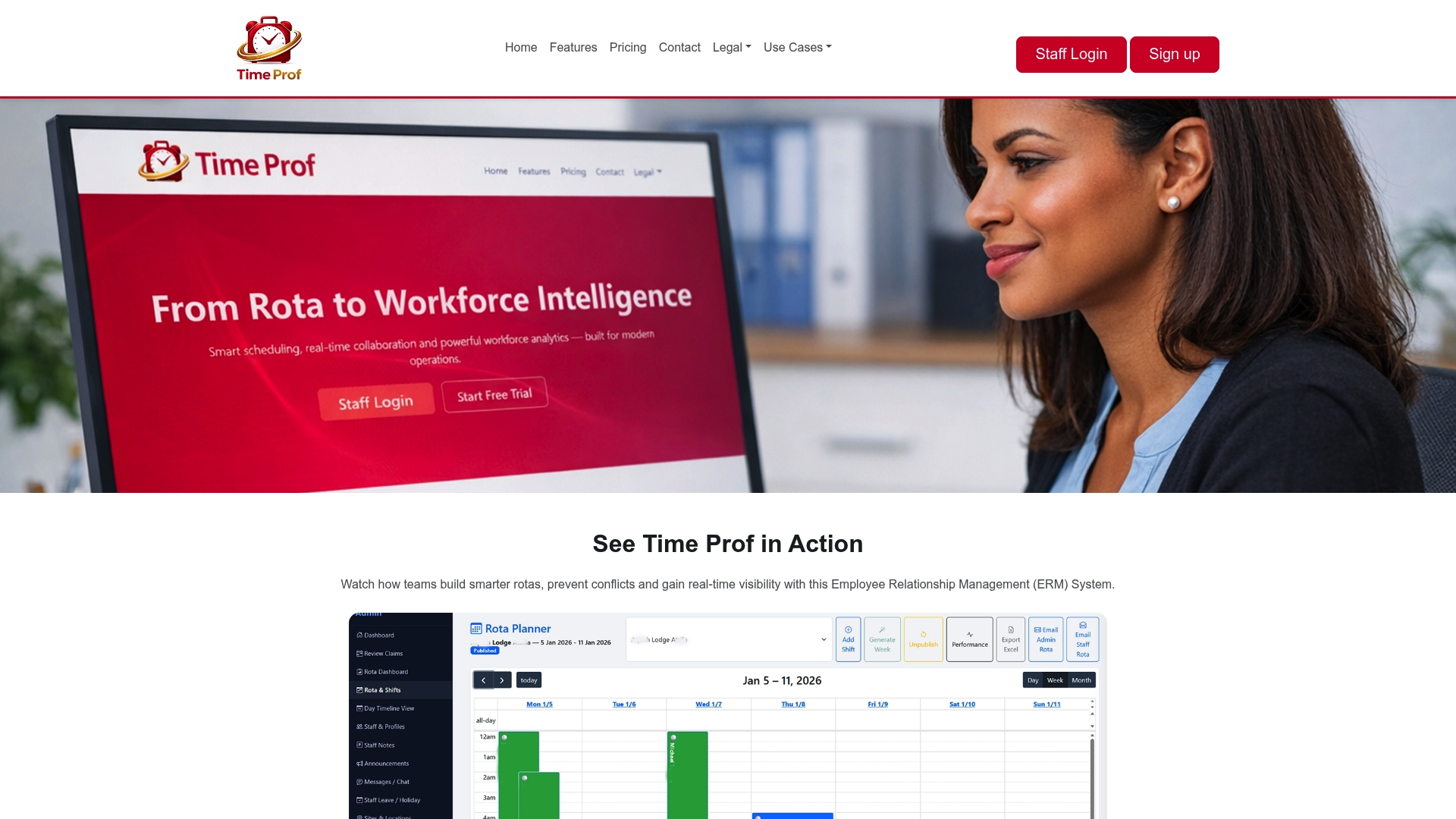
Timeprof brings shift planning, leave management, skills matching, and real-time attendance tracking into one platform. Managers can build compliant rotas that account for analyst availability and qualifications, receive automatic alerts when coverage falls below threshold, and give analysts self-service visibility into their own schedules. Geofenced clock-in and audit-ready reporting mean that every shift is verified and every absence is recorded. For security teams managing multi-site operations or hybrid staffing models, Timeprof removes the spreadsheet overhead that turns scheduling into a weekly crisis.
FAQ
What is the role of scheduling in security operations?
Scheduling determines when analysts are present, which shifts are covered, and whether automated tasks run with proper governance. It is the primary mechanism for ensuring continuous threat monitoring and controlled access across both human and automated security functions.
How many staff does 24/7 SOC coverage actually require?
True 24/7 coverage requires 15–20 full-time equivalents when annual leave, sick days, and training are factored in. Staffing to the minimum headcount creates fragility and leads to coverage gaps during absences.
Why do SOC analysts leave so quickly?
Average SOC analyst tenure is 18–24 months, driven by alert fatigue and repetitive Tier 1 triage work. Capping alerts below 50 per shift, automating low-value triage, and rotating analysts through different functions are the most effective ways to extend retention.
What is the biggest scheduling risk for security teams?
The largest risk is the coverage gap created by reduced weekend and holiday staffing. Organisations that cut security headcount by 50% during off-hours face a direct correlation with the 60% of ransomware attacks that target precisely those windows.
How should automated scheduled tasks be governed in security operations?
Automated tasks should be treated as non-human identities with named owners, short-lived credentials, and full audit logs. Every scheduled workload should be revocable immediately if its behaviour becomes anomalous.